
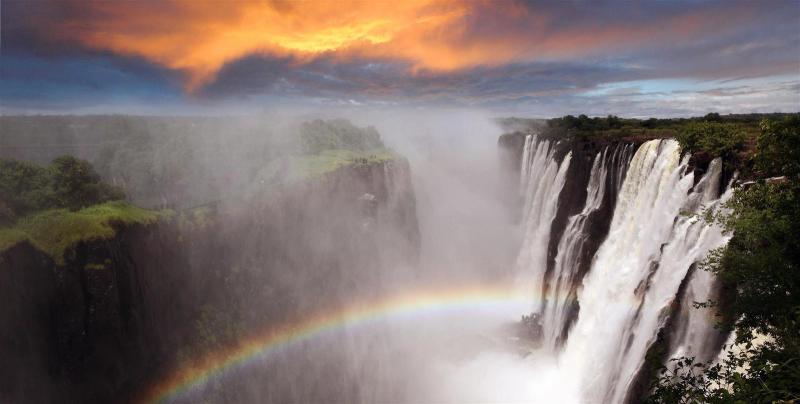
Victoria Falls is a hard act to follow. After witnessing the rainbow-drenched waterfall that leaves you thoroughly wonderstruck, you’d be forgiven for thinking Zambia had shown you its grandest trick right out of the gate. But follow the flow further, and a whole other world awaits. Zambia is a canvas that refuses to be viewed from a distance. You don’t come here to spectate but to be entirely immersed in the wild in a way that’s becoming increasingly rare. Whether paddling the waterways or tracking big cats across its golden plains, Zambia gets under your skin. The question then isn’t simply where you go. It’s how deeply you dare to dive in. These are the top seven things to do in Zambia beyond the Falls.
Follow the Zambezi: Lower Zambezi National Park
Ask the crowds about Africa’s greatest safari destinations, and the Lower Zambezi National Park might not be the first to spring to mind. But ask our Travel Experts where they felt most deeply moved, and it unfailingly tops the list. It’s easily one of Africa’s most underrated sanctuaries, and perhaps its most profoundly touching.
Here, the river works an ancient kind of sorcery: it bends your perception of time, dismantles all hurry, and pulls you into its flow.
1. Glide Past Wildlife on a Canoe Safari
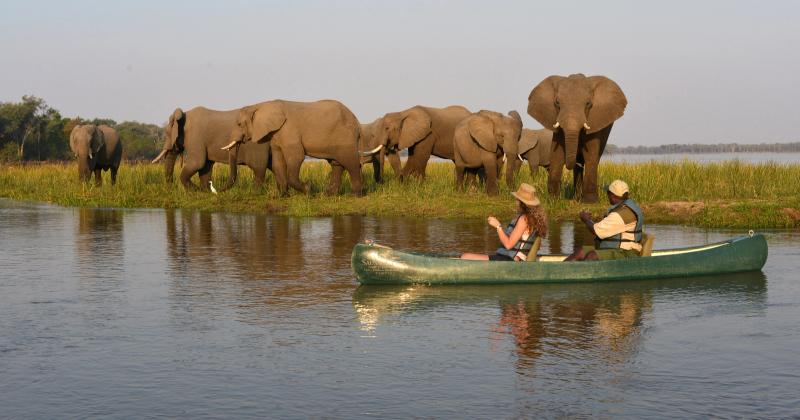
On land, you scan the horizon like a bystander. In a canoe, you become an active participant in the wilderness.
Paddling these calm channels is an intoxicating lesson in stealth. Reeds whisper against the hull as malachite kingfishers spark past like blue neon. Bull elephants browse along the banks, unfazed by your presence, while further along, a hippo surfaces with a throaty, resonant snort, before slipping beneath the water again.
From the canoe, stripped of artificial barriers, you gain a unique vantage point on it all.
2. Cast a Line on a Tiger Fishing Excursion
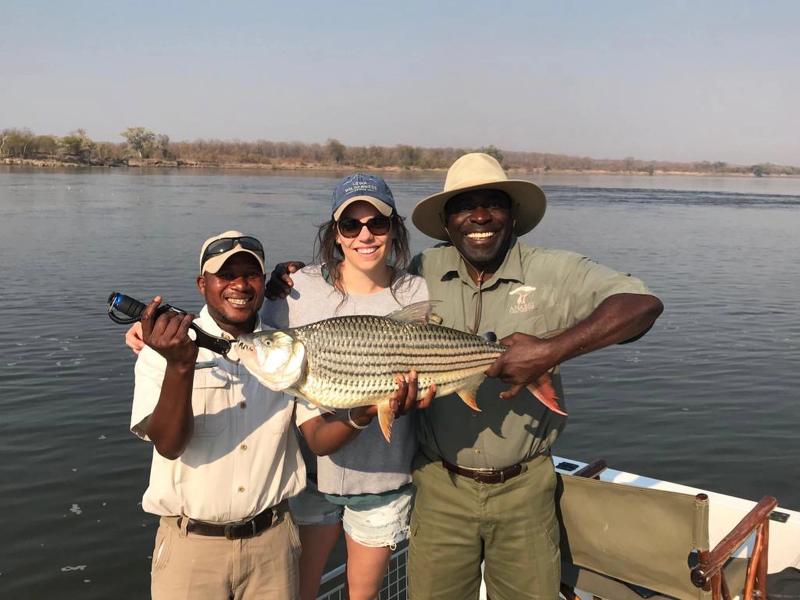
Trade your paddle for a rod. The Zambezi is renowned among anglers for its tiger fishing, offering a spirited catch-and-release challenge against one of the continent’s most iconic freshwater species.
Spending a quiet morning out on open water with a specialist fishing guide – watching the water for movement and feeling the sudden, electric tug on the line – is a wonderfully hands-on way to experience the river.
3. Go Golden on a Boat Cruise
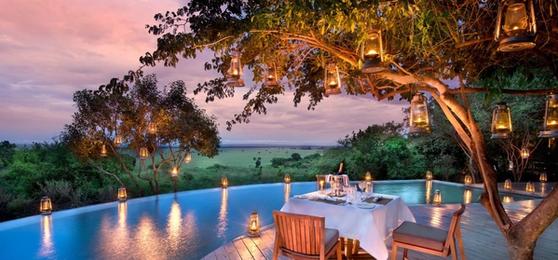
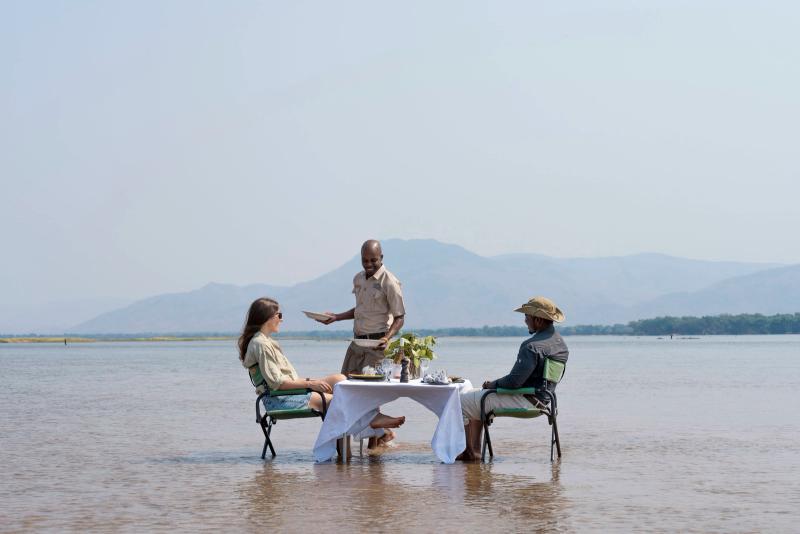
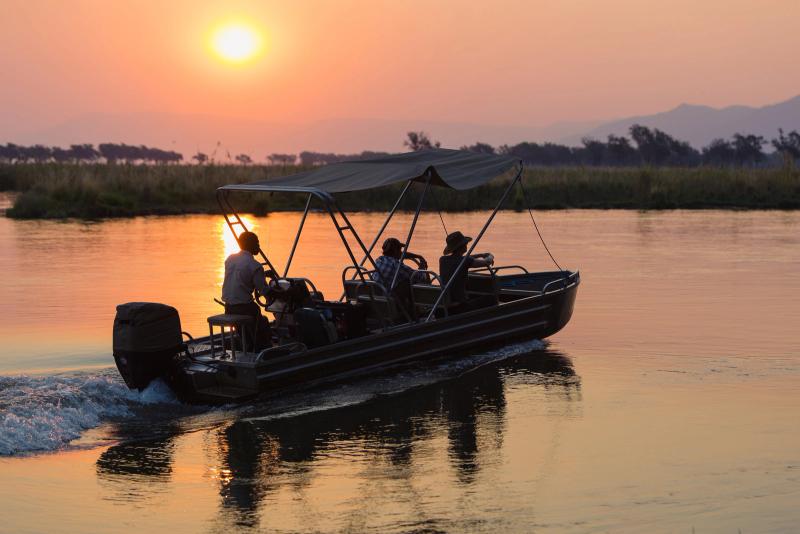
When the midday heat mellows, the river slips into pure theatre. You’d swear a sunset boat cruise is about slowing your pulse: ice clinking against glass, cold gin and tonic in hand, and the water turning to molten amber beneath a painted sky.
Along the shoreline, baboons bicker in the overhead branches and herds gather for a twilight drink beneath ancient winterthorn trees as the African wild exhales around you.
Follow the Tracks Inland: South Luangwa National Park
For all the liquid magic of the Zambezi, a completely different Zambia awaits inland – one that demands you ditch the engine, step out into the dust, and meet the wild on its own terms.
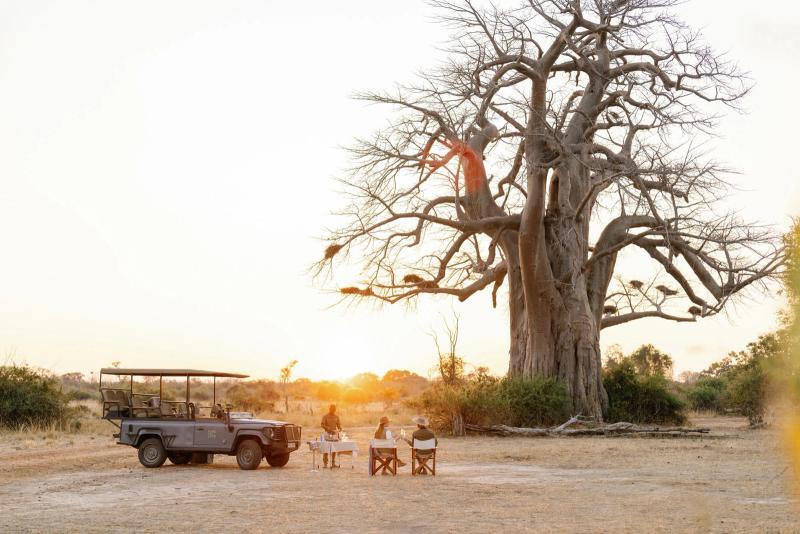
Welcome to South Luangwa National Park, the undisputed spiritual home of the walking safari. Beneath cathedral-like canopies of mahogany and baobabs, the horizon closes in and the African bush shifts from a scenic backdrop into a labyrinth.
Out here, you step into the wilderness, where the smallest creatures can inspire some of the biggest fascinations.
4. Learn the Art of Tracking on a Legendary Walking Safari
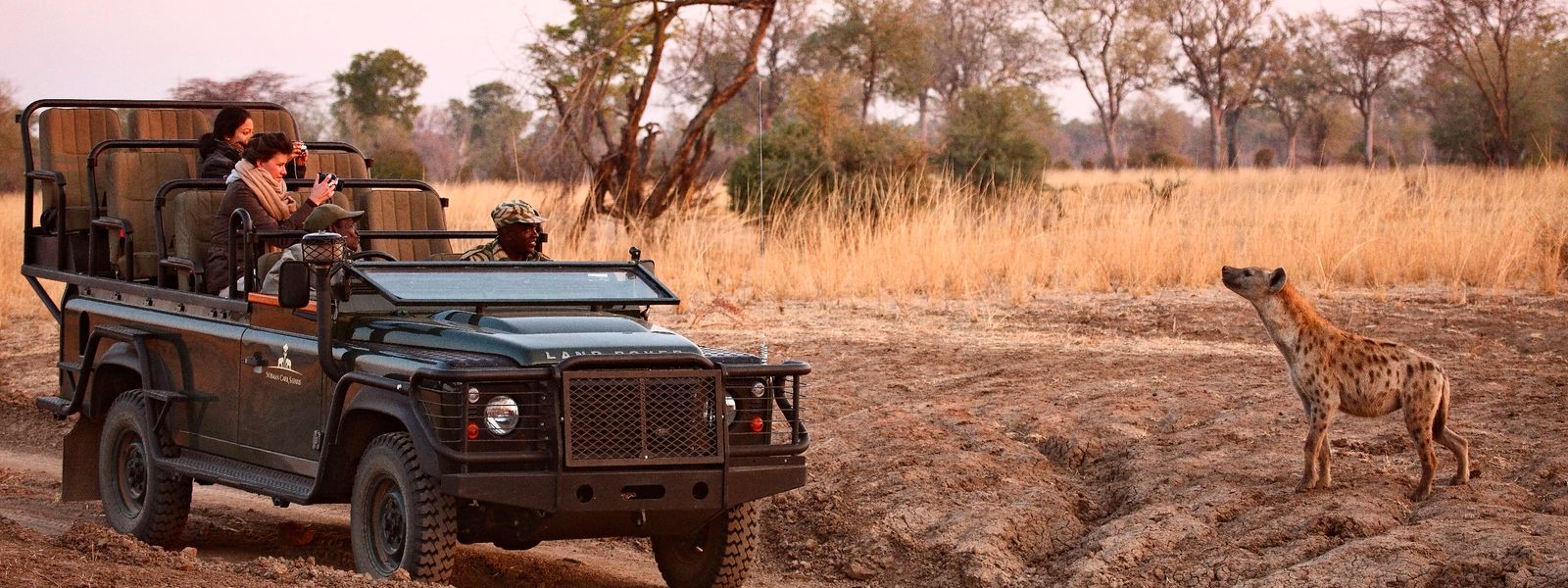
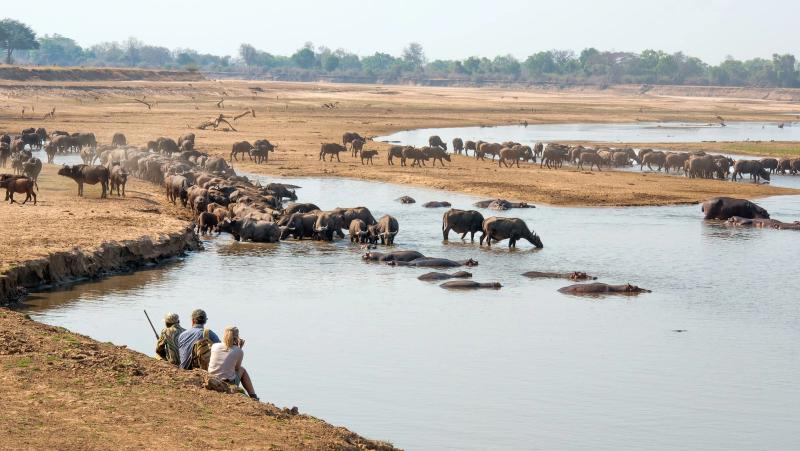
This is safari stripped back to its purest form. Led by an armed wildlife scout and an expert guide, your boots become your wheels, and your senses zoom into the present moment.
A fresh pugmark pressed into morning dust is no longer just a print; it’s the breaking headline of a lion’s night hunt. You quickly learn to read the intricate language of the bush: the frantic alarm rattle of an impala, a snapped branch oozing fresh sap, and the sweet, crushed scent of wild sage underfoot.
It’s never about recklessly charging towards danger, but rather the exquisite realisation that you’re simply another creature walking an ancient, untamed world.
5. Spot Big Cats on an Exhilarating Night Drive
South Luangwa isn’t called the “Valley of the Leopard” on a whim. Once the sun dips below the horizon, you might watch a leopard moving gracefully through the tall thatch.
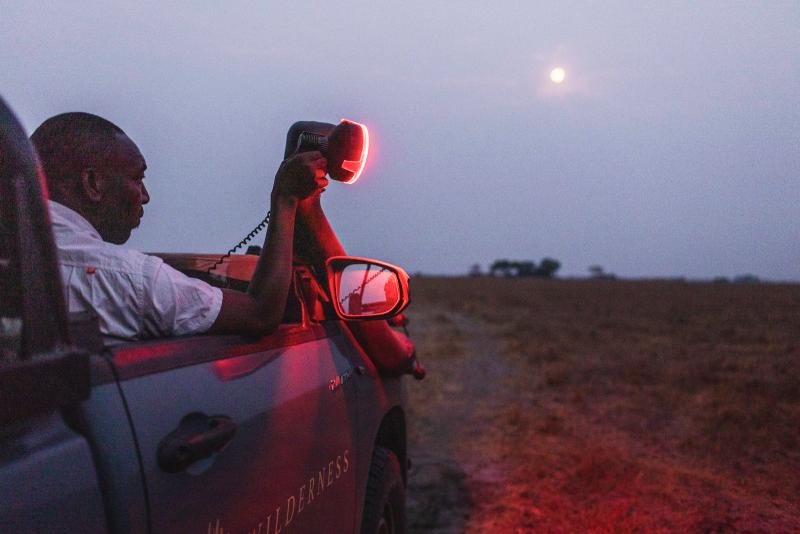
And unlike many parks across Africa that close their gates at dusk, here the story continues well after dark. Using gentle, filtered red light that respects the wildlife, guides illuminate a secret world of creatures who live exclusively by night. Spot wide-eyed bushbabies leaping through the canopy, or catch sight of elusive wanderers like porcupines, civets, and genets slipping through the scrub.
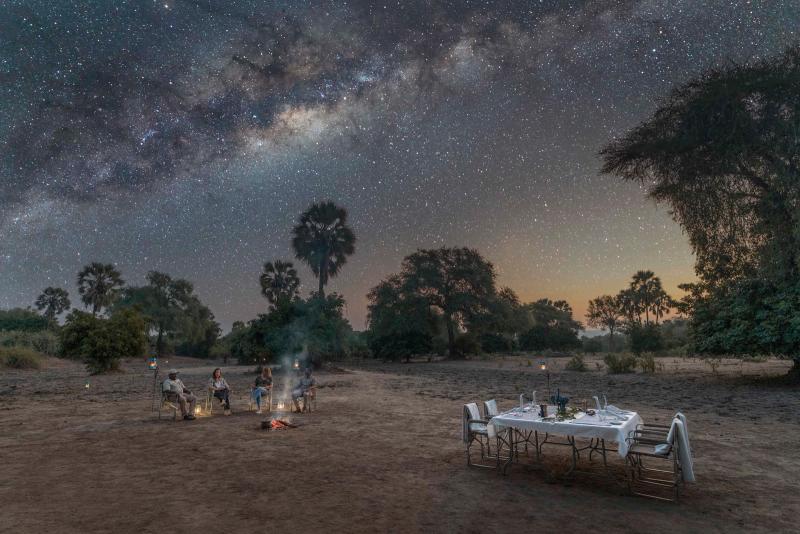
6. Sleep Out Beneath a Billion Stars on a Dry Riverbed
As the dry season peaks, seasonal tributaries recede to leave behind wide, sweeping highways of soft sand, creating the ultimate setting for an open-air sleepout. With rain-free skies and open sightlines stretching down the dry riverbed, there are no walls or ceilings to separate you from the night.
Kick off your boots by a crackling mopane fire, then sink into a plush bed dressed in fine linens beneath a gauzy mosquito net, lanterns glowing softly. Falling asleep under a blazing Milky Way far from anything else in the world is an experience unlike any other.
Follow Further: Kafue National Park and Liuwa Plain National Park
If the Lower Zambezi pulls you close and South Luangwa tunes your senses, Kafue is where you throw your arms open to pure scale.
Clocking in at a staggering 22,400 square kilometres, Zambia’s largest wilderness offers a glorious sense of wide-open freedom where you rarely cross tracks with another vehicle.
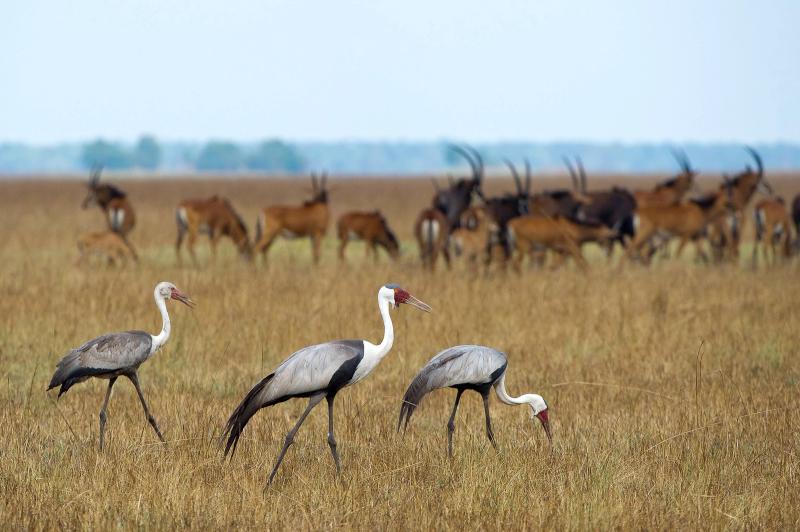
Up north, the legendary Busanga Plains burst open into glassy channels and flooded grasslands. Here, herds of red lechwe splash through the shallows with wild abandon, closely trailed by tree-climbing lions navigating the mist-wreathed palms.
7. Witness One of Nature’s Grandest Gatherings
Venture even deeper off the map into western Zambia, and the landscape shapeshifts into the cinematic expanse of Liuwa Plain National Park.
This remote frontier plays host to Africa’s second-largest wildebeest migration – tens of thousands of animals moving in mesmerising unison across golden floodplains.
It’s hauntingly beautiful and deeply raw, made for explorers who like their adventures served wild, vast, and completely elemental.
How to Plan Your Zambia Adventure
It’s easy to get swept up in stories of swimming elephants, sundowners in the shallows, and leopards stalking through open woodland. Translating that into an actual, working itinerary is where deliberate planning comes in.
Zambia deeply rewards taking your time. With regional flights hubbing through Lusaka, linking different national parks is remarkably straightforward. The trick is pairing destinations with intention rather than attempting to conquer the entire map in a single sprint.
If you’re ready to start sketching out your own journey, here’s how the pieces fit together best:
The Art of Combination
- Victoria Falls + Lower Zambezi + South Luangwa
The benchmark itinerary. Kick off with the adrenaline of the Falls, slip straight onto the water for river-based safaris in the Lower Zambezi, and cap it off tracking big cats on foot in the Luangwa Valley. - Lower Zambezi + South Luangwa
Bypass the Falls entirely to devote every day to pristine wilderness. Pairing water-level canoeing with raw, boots-on-the-ground tracking gives you Zambia’s two most iconic, contrasting safari paces in one clean sweep. - South Luangwa + Kafue or Liuwa Plains
Tailor-made for safari connoisseurs. Combine Luangwa’s predator density with the horizon-bending scale of the Busanga floodplains or Liuwa’s wildebeest migration for an adventure with a far lower tourist footprint.
The Best Time to Visit Zambia
Zambia’s calendar revolves around three distinct pulses: peak dry-season game, the green season, and high-water river flows.
Moving Between Camps
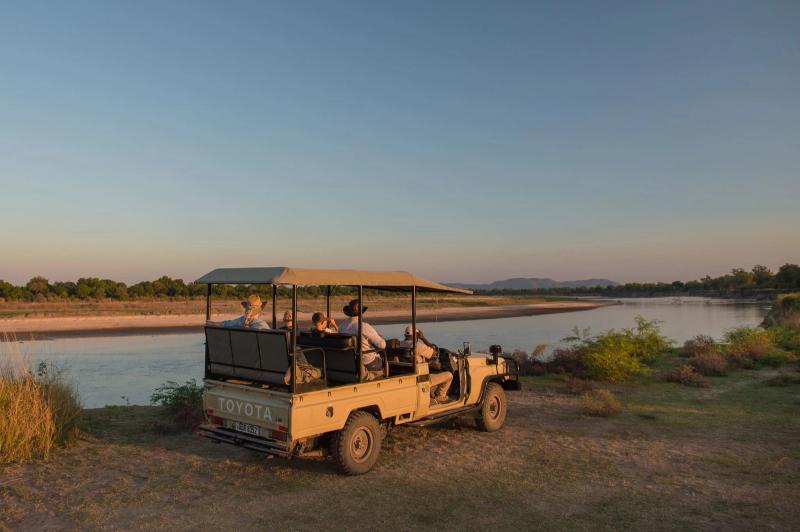
Zambia’s safari areas are vast, which makes light aircraft transfers the quickest (and the most scenic) way to link remote bush strips. Keep luggage strictly to soft-sided duffel bags (usually capped at 15–20 kg to fit light aircraft pods).
Above all, resist the urge to hop destinations every other day: three nights per camp is the golden rule, giving you time to sink into the landscape instead of spending half your safari on an airstrip.
Find Your Adventure Beyond the Thunder
Victoria Falls is a magnificent place to begin. But Zambia’s story doesn’t end where the water tumbles over the cliff.
If you’re wondering which of these immersive landscapes belongs in your own itinerary, a Rhino Africa Travel Expert can help you find the right combination, season, and pace to bring your Zambia adventure to life.
Feature Image Credit: Time + Tide Chinzombo