Growing up in South Africa, my childhood was defined by a horizon. From the edge of my family home, on a clear day, you could see the outline of the Lebombo Mountains, which form the border with Mozambique. For me, that line on the landscape wasn't just a geographical boundary. It was the edge of a living, breathing kingdom, the Kruger National Park. It was the place where I first learned to listen to the language of the bush, where my passion for wildlife was ignited, and ultimately, the compass that led me down a path to Rhino Africa, where I find myself today.

My passion for wildlife and the Kruger National Park started at a young age
A Century of Wild Legacy
On 31 May, this iconic sanctuary celebrates its 100th year of existence. A century of protecting the wild, weathering global storms, and redefining what conservation means to the world. This is not merely a milestone for South Africa; it’s a celebration of a global treasure that has shaped the modern safari industry.
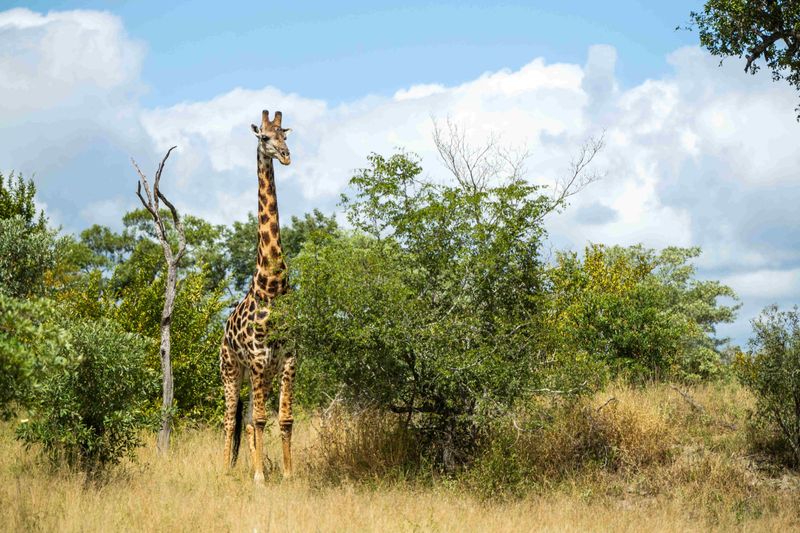
Wildlife roams free in the Kruger National Park
To truly comprehend the scale of the Kruger National Park, one needs to look at a map of the world. Covering nearly 20,000 square kilometres, this wilderness is roughly the same size as the US state of New Jersey or countries such as Israel, Qatar or Slovenia. But more than just an expanse of wilderness, it stands as a vast, self-sustaining ecosystem that has served as a bastion of biodiversity for 10 decades.
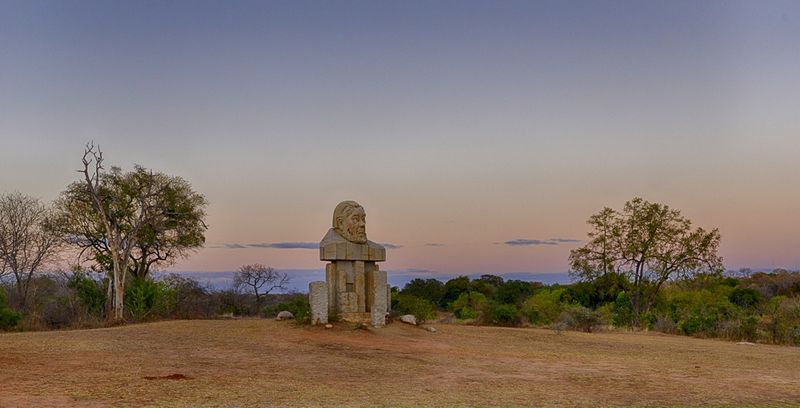
Paul Kruger's statue, the national park's namesake
Kruger's History at a Glance
But this grand wilderness did not simply materialise by accident or overnight. The journey towards the icon we know today began with small, visionary steps.
- 1898: The Sabie Game Reserve is initially established by President Paul Kruger to control hunting and protect the region's rapidly dwindling wildlife populations.
- 1926: The National Parks Act is officially passed, merging the Sabie and Shingwedzi reserves to form the Kruger National Park, securing its protection under law.
- 1927: The park opens its gates to the public for the first time. Charging a modest entry fee, it welcomes the very first eco-tourists and cements its place in the global consciousness.
Over the subsequent decades, the park expanded its borders, transforming from a wildlife refuge into a world-renowned conservation and eco-tourism model that sets the standard for international conservation strategies.
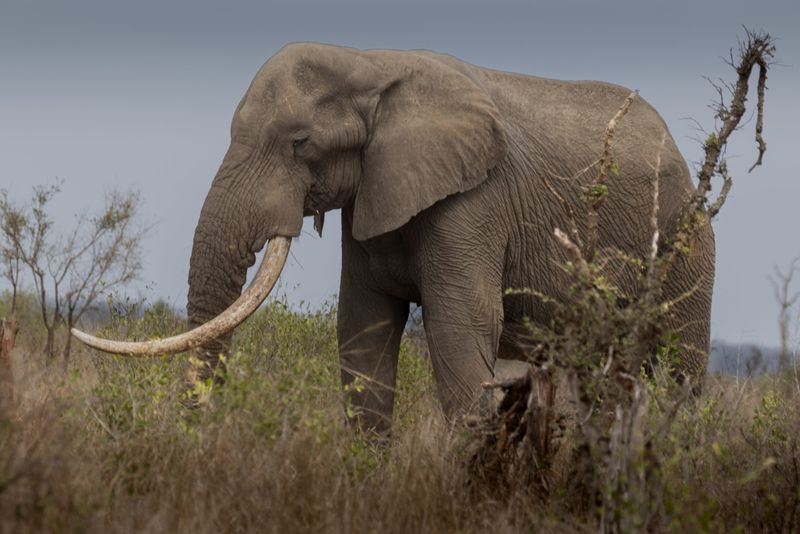
Gentle giants have roamed Kruger for decades, Image Credit: Brad Mitchell
Breaking Barriers and Facing Storms
Kruger’s history is defined by its ability to adapt and evolve. One of the most significant milestones in its modern history occurred during the 1990s when fences were dropped between the national park and adjacent private game reserves, such as the Sabi Sand.
This historic move restored ancient migratory routes, creating the Greater Kruger area. This allowed wildlife to roam freely across vast landscapes, transforming fragmented pockets of land into a cohesive wilderness.
This spirit of cross-border collaboration continued in 2002 with the formal establishment of the Greater Limpopo Transfrontier Park. This ambitious initiative linked Kruger with the Limpopo National Park in Mozambique and the Gonarezhou National Park in Zimbabwe.
Nature, after all, recognises no political borders, and this transfrontier park allowed for the restoration of historical ecosystem dynamics on a continental scale.
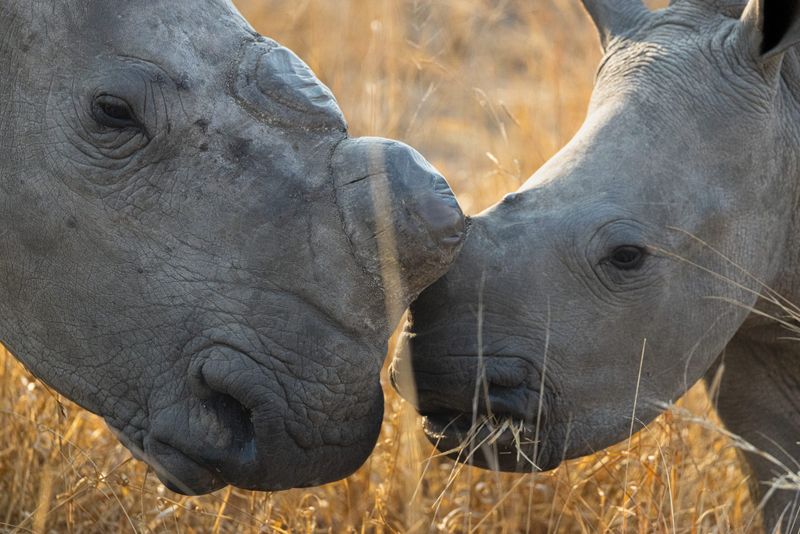
Conservation lies at the heart of Kruger National Park, Image Credit: Brad Mitchell
The Hurdles to Overcome
Yet, a century of existence inevitably brings immense challenges. The park has survived devastating natural disasters, including major historic floods that reshaped riverbanks, uprooted ancient trees, and tested the resilience of both infrastructure and wildlife.
More pressingly, the park has been the front line of the modern rhino poaching crisis. It's a sobering reality, but one that has galvanised global conservation efforts. The unwavering dedication of rangers, anti-poaching units, and canine teams continues to safeguard our endangered heritage, ensuring that future generations will still see these magnificent creatures roaming free.
Kruger National Park Timeline
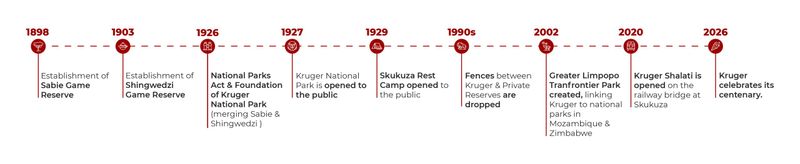
From 1898 to now, Kruger has had many milestones
Innovations in Luxury and Community
While the park remains deeply rooted in preservation, it has always balanced the raw wilderness with hospitality and eco-tourism. A perfect example of this forward-thinking spirit is Kruger Shalati, also known as the "Train on the Bridge".
Permanently stationed on the historic Selati Bridge directly above the Sabie River, this unique luxury lodge pays homage to the 1920s railway safaris that first brought visitors to the park. Glass-walled suites are suspended right over the waterway (and the wildlife that call it home), combining historical storytelling with design.
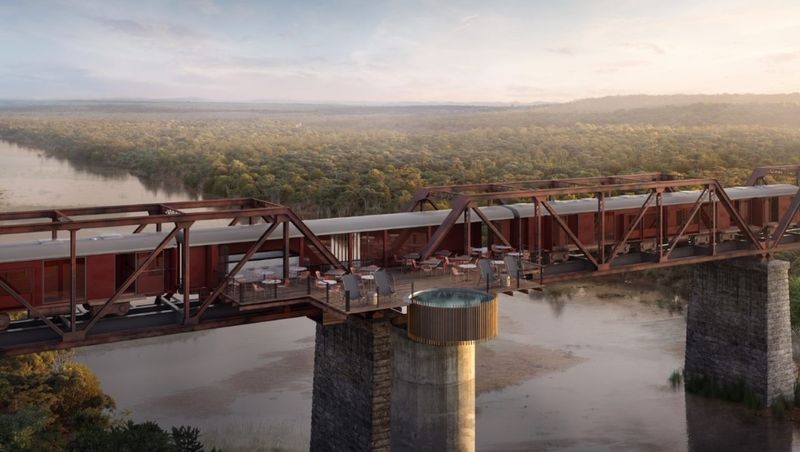
Kruger Shalati offers a truly unique vantage point of the Kruger National Park
Most importantly, the modern Kruger recognises that conservation cannot succeed in isolation. The park plays a vital role in empowering rural communities living along its borders.
Through employment opportunities, sustainable tourism development, and digital rural education partnerships, the park ensures that local people benefit directly from wildlife tourism. The future of wildlife conservation depends entirely on these human connections, proving that communities are the ultimate guardians of the wild.
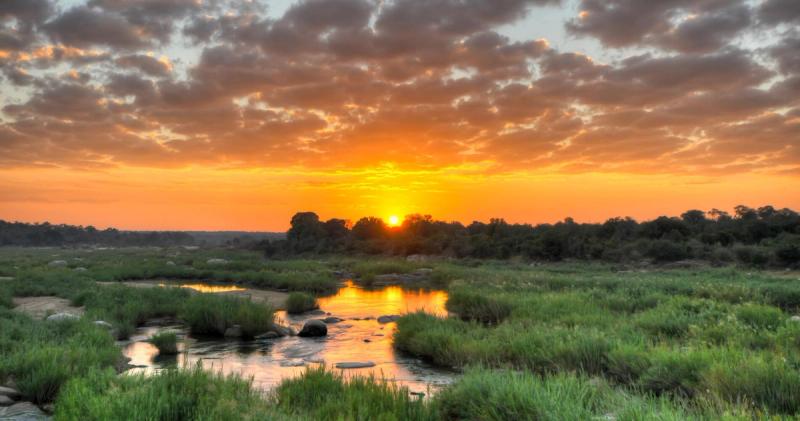
A bright future awaits our beloved Kruger National Park
Looking to the Next 100 Years
As I look back at that Lowveld horizon today, my gratitude for the Kruger is deeper than ever. It's a place of renewal, survival, and profound beauty that continues to teach us about our place in the natural world. As we cast our eyes toward the next century, our mission at Rhino Africa remains unchanged: to support the custodians of this wilderness and invite guests to experience its magic firsthand.
Happy 100th birthday, Kruger. Thank you for shaping my journey, and for continuing to inspire the world.
Celebrate Kruger's Centenary
Are you ready to witness the majesty of Africa's flagship sanctuary for yourself? Get in touch with our Rhino Africa Travel Experts to begin curating your tailor-made luxury safari adventure.