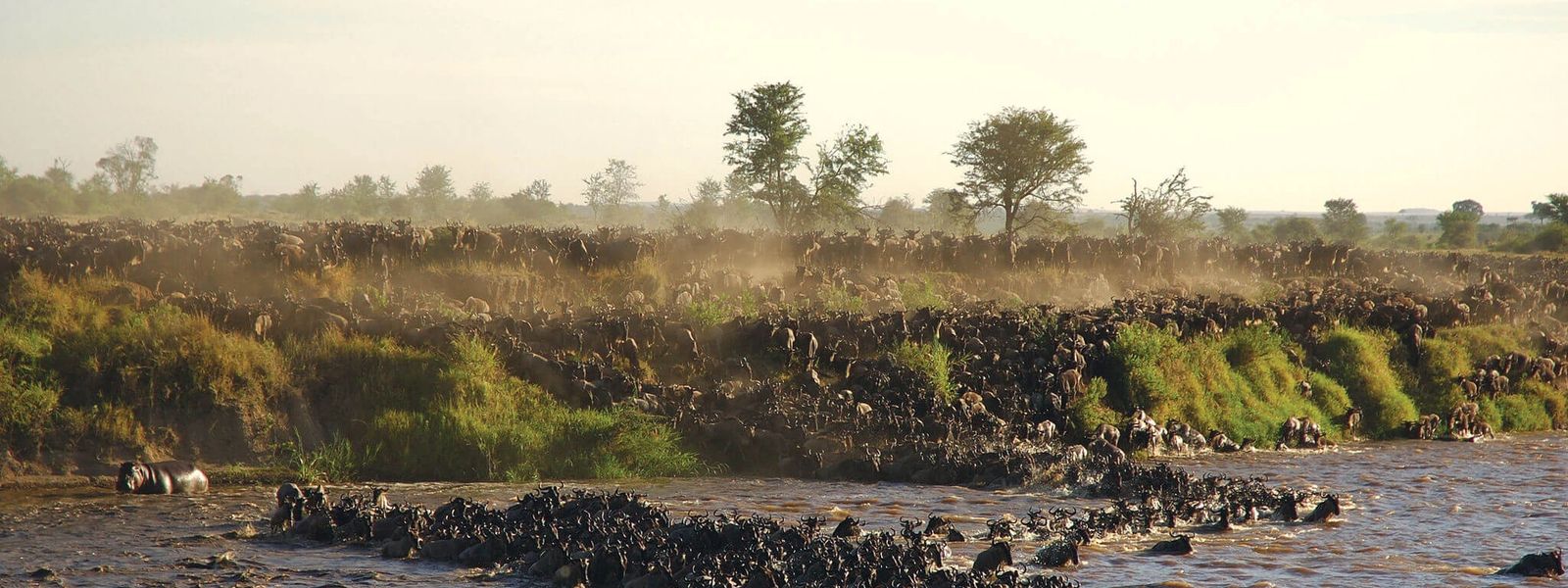

Two countries. 12 months. Zero intermission. The Great Wildebeest Migration is not a once-a-year event you catch on a long weekend. It’s a year-round loop, and understanding how it works is the single most important thing you can do before you book. Get it right, and you’ll witness one of the most extraordinary phenomena on the planet.
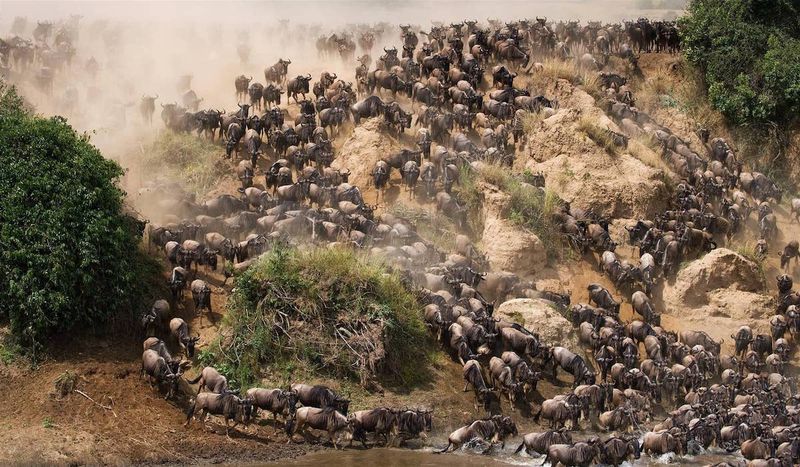
What Is the Great Wildebeest Migration?
Most people picture the migration as a single river crossing – a chaotic plunge into crocodile-filled water, resolved within a few breathless minutes. That moment is real. It’s spectacular. But it’s only one chapter of a far longer story.
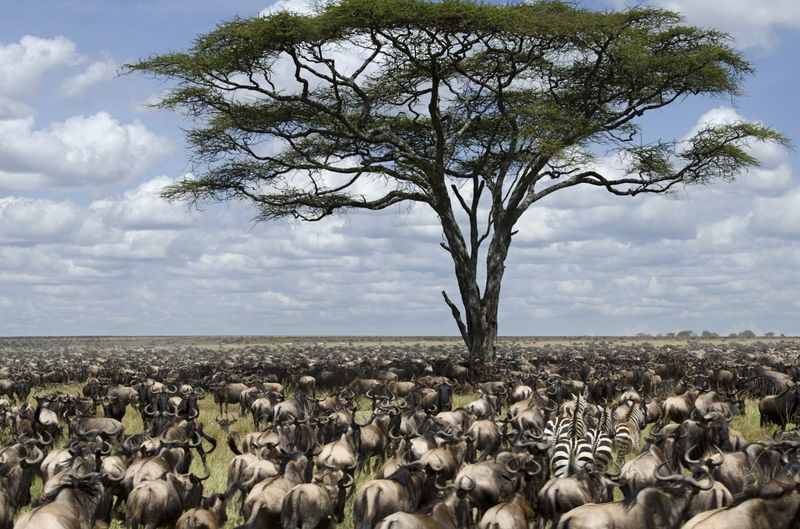
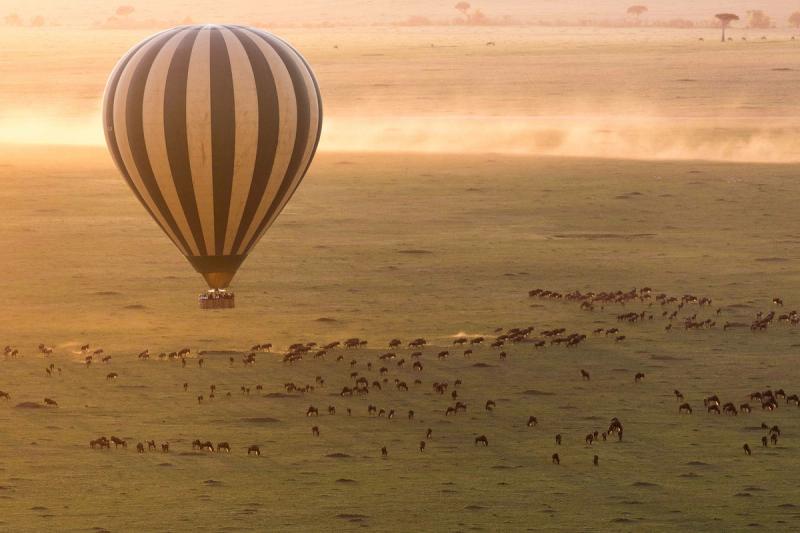
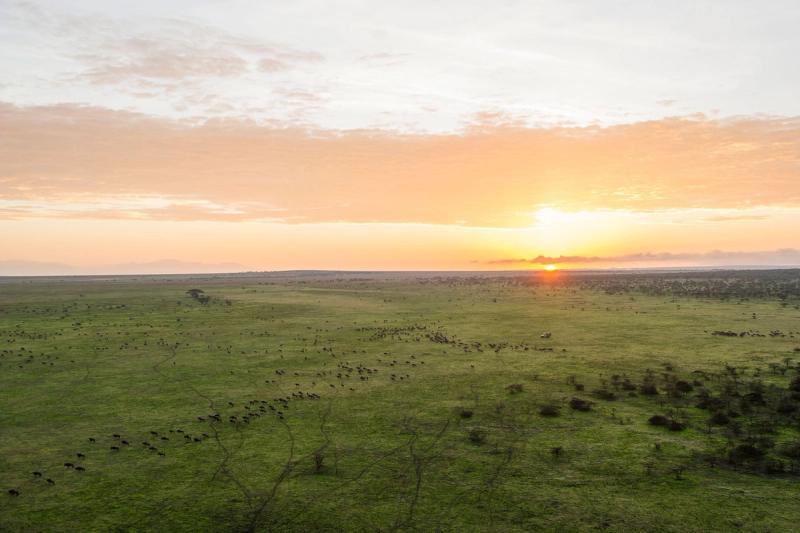
The Great Wildebeest Migration is a continuous, clockwise loop through the Serengeti-Mara ecosystem, driven entirely by rainfall and the fresh grazing it produces. Nearly two million wildebeest, joined by hundreds of thousands of zebra and gazelle, follow the rains in an instinct-driven circuit. There’s no start line and no finish. The herds are always somewhere on this route, which means that whenever you travel, you can position yourself to meet them.
The key is knowing where they’ll be, and when.
What Month is The Great Wildebeest Migration?
Since this is a year-round journey, the Great Wildebeest Migration doesn't sit still for a single month. Instead, the herds move through two countries based on the seasons. Tanzania owns the majority of the calendar, while Kenya's Maasai Mara provides a concentrated, high-intensity window.
Here’s how the year unfolds:
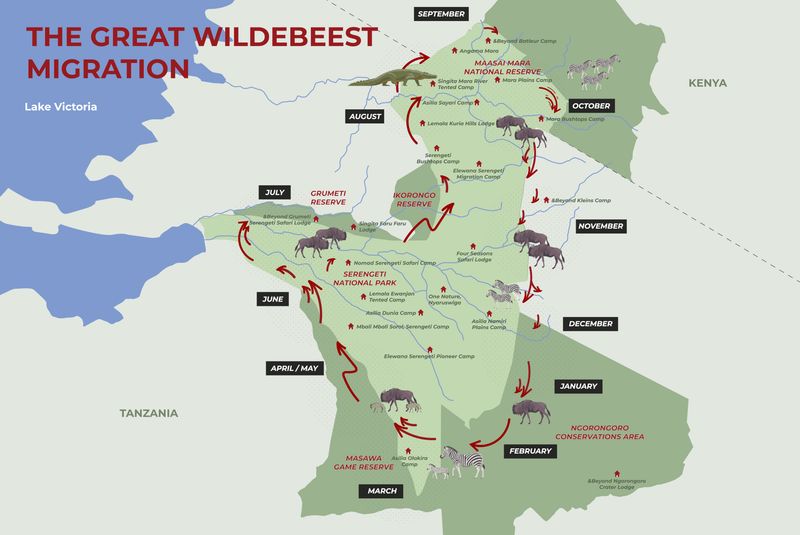
December to March: Calving Season in the South
In December, the herds settle onto the short-grass plains of the southern Serengeti and the Ngorongoro Conservation Area, drawn by soils that are exceptionally rich in the minerals nursing mothers need.
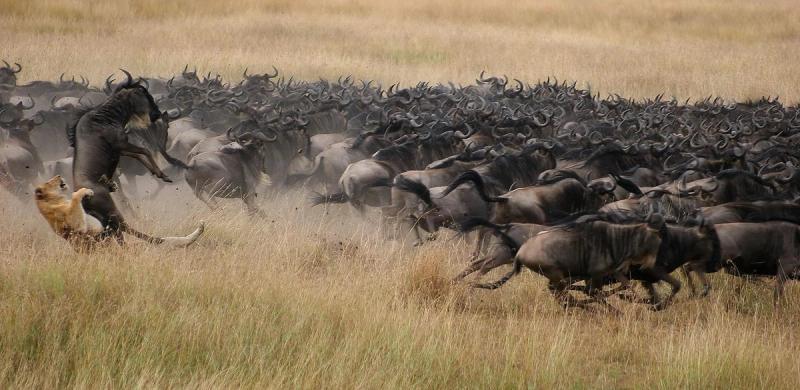
Up to 8,000 calves are born per day at peak, which naturally draws the ecosystem's apex predators. Lions, cheetahs, and hyenas work the edges of the herds, making this a raw, unedited look at survival. By March, the young calves can keep pace with the herd, and the slow march north begins.
April to May: The Long Rains and the Western Push
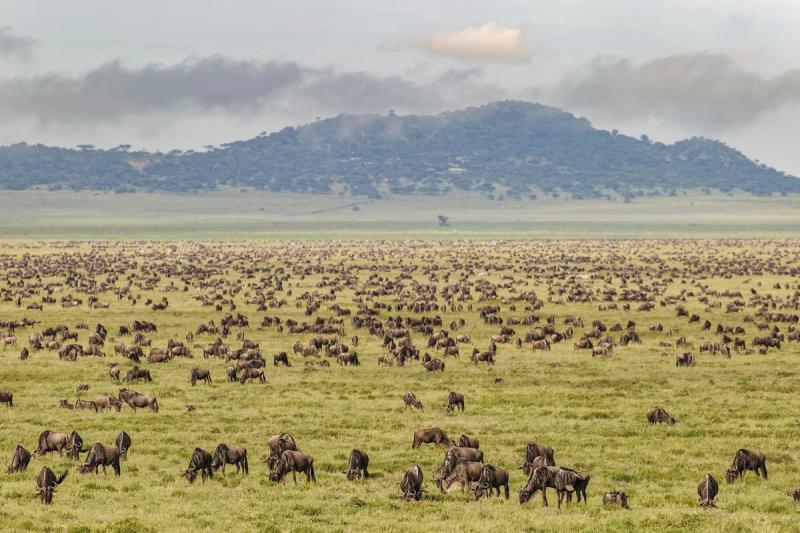
As the southern grasses dry out, the herds begin tracking northwest through the central Serengeti before funnelling into the Western Corridor. Heavy downpours arrive during this window, turning dirt tracks into mud, and several camps use this time to close for annual maintenance.
It’s the quietest season for tourism in Tanzania, and generally best suited to guests who prioritise solitude over game viewing. The wilderness becomes difficult to navigate, while the herds simply keep moving through the downpours toward the next stage of their journey.
June to July: The Grumeti River and the Western Corridor
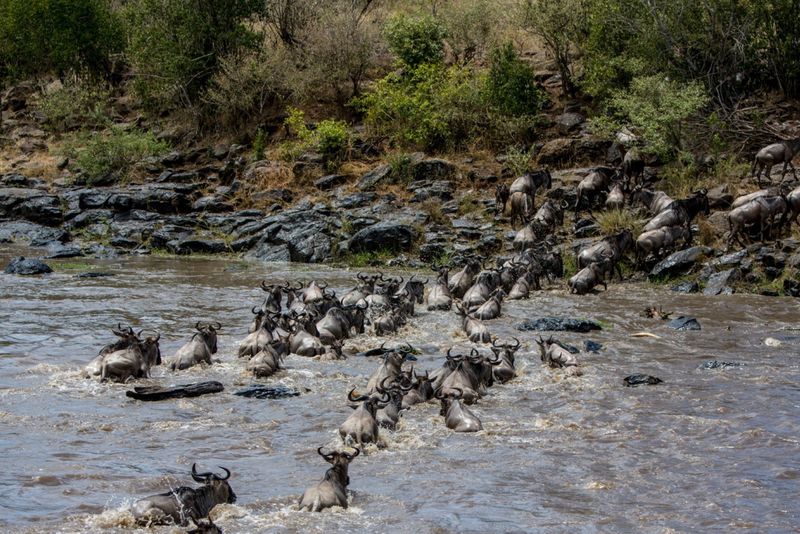
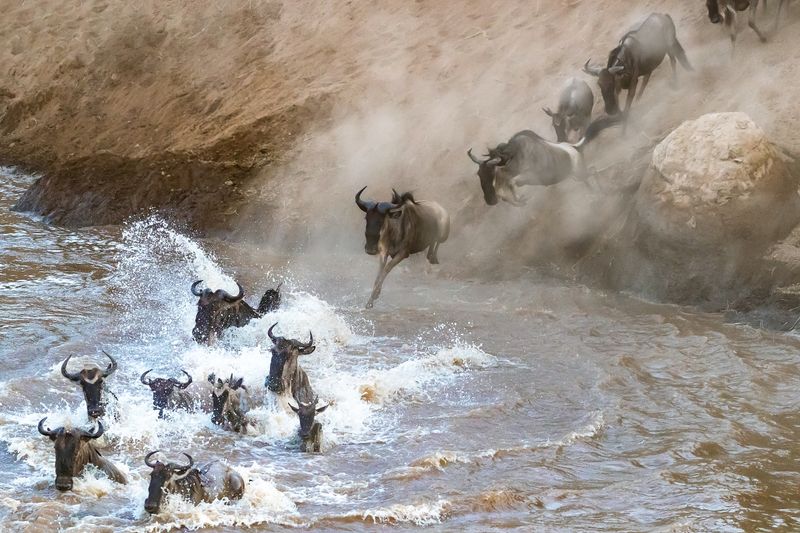
By June, the herds have massed in the Western Corridor and are pressing up against the Grumeti River. The resident Nile crocodiles here are among the largest on the continent, and they’ve had months to prepare for the gathering.
These river crossings are less famous than that of the Mara, but no less intense, and competition for a good vantage point is considerably lower. For guests who want the full experience without the crowds, the Grumeti in June is worth serious consideration.

Late July to September: The Mara River and Northern Serengeti
This is the classic phase most people picture: the herds pushing into the northern Serengeti before pressing up against the banks of the Mara River and spilling over into Kenya. These crossings happen repeatedly over a few months, rather than as a single event.
What the photographs don’t show is the real patience required on the ground. You drive to the riverbank, and you wait, sometimes for hours, while the herd builds at the water's edge, panics, retreats, and then suddenly plunges. An experienced guide who understands herd behaviour can read the subtle cues that signal a crossing is building, which makes all the difference.
Camp position matters just as much; staying close to the river means you’re minutes away when the movement starts, not an hour's drive behind it.
October to November: The Short Rains and the Return South
Once the dry season breaks and the first brief rains arrive, the herds turn back south along the eastern side of the Serengeti, moving through the Lobo Valley and Loliondo region. This phase receives far less attention than the famous river crossings, but it remains one of the most important chapters of the annual cycle.
Throughout November, they move at a steady pace across the central plains while the dust settles and the air clears. December finds them right back on the southern short-grass plains to start the clock over again.

Why the Rainfall Matters More Than the Calendar
The herds follow the scent of rain, not a strict schedule. Therefore, these seasonal timelines are guidelines rather than guarantees. In a wet year, the first river crossings can arrive in early July. In a dry year, the herds might not push through until late August.
Rainfall patterns across East Africa are also shifting, arriving later, ending sooner, and hitting the plains with a concentrated intensity that was less common a generation ago. The animals’ instinct is unchanged. The precise timing is not.
This makes current, on-the-ground knowledge more valuable than ever when you’re planning a migration safari, and it’s one of the main reasons our Travel Experts stay in close contact with guides and camps throughout the year.
Is Kenya or Tanzania Better for the Migration?
Tanzania's Serengeti hosts the lion's share of the migration calendar. The calving season, the Grumeti crossings, the build-up through the western corridor, and the northern Serengeti crossings that match the Mara in drama and beat it on solitude, all unfold in Tanzania. If you're travelling outside the July to September window, Tanzania offers significantly more opportunities to follow the migration.
Kenya's Maasai Mara earns its reputation during that dry season window. The reserve is considerably smaller than the Serengeti, so when the herds arrive, they pack into a tighter area. Sightings are more concentrated, predator activity is extraordinary, and the energy during peak crossing season is unlike anything else in Africa. If July to September is your only window and you want the most concentrated game viewing possible, Kenya is a serious contender.
Where Is the Best Place to See the Wildebeest Migration?
If a river crossing is at the very top of your list, your best options are along the Mara River in the northern Serengeti between late July and September, with the Grumeti River in June and July serving as an earlier alternative.
But the best place depends entirely on what kind of experience you want. If you prefer space over riverbank crowds, the southern plains during calving are genuinely hard to beat.
You’re placed in the middle of the action with cheetahs, lions, and perhaps even African wild dogs working the herds, and you’re sharing the environment with far fewer game-drive vehicles than you’ll find further north in peak season.
Whichever phase you choose, the single most critical factor in actually witnessing a crossing comes down to positioning and patience. You need a camp situated within striking distance of the water, paired with a guide who can interpret herd behaviour rather than just guessing. It’s the difference between a long drive after the dust has already settled and being right there when the movement begins.
When Should I Book My Tanzania Holiday?
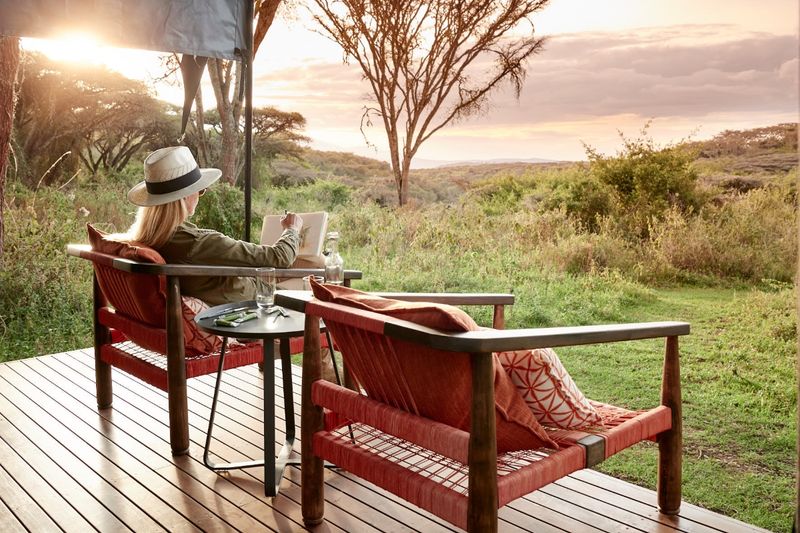
If you're hoping to schedule a safari during the peak season, we suggest booking at least 12 months in advance. If you're interested in travelling outside peak migration periods, six to eight months is often sufficient, although the most sought-after camps can still fill well in advance.
It’s also worth thinking about the broader shape of your trip before you commit to dates. A few days in Zanzibar, a morning in the Ngorongoro Crater, and time around Arusha pair naturally with a migration safari (and they’re easier to build well when the conversation starts early).

How Much Does a Great Migration Safari Cost?
The cost of a Great Wildebeest Migration safari in Tanzania shifts noticeably with the seasons, depending on when you travel and where you choose to stay.
As a general guide, you can expect rates to start at around 1,000 USD per person per night during peak wildlife months, rising to approximately 3,500 USD per person per night at some of the more exclusive camps and locations.
Because the experience can vary so widely, from simple, close-to-nature camps to highly considered, low-impact lodges, it’s worth speaking with one of our Travel Experts. They can help shape an itinerary that fits both your timing and the kind of experience you want to have.
Where to Stay in Tanzania to See the Great Migration
Where you base yourself matters just as much as when you travel. To simplify your planning, luxury accommodation across the Serengeti ecosystem generally falls into three distinct categories based on what you value most: total exclusivity, immediate river access, or predator action.
Private Concessions and Estates
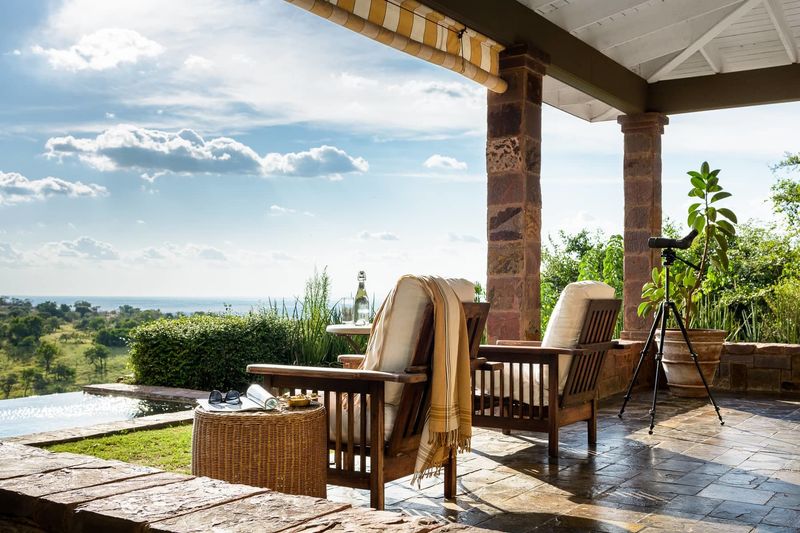
Sitting on private reserves bordering the national park, these lodges offer what the public sectors cannot: off-road driving, night safaris, and walking expeditions. Crucially, they strictly limit the number of game-drive vehicles, keeping peak-season crowds completely out of sight.
Some of our favourites include:
Mobile Camps That Follow the Herds
If you want to stay as close to the action as possible regardless of when you travel, a mobile camp is the answer. These camps move with the Migration, repositioning across the Serengeti as the herds shift north and south through the year.
A few to look at:
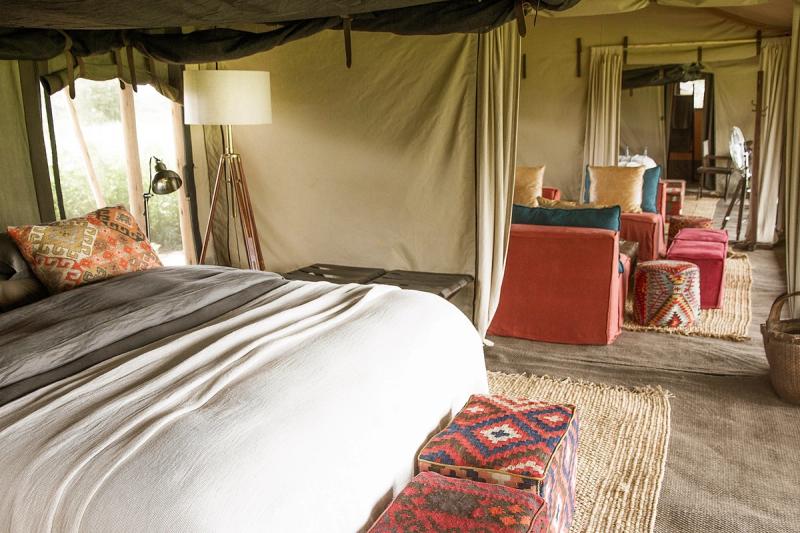
Riverfront Bases
To see a river crossing, you need to be close to the water. These camps sit right on the major river systems, meaning you spend less time driving to the banks and more time positioned for the herds to plunge.
Our top picks are:
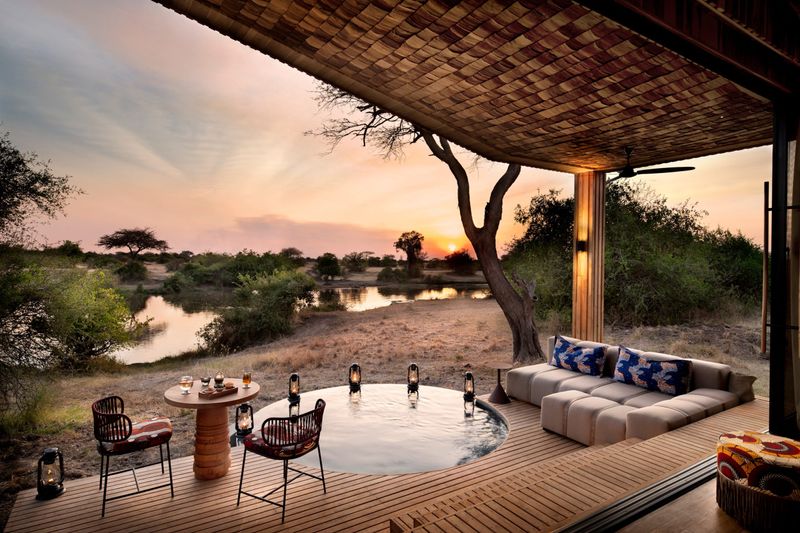
Deep-Wilderness Camps
Certain pockets of the Serengeti hold resident big cats year-round, offering intense predator viewing regardless of where the herds move.
We recommend staying at:
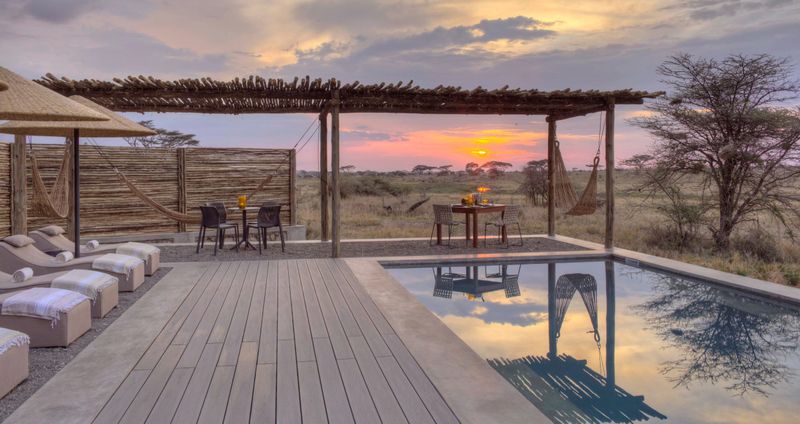
Our Favourite Great Wildebeest Migration Tours in Tanzania
The itineraries below are just a starting point, built around the key seasonal windows. At Rhino Africa, every detail gets shaped around you once we know when you're travelling and what you're after.
Tanzania Revealed: Sun, Savannah and Spice
Arusha to Zanzibar via the Serengeti and Ngorongoro Crater. Migration territory, crater wildlife, and Zanzibar’s white-sand beaches in one trip. Bush to beach, anyone?
Great Migration Safari in Tanzania
12 days across the Serengeti, Maswa, Ngorongoro, and Lake Manyara. A thorough sweep of Tanzania's northern circuit timed around the Migration.
Mara to Serengeti: East African Icons
For the river crossing window. Cross from Kenya's Maasai Mara into Tanzania's Serengeti, covering both sides of the Migration's most famous chapter.
Ready? Let’s Start Planning
The Great Wildebeest Migration waits for no one, and neither do the best camps. Get in touch with us today, and one of our Travel Experts will work out the right window, the right location, and everything in between for a seamless experience.