
For Rhino Africa Travel Expert Julia Grass, safari is hardly unfamiliar territory. After 14 years of helping guests plan their journeys through Africa, she knows the thrill of spotting wildlife and the satisfaction of a game drive that delivers exactly what you hoped for. But after a few safaris, she found there was far more to safari than simply what appeared in front of the vehicle. Her recent trip to Zambia confirmed that it’s the ideal destination for repeat safari-goers. Here’s why.

What Happens After the Big 5
You've done the classic safari. What do you look for now?
For Julia, that's a question that comes with experience. She has seen how priorities can shift once the Big 5 are no longer the only measure of a memorable game drive.
“When you’ve done a few safaris, you start to realise it’s not always about how many animals you see,” she says. “You become interested in how the landscape works, how the guides read it, and how animals behave differently depending on their surroundings. You start noticing all the little things you might have missed before.”
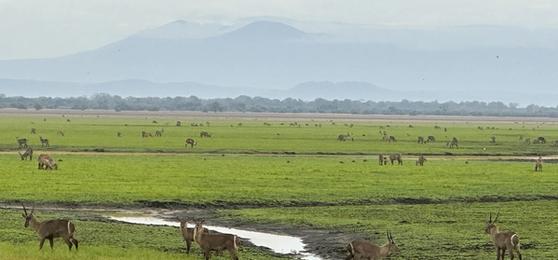
That was part of what drew her to Zambia. In the Lower Zambezi, the broad river becomes part of the experience, with elephants moving along its banks and fish eagles calling overhead. Further north, the Luangwa Valley stretches across vast country, where amber savannah meets riverine forest.
Here, a safari can take you beyond the passenger seat of a 4x4. And that’s precisely what makes Zambia so compelling when the classic safari is no longer new.
Chapter 1: You Have to Earn the Sighting
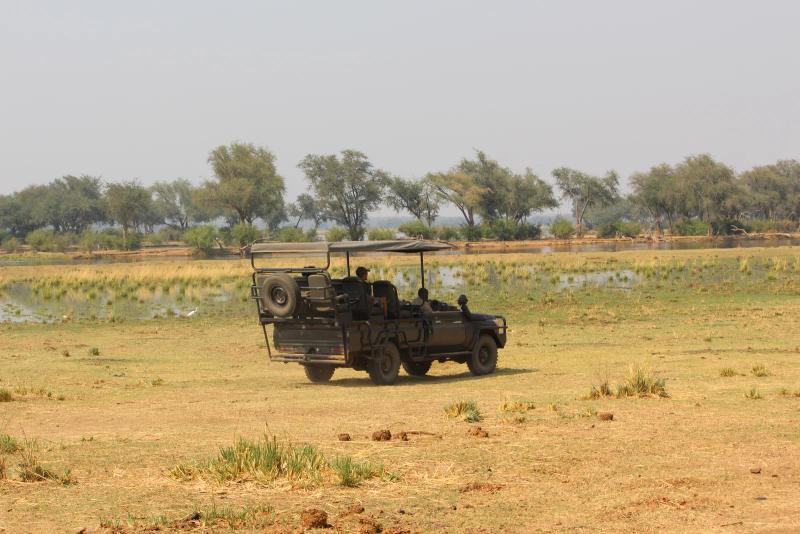
On the itinerary, it reads simply: game drives, morning and evening. What that doesn't capture is how differently a Zambian game drive feels.
The roads stretch through enormous tracts of wilderness, with mopane thickets and open bushveld unfolding in every direction and, often, little sign of another game-drive vehicle. Somewhere out in the brush, wildlife is moving on its own terms, and the thrill lies in piecing together where it is.
“In high-density reserves like Sabi Sand, you can spot animals more easily,” Julia explains. “In Zambia, there are large areas to cover, and the vegetation, rivers and riverbanks can make some areas difficult to access. Tracking takes more patience because you can’t always get close by vehicle.”
Julia liked that unpredictability. The guides were constantly reading the landscape, piecing together clues that could easily go unnoticed: a paw print pressed into the dust, a broken branch, an alarm call rising suddenly from the trees.
Rather than driving from one sighting to the next, she found herself completely absorbed in the story unfolding around her. There was no radio crackling with news of the next animal; instead, she and her guide listened together to the sounds of the bush, pausing to interpret the signs around them. Each clue became a new sentence, each kilometre a new paragraph.
Chapter 2: The River as a Second Guide
A game drive tells one story. In the Lower Zambezi, the river tells another.
The Zambezi runs broad and slow along the northern edge of the national park, its surface catching the enormous African sky. Beyond the water, Zimbabwe's escarpment rises in the distance, while the Zambian side gives way to winterthorn groves, open floodplains, and towering trees gathered along the banks. It's a landscape shaped by water, and here, the river is as much a part of the safari as the wildlife.
Julia’s journey began with a short road transfer from the airstrip before continuing by boat to Sausage Tree Camp. The boat wound through the glistening channels, the banks slowly unfolding around them.
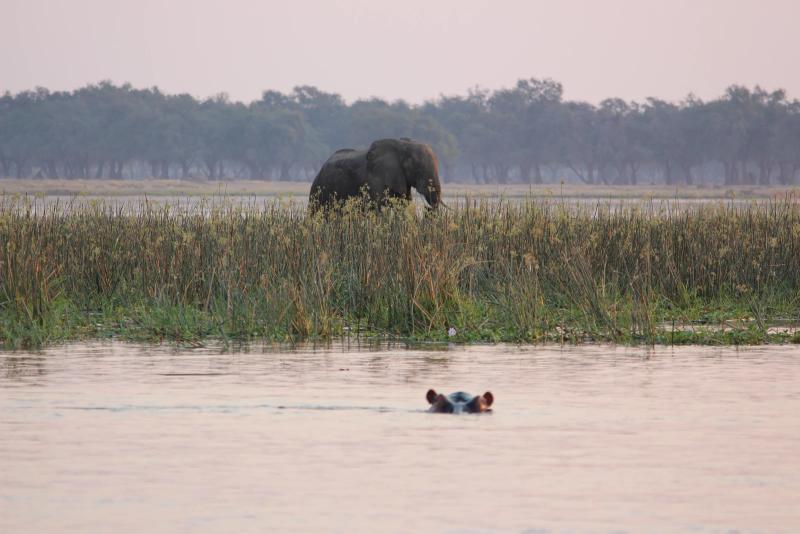
Kingfishers darted between the reeds, elephants fed along the shore, and the gentle lap of the river became the soundtrack to her arrival. What could have been a routine transfer was already a wildlife experience in its own right.
It was an immediate highlight. Julia recommends taking the boat when possible, turning the journey to camp into part of the safari itself.
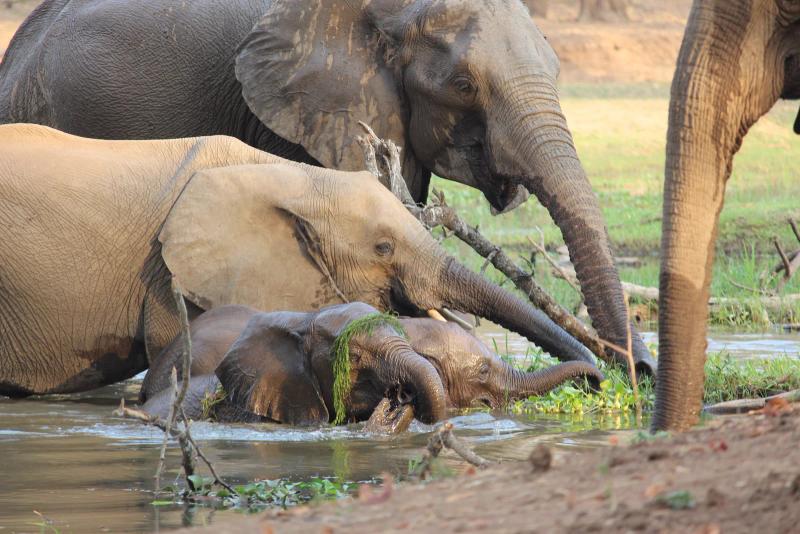
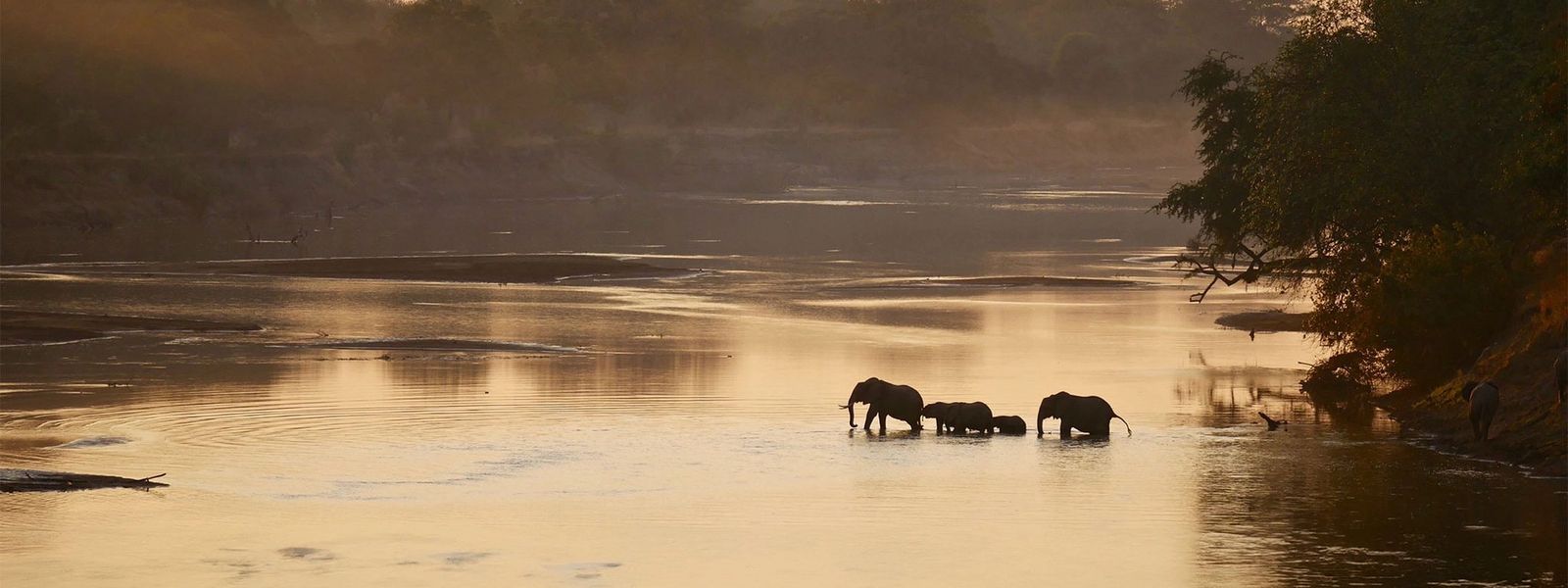
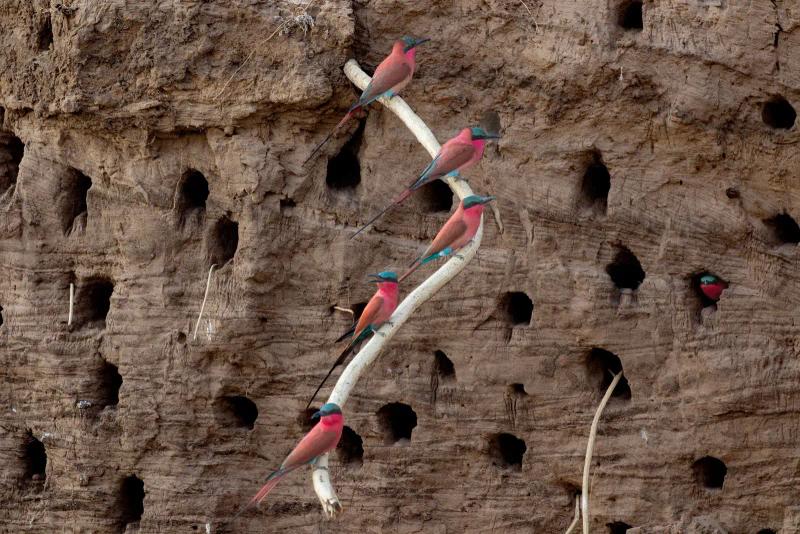
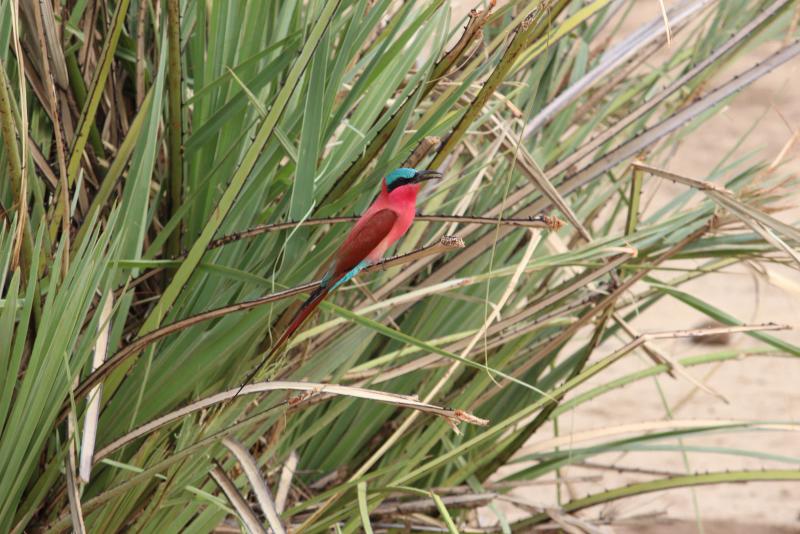
At Sausage Tree, the river remained a constant presence. Mornings began with mist rising off glassy water. Evenings ended under violet skies. During one boat cruise, Julia spotted rare nesting carmine bee-eaters flitting along the clay banks. On another, a herd of elephants plunged into the river, trunks raised high like snorkels as they cut through the current.
“There are always things you haven’t seen,” Julia says. “Even after all these years of travelling, you can still see something completely new.”
Julia's advice is simple: if you've already seen the bush from four wheels, give yourself a chance to experience it from the water, too.
Chapter 3: Leaving the Vehicle Behind
If the river offered Julia a different way into the wilderness, walking brought her closer still.
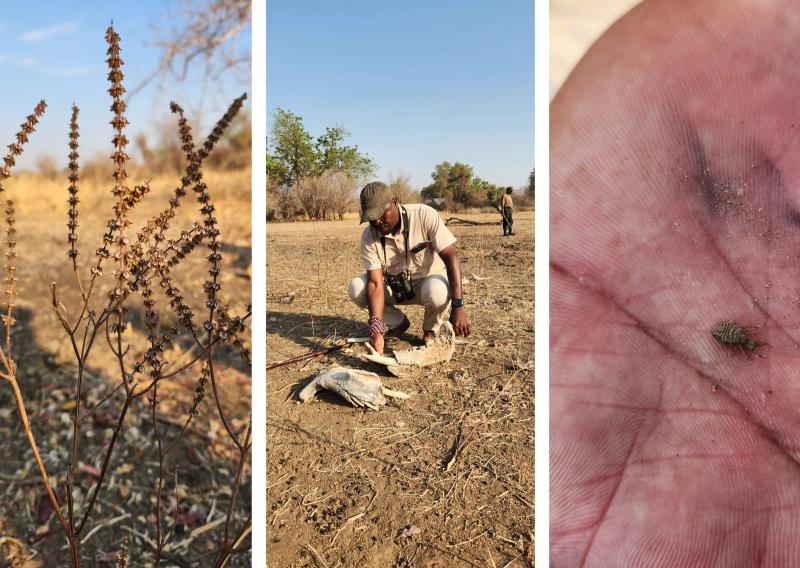
South Luangwa National Park is renowned as the birthplace of the walking safari. Once she stepped down from the safari vehicle, the scale of the landscape felt different. The Luangwa Valley stretched around her in sweeping grasslands and shaded thickets, but the further she walked, the more her focus moved from the horizon to the ground beneath her boots.
Her guide pointed out the finer details, from tracks pressed into soft earth and dung left by passing herds to the intricate architecture of termite mounds and indigenous flora holding the ecosystem together. From an elevated riverbank, they watched a pod of hippos below, before continuing on foot.
“You notice so much more when you’re walking,” Julia says. “It’s not just about the animals. The guides know everything about the trees, the plants, the insects, and what’s happening around you.”
And then, of course, there was the wildlife.
And then came the kind of encounter that reminded her the wildlife was never far away. One moment, Julia was following subtle clues in the earth; the next, she came across a baby giraffe. Its legs seemed almost comically long beneath its still-small body, giving it the slightly awkward grace of an animal that had only recently learned how to move through the world.
“It was the cutest thing ever,” she laughs.
That’s the beauty of being on foot. Without a game-drive vehicle framing your view, the bush feels bigger and more immediate. A faint track in the dust, a pod of hippos below the riverbank, or a flicker of movement in the grass becomes worth stopping for.
Chapter 4: The View From Above
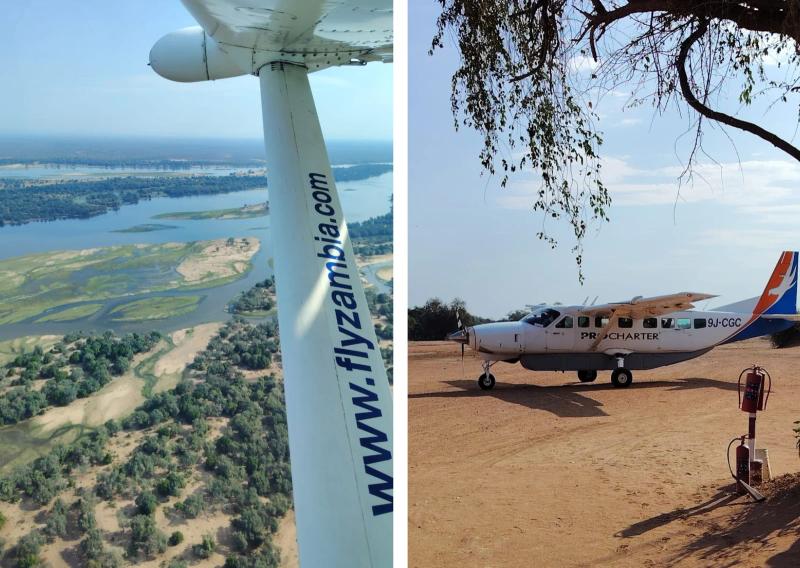
After the intimacy of walking, Julia saw Zambia from the sky. A light aircraft lifted off over South Luangwa, revealing just how varied the landscape was beyond the tracks and riverbanks she had been exploring on the ground.
From above, the Luangwa River wound through a patchwork of floodplains, grasslands and woodlands, its course changing with the landscape around it. Valleys opened into broader plains, dense vegetation gave way to open country, and escarpments and mountain ridges rose beyond it.
From the ground, these places felt separate. From the air, they became part of one vast and constantly changing landscape.
“I was surprised by how beautiful the landscapes were,” she says. “You have these incredible mountain backdrops, and then suddenly the vegetation changes completely. It was difficult to compare it to anywhere else.”
That’s what stayed with her. Each way of exploring Zambia, from the game drive to the river, the walking trail and finally the flight, revealed something the last one couldn’t.
On the ground, she noticed the tracks. On the water, she watched elephants move through the river. From above, she could finally see how the river, grasslands, woodlands, valleys and escarpments connected, giving her a clearer picture of the landscape she had been exploring all along.
The Safari Julia Would Recommend
By the time Julia left Zambia, she had a much clearer idea of who she would send there.
“You need to be someone who is happy to slow down and to spend time looking,” she says. “If you’ve done a few safaris already, Zambia gives you something different to explore.”
For repeat safari-goers, Julia recommends around seven to eight days, ideally split between the Lower Zambezi and South Luangwa – and if time and money allow, visit Kafue National Park. She suggests travelling between May and September, when cooler, drier conditions make it a particularly good time to explore the bush.
Beyond the dates and itinerary, though, she suggests coming with patience and open eyes, leaving some room for the unexpected.
Ready to See Safari Differently?
If you've already done the classic safari and are wondering what’s next, Zambia might be your answer. From the riverways of the Lower Zambezi to the walking trails of South Luangwa, our Travel Experts can help you build a journey around the kind of safari you want to experience. Get in touch and let’s start planning.