
What does it take to bring a place back from the brink? Is it the return of predators to the plains? Or is it a young man planting his first garden, a guide learning to read the tracks beneath his feet, or a vet saving lions from snares? Gorongosa National Park’s legendary recovery isn't just a triumph of nature. It's a story of human grit, belonging, and hope. I sat down with six people behind the scenes to discover the work they’re doing to bring Mozambique's wild heart back to life.

Learning the Landscape
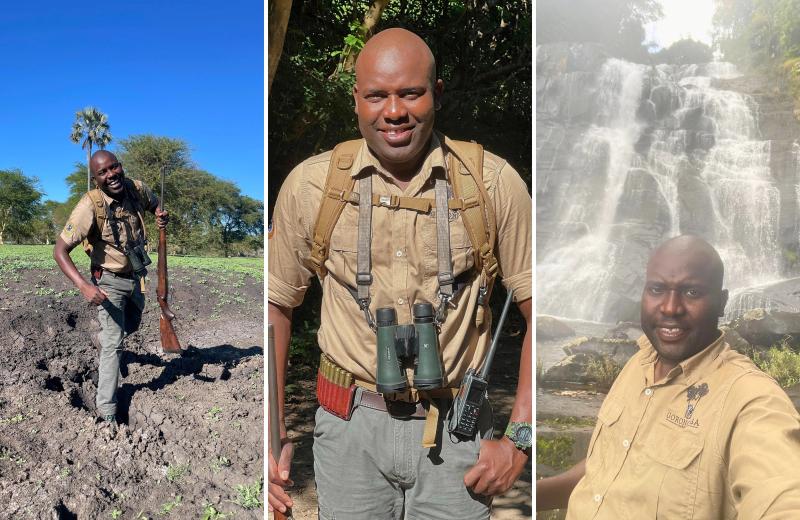
Togara "TJ" Charingira’s first ambition wasn’t to guide – it was to drive a Land Cruiser.
He grew up in north-western Zimbabwe, where the bush was both his playground and his classroom. Long before he realised guiding could become a job, he spent his childhood watching the subtle movements of the wild, fostering an instinctual understanding of animal behaviour.
That deep-rooted connection kept him going through years of hard graft. Working security guard shifts by night and studying by day, TJ eventually earned his licence, building a career that saw him named Safari Guide of the Year in 2021.
Yet what truly defines TJ isn't the trophy; it's his infectious curiosity, which seems to have no limit. In Gorongosa, he's drawn to what most people walk straight past, finding as much wonder in a dung beetle as in a lion pride.
“Guiding is an endless class,” he tells me with a smile. His humility is humbling, and I can’t help but feel inspired.
Ask TJ what sets Gorongosa apart, and he won't pin it down to one landmark. He speaks of the fever trees, the sand forests, and the landscape's endless layers waiting to be decoded. After 17 years in the safari industry, he has found in Gorongosa more than a place to work – it is home. And now, for the first time in years, he’s close enough to Zimbabwe to spend Christmas with his mother.
The boy who once just wanted a steering wheel has found a much bigger world to explore.
Curiosity Takes Root
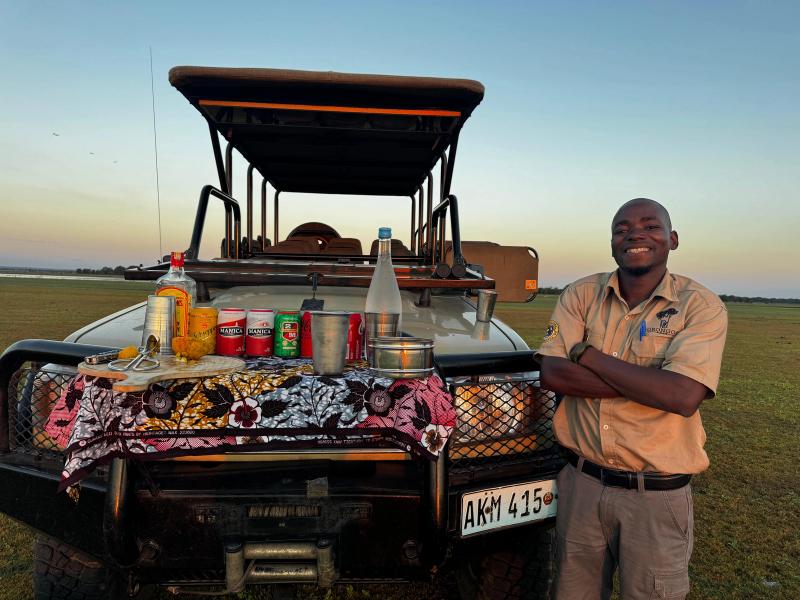
When I met Felizardo, he had just stepped into a role he’s spent years preparing for. At 26, he had worked his way up from dishwasher, housekeeper, and waiter to earn an elite tracking qualification before becoming a professional guide at Gorongosa.
And it’s easy to see why this position is perfect for him. When Felizardo talks about wildlife, everything else in the room fades away. Even in his spare time, he devours books on animal behaviour, plants, and the subtle ways ecosystems communicate. When the topic turns to his favourite species, he’ll bypass the park’s famous predators entirely – and choose the humble termite.
“Termites are ecological engineers,” he explains with an enthusiasm that is instantly contagious.
Yet the most powerful part of Felizardo’s story isn't just his deep knowledge of the wild. It’s what his journey represents to those watching him. Growing up in the village beside the park, he carries a profound sense of responsibility to show the next generation what is possible when passion and drive meet opportunity.
Young boys in his neighbourhood now see someone from their own streets leading guests through the wilderness, and they begin to imagine a different future for themselves. His friends and family look at the park with fresh eyes, seeing conservation not as a fence, but as a doorway.
“I’m an example for my community,” he says simply.
Every time he heads out into the bush, he is showing them exactly where that path can lead.
Make Something Grow
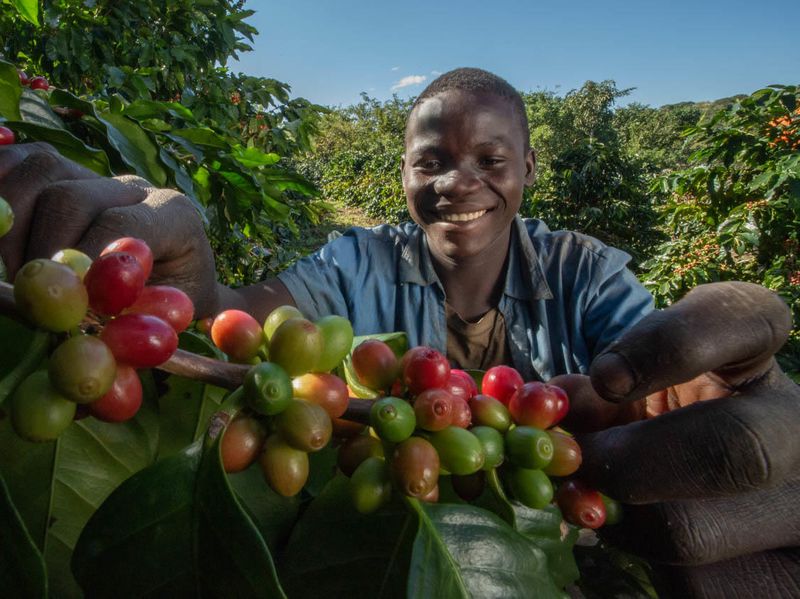
By five in the morning, Ricardo was already out in the dirt, trying to stay one step ahead of the warthogs. They had developed a taste for his grass, and keeping them off can be a full-time job in itself.
Working at Gorongosa had been his dream since childhood. When he finally landed a casual gardening contract at Chicari Camp, he poured everything into coaxing the grounds into bloom. And when his three-month contract ended, Ricardo didn't walk away.
Instead, he kept showing up every single day – unpaid, tools in hand – simply to carry on planting.
That devotion didn't go unnoticed. Seeing a young man who refused to abandon what he had started, camp management created a permanent role specifically for him. Thus began the Planting Project at Chitango Lodge.
Visit today, and you’ll see: Ricardo’s touch is everywhere. He tends to impala lilies, aloe vera, and delicate blossoms that open only for the 11 am sunlight. Guests stop to marvel at the gardens, but for Ricardo, the real reward lies elsewhere: his earnings pay his brothers' school fees and help build his family's home.
“When we look around camp since we started, it looks very different. It makes me really proud.”
What began as a temporary contract has become a living legacy – a testament to what happens when you nurture both the land and the people who care for it.
For now, though, Ricardo still arrives before the sun, tending to what he's planted and keeping an eye out for the next warthog.
Caring for What Returns
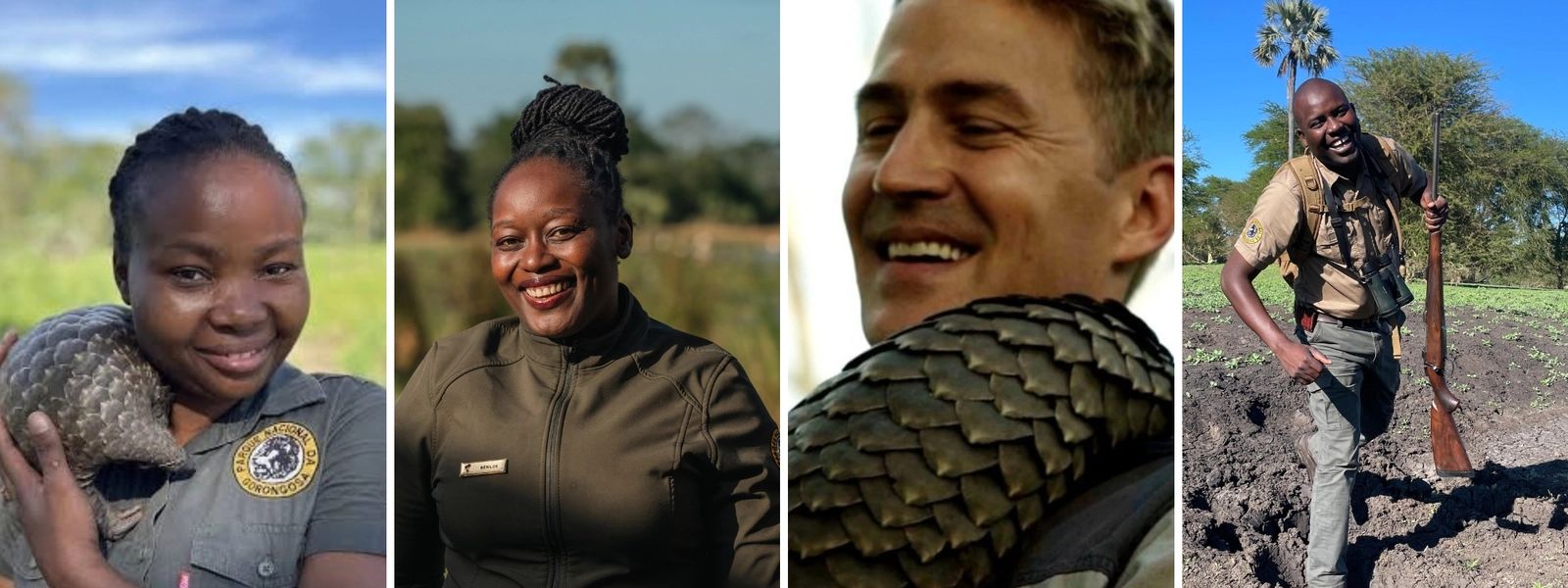
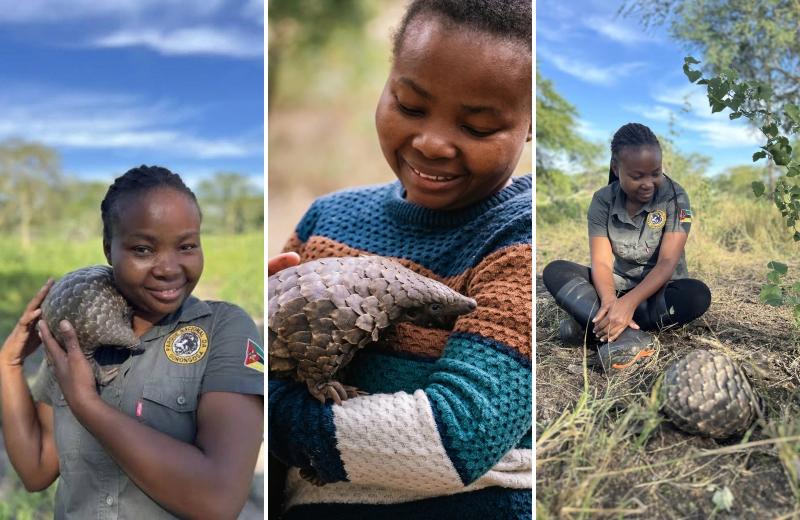
When Tambo arrived in Mercia Angela’s hands, the orphaned pangolin weighed only 350 grams.
For four months, Gorongosa’s park veterinarian fed him milk by hand and taught him to forage for ants. She watched him build his strength step by step until he was ready to return to the wild. She still catches glimpses of him on game drives – a tiny life she nursed, now living free in the bush.
Tambo’s story is just one victory in the broader work Mercia has led since 2018. She was there when the park introduced its first 51 African wild dogs, a population that has now surged to over 200.
Yet restoration carries a heavy emotional toll. Mercia stands at the sharpest edge of recovery, treating animals caught in the crossfire of human conflict. She tells me about a lion trapped in a wire snare, the metal cutting deeply into his neck. It took five long months of repeated treatments to heal his wounds. Today, that same lion leads a great pride of his own.
As Mercia speaks about the cruelty of those snares and the pangolins she rehabilitates, the weight of it hangs between us, and we both shed tears. It's the harder side of conservation: knowing the suffering is man-made. Yet when I ask what keeps her going, she doesn't dwell on the heartbreak.
“We need wildlife. Wildlife needs us.”
Guests who visit Gorongosa can step behind the scenes and into the pangolin rehabilitation centre or join the veterinary team in the field. They aren't just seeing a finished postcard – they're witnessing the raw, hands-on work of bringing an ecosystem back into balance.
Welcoming People Into the Wild
The first night Benilde Elclisiana dos Santos Elias arrived at Gorongosa, something outside her room started screaming.
Unfamiliar with the sounds of the bush, she assumed an animal was under attack and burst into tears. The next morning, she discovered her terrifying visitor was nothing more than a harmless bushbaby.
When she shares this, we both laugh. And it captures Benilde perfectly: warm, animated, and delightfully human.
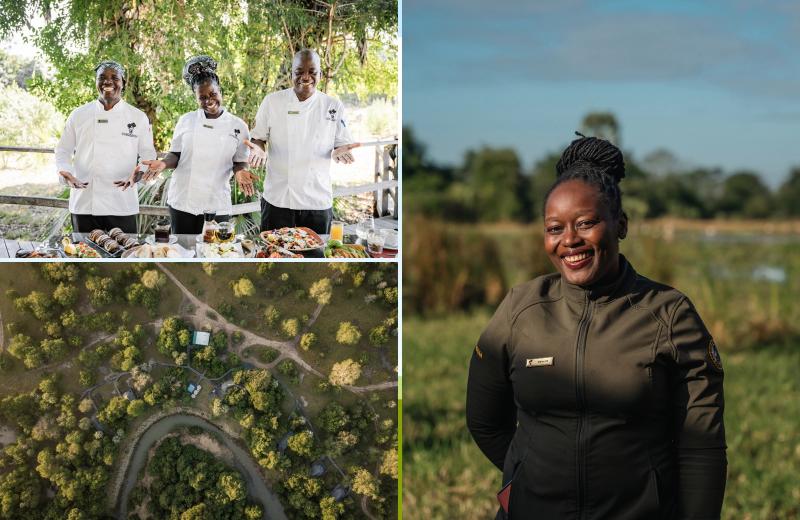
As manager of Muzimu Lodge, she is up before dawn to get things running. But her favourite time comes later, at mid-morning, when the team gathers around the fire to swap stories from the night before and prepare for the day ahead.
“We work as a family.”
At Muzimu, that means no task is too small to share. Guides step in to help, maintenance staff pitch in, and Benilde moves wherever she's needed.
Yet her connection to Gorongosa extends far beyond daily operations. Deeply moved by the park’s revival, she wrote a poem to share during a bush dinner, wanting to offer guests something richer than standard safari chatter. She wrote not about the animals, but about the people and passion quietly restoring the landscape.
When she recites it, her words touch everyone who hears them, our team at Rhino Africa included. Now, her poem even closes company presentations, a lasting testament to its impact.
Benilde laughs gently at the thought. Behind the scenes of this wilderness, she's given Gorongosa’s human story a voice.
The Bigger Picture
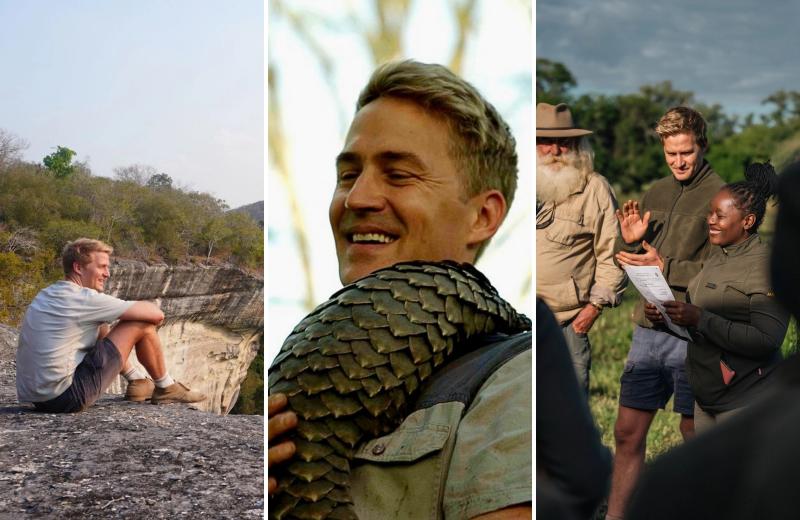
The first time Douglas Flynn saw Gorongosa, he was looking down from an aeroplane window.
On one side of the park boundary, the land was bare and degraded. Then the plane crossed the line, and the canopy closed in – green, dense, and alive.
As Gorongosa’s conservation director, Doug embodies quiet leadership. Raised on a reserve in Zambia, conservation is simply in his blood – though he rarely makes the work about himself. Instead, he sees his role as championing the rangers, scientists, and surrounding communities, ensuring the collective feels seen, valued, and empowered.
For Doug, restoration is ultimately about stepping back and trusting the land.
“You don't have to give nature a chance; you have to give it just half a chance.”
That philosophy extends to the people who call the region home. He believes Gorongosa’s future depends on local schools, healthcare, and sustainable jobs, so the community has a real stake in the park's survival. It’s a legacy he hopes will last for generations – both for the local families and his own.
“I would love my girls to inherit a thriving, beautiful, intact set of African landscapes, with Gorongosa being one of those,” he reflects.
I asked him for his favourite sound in the park, and he chose the deep, pre-dawn call of the ground hornbill. Why? Because as large, long-lived territory holders, these endangered birds are among the first to disappear when a habitat degrades, and the hardest to bring back.
Hearing them booming across the misty plains at first light isn't just a pleasant sound; it's living proof that an entire ecosystem is healing from the roots up.
Become a Part of Gorongosa’s Story
Gorongosa’s recovery can be seen in the wildlife returning to its plains, in the forests growing dense again, and, perhaps most importantly, in the people whose lives are changing alongside it. Because a landscape can only truly recover when the people who call it home have a future in that recovery too.
To visit Gorongosa is to step into something much larger than a standard safari, and if you’d like to be a part of this remarkable narrative, we’d love to help get you there. Get in touch with our team, and let the journey begin.