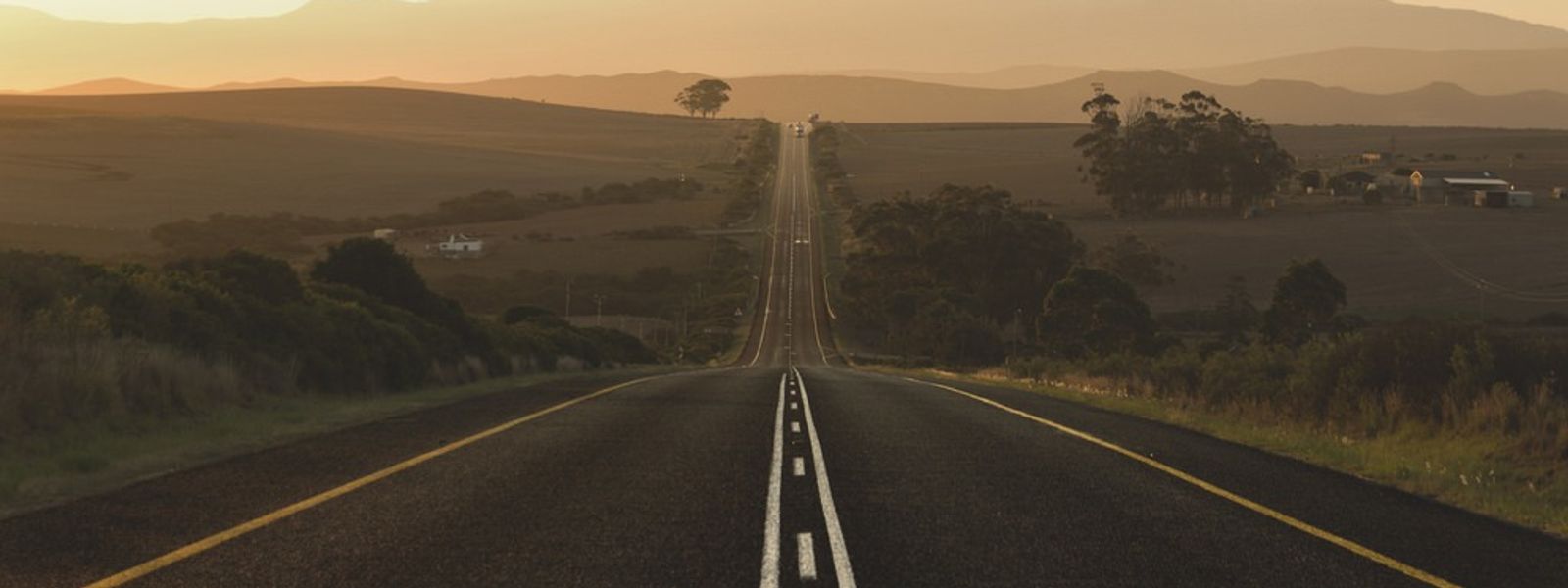

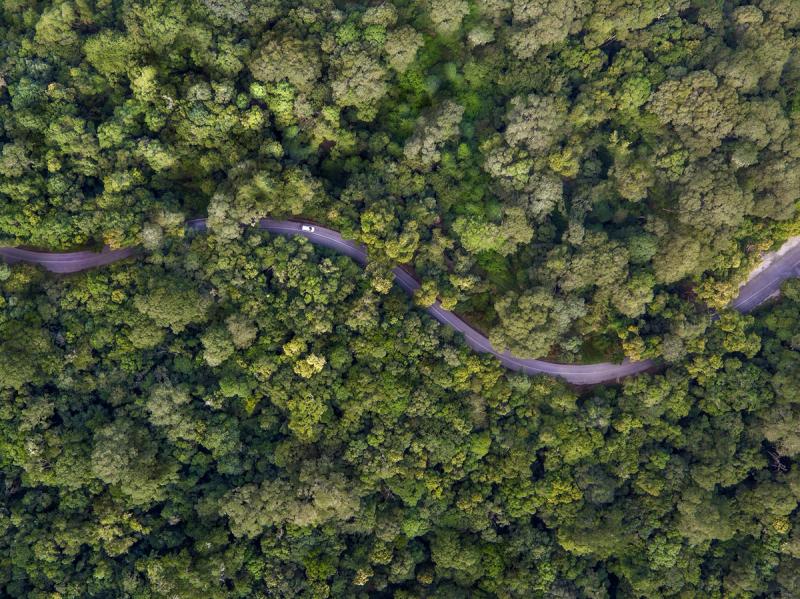
Choosing between the Garden Route and the Whale Route is a bit like choosing between two exceptionally charismatic siblings. Both trace the southern coastline and belong on any shortlist of the best road trips in South Africa, but they couldn't be more different. One is the restless adventurer, tempting you with ancient forests and winding mountain passes. The other is perfectly content to linger over a coffee while southern right whales breach offshore. Neither is better. It simply depends on the kind of road trip you're after.
At a Glance
Before we introduce you properly, here's how the two stack up side by side.

What Are These Routes?
South Africa's southern coastline holds two of the country's most rewarding self-drives. They sit side by side on the map without being remotely similar in character. One is lush and layered. The other is wide, windswept, and wonderfully unhurried.
The Garden Route
Stretching from Mossel Bay to the historic hamlet of Storms River, the Garden Route has a habit of rewriting your plans. What starts as a quick photo stop becomes coffee, then lunch, then an afternoon activity you hadn't planned for.
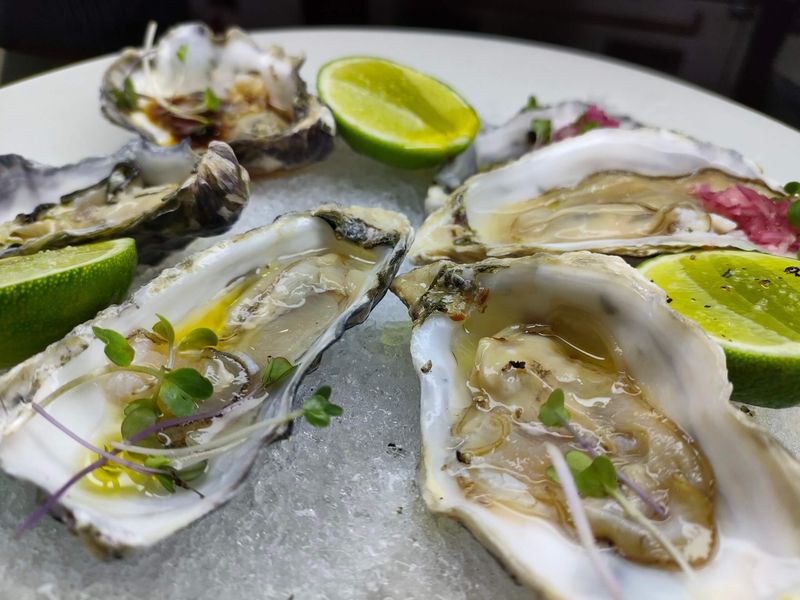
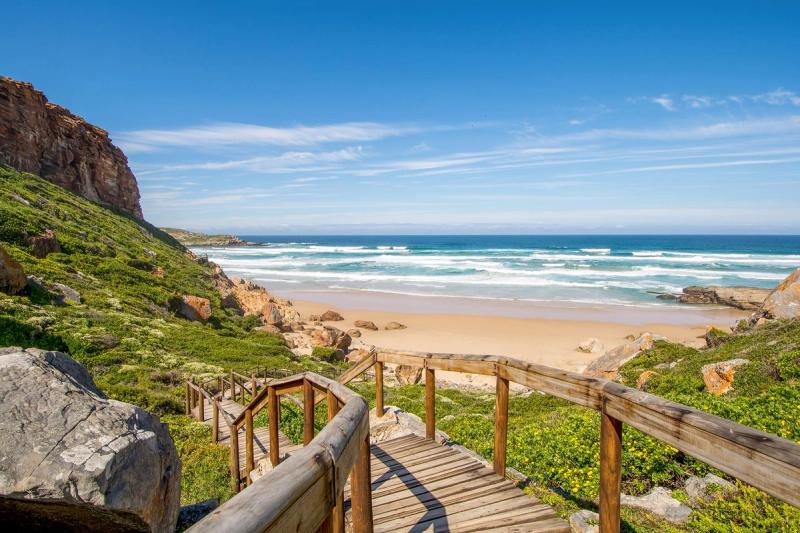
The challenge is never finding something to do. It's deciding what to leave for next time. Knysna pulls you in for fresh oysters and a leisurely meal by the lagoon. Plettenberg Bay's golden beaches and the coastal trails of Robberg Nature Reserve are so enchanting that you may never want to leave.
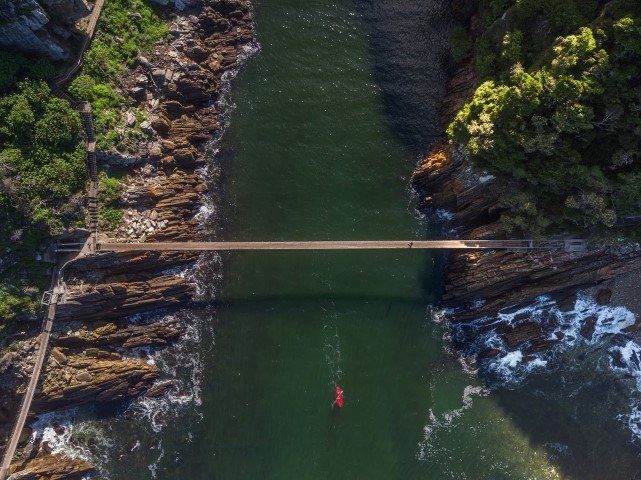
Further east, Tsitsikamma turns up the magic with its iconic suspension bridges, swaying above the Storms River mouth, inviting you to trade solid ground for soaring views and an ancient forest canopy tall enough to make you feel delightfully small standing beneath it.
And just when you think you've seen the best of it, bottlenose dolphins appear in the surf, the indigenous forest fills with birdlife, and the malaria-free Big 5 reserves within easy reach remind you that a safari is never far away.
A typical Garden Route itinerary moves from Mossel Bay to Knysna, on to Plettenberg Bay, then finishes among the forests of Tsitsikamma – five to seven days is the sweet spot.
The Whale Route
Cross into the Overberg, and things slow down almost immediately. The roads grow quieter, the horizon opens up, and before long the landscape has persuaded you to do the same.
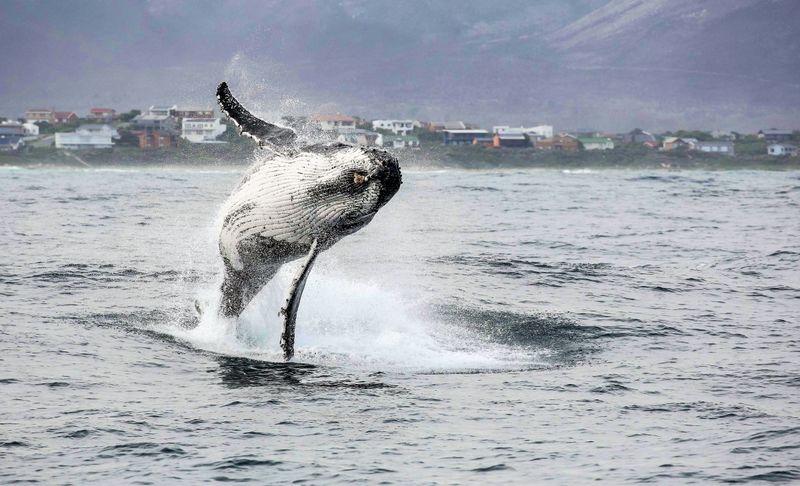
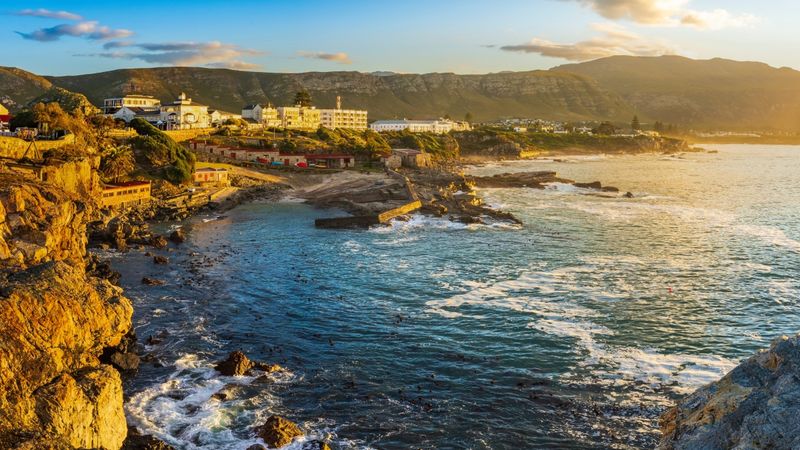
The trick here isn't packing more into the day. It's giving yourself permission to do less. Mornings begin with the light shifting across Walker Bay, followed by an unhurried wander along the Hermanus Cliff Path, keeping one eye on the water. Expect 12 km of sweeping coastal views and some of the best land-based whale watching you'll find.
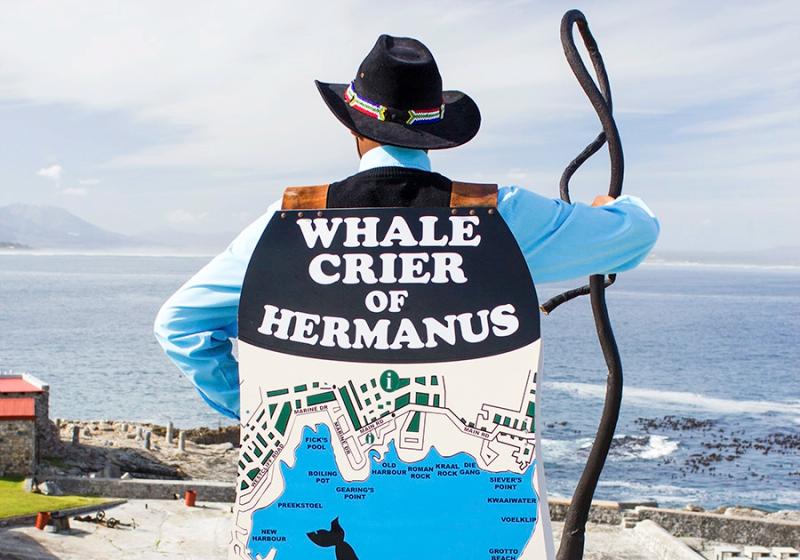
And if you suddenly hear a long, booming horn echoing through town, don't be alarmed. That's the Hermanus whale crier, announcing a fresh sighting with a horn made from dried kelp. It's exactly as eccentric and charming as it sounds.
Just inland, the Hemel-en-Aarde Valley offers another reason to stop. Cool-climate pinot noir and chardonnay have put the region on the wine map, and a tasting paired with lunch overlooking the vineyards is reason enough to take the scenic route.
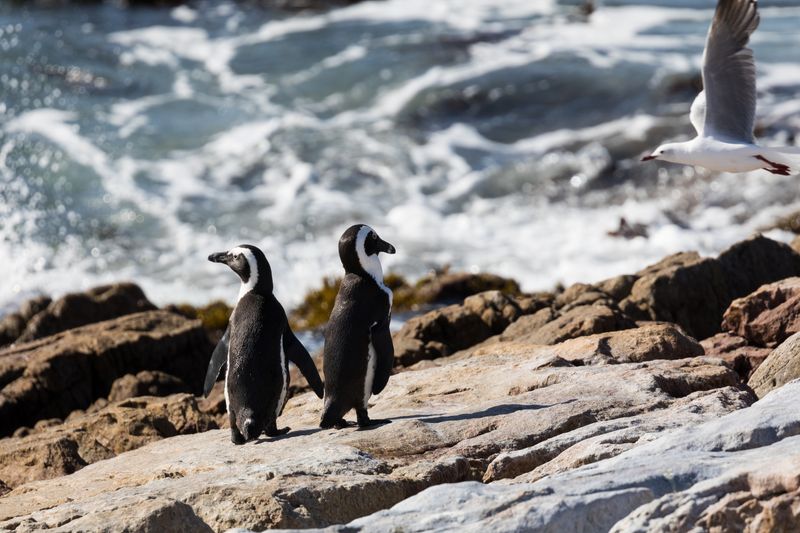
Further along, Betty's Bay has a lively African penguin colony, while De Hoop Nature Reserve offers white dunes and open fynbos where bontebok and Cape mountain zebra roam. By the time you reach Cape Agulhas, the southernmost tip of Africa, you'll have stopped checking the time altogether.
A typical Whale Route itinerary runs from Hermanus to De Hoop Nature Reserve, finishing at Cape Agulhas. Three to four days is ideal, because taking your time is the whole point. But if you can't commit to the full route, Hermanus also makes a fantastic day trip from Cape Town.
Two Personalities, One Coastline
It's tempting to compare these two side by side as though one might eventually win. A more useful question is which kind of traveller you are, because these routes tend to attract different company.
Forests vs Fynbos
The Garden Route treats scenery like a highlight reel it can't wait to show you. Ancient yellowwood forests become tidal lagoons, lagoons give way to mountain passes, and passes drop back down to a stretch of coast where you'll find yourself pulling over for reasons you can’t quite explain. It rarely gives you time to settle into one view before offering a better one. Even on a second or third visit, it finds ways to catch you off guard.
The Whale Route swaps forests for fynbos. Rolling hills stretch towards the sea, limestone cliffs drop sharply to the water below, and the sky feels wider than it has any right to. This stretch of the Overberg, between Hermanus and Cape Agulhas, comes alive with wildflowers in spring and southern right whales in winter.
Birdsong vs Blowholes
Wildlife comes in many forms along the Garden Route. Dolphins regularly play in the waves off Plettenberg Bay, and birdlife fills the forest canopy.
It’s also home to popular wildlife sanctuaries like Monkeyland, Birds of Eden, and Jukani. Here, you can walk among free-roaming primates, wander through one of the world's largest free-flight aviaries, or see rescued big cats up close.
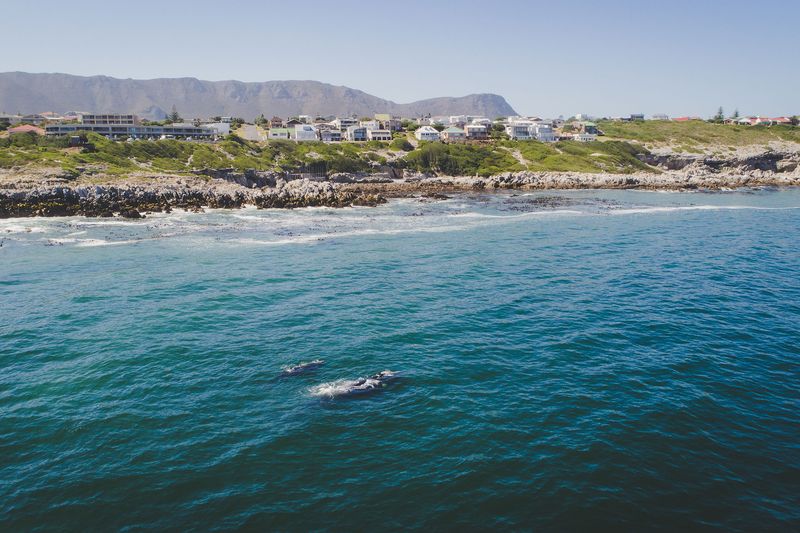
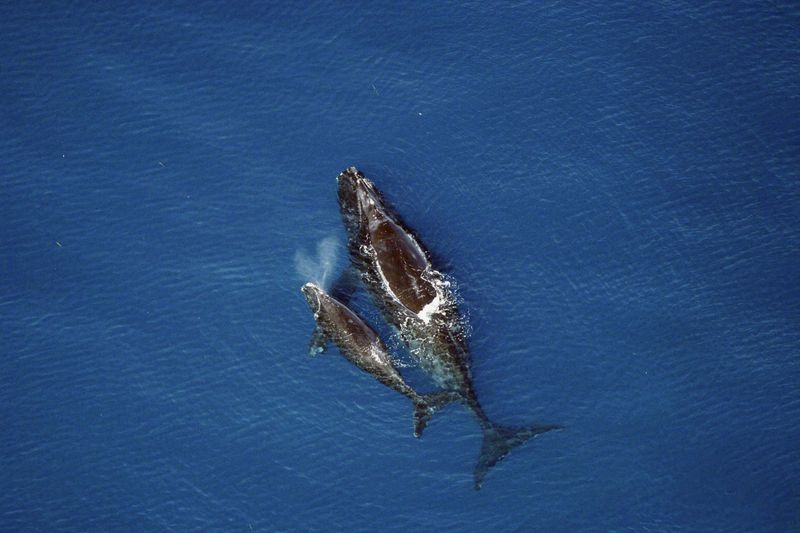
By contrast, the Whale Route invites you to linger a little longer, and rewards you handsomely for doing so. During peak whale season, southern right whales surface close enough to the Hermanus Cliff Path that you hear their blow before you see them. No vehicle between you and what you're watching, no schedule. Just open water and something grand moving through it.
Betty's Bay's African penguins, Cape fur seals, and the birdlife across the Overberg wetlands are well worth seeking out too, though they rarely compete with what's happening offshore.
Fast-Paced Action vs Slow Living
This is where the two routes really part ways.
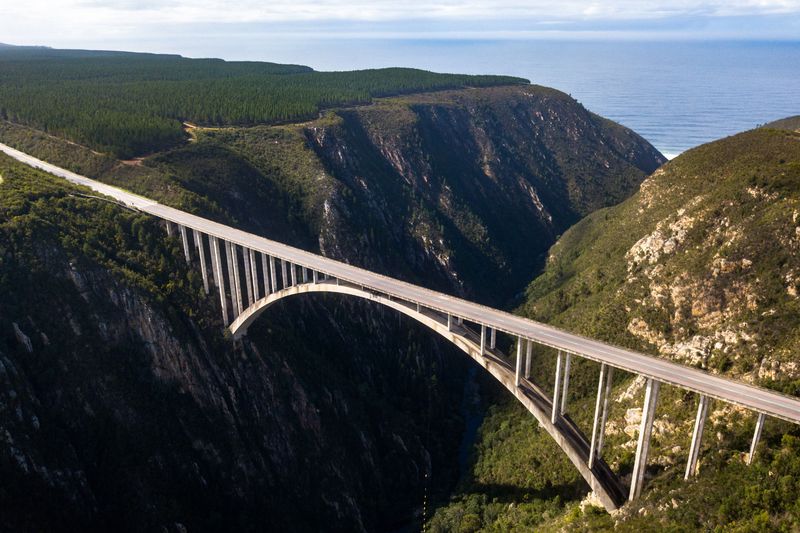
Few roads pack as much variety into a day's drive as the Garden Route. Zipline through the Tsitsikamma forest, paddle kayaks up winding river gorges, learn to surf at Victoria Bay, or step off Bloukrans Bridge – the world's highest commercial bungee jump – if the mood takes you. The towns are lively, the evenings tend to develop their own plans, and the route has a remarkable talent for filling days you thought you had left free.
The Overberg takes the opposite approach. An hour on the cliff path watching marine life move through Walker Bay. A leisurely afternoon in the Hemel-en-Aarde wine valley. A walk across De Hoop's white dunes that takes twice as long as planned because the light was too good to rush past.
If the Garden Route is the sibling who books all the activities, the Whale Route is the one who suggests another glass of wine and asks what the rush is.
Coastal Feasts vs Wine Estates
On the Garden Route, eating well rarely requires a plan. Fresh Knysna oysters at the waterfront while deciding what's next. A farm stall you only meant to glance at, until the smell of a pie out of the oven pulls you in, and twenty minutes later you're back in the car with a wedge of local cheese and a bottle of handcrafted gin.
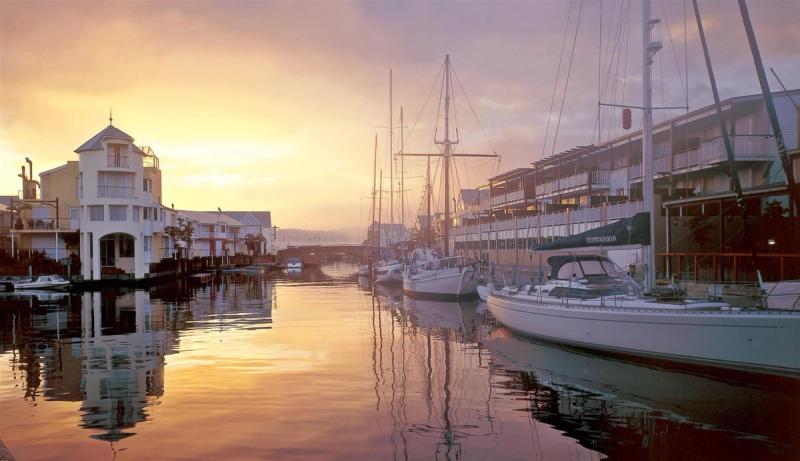
Knysna also has a knack for stretching the afternoon. Settle in at a waterfront restaurant with a wine flight and watch yachts drift across the lagoon, or claim a table with a view and let the next stop wait a little longer.
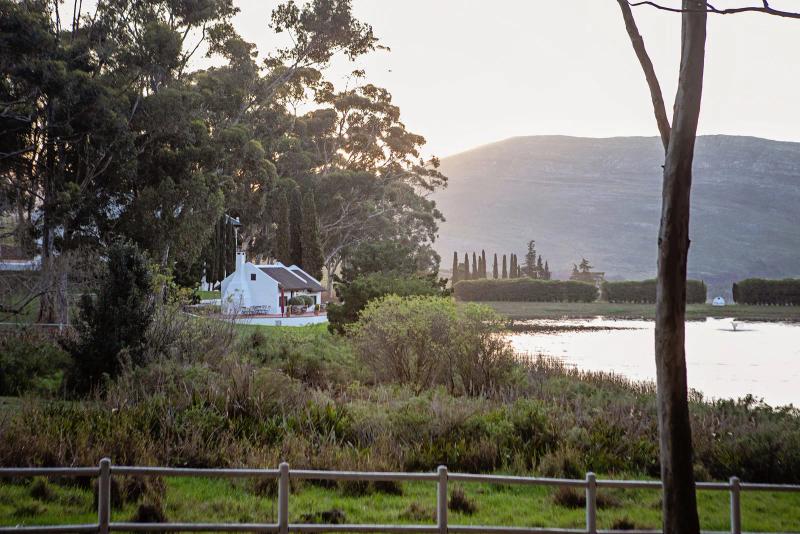
Around Plettenberg Bay, the food scene has a story behind it. Bramon was the estate that pioneered viticulture in the area, and its sparkling wines have since picked up serious international recognition. The restaurant sits among the vineyards with the mountains beyond, making it the kind of place where tapas and a glass of bubbly become the afternoon’s plan.
The Whale Route asks you to pause a little more. Here, a meal isn't something you squeeze in between stops. It often is the stop. The Hemel-en-Aarde Valley, translating to "heaven and earth" (and it lives up to the name), produces some of South Africa's finest pinot noir and chardonnay. Hamilton Russell Vineyards, the estate that started it all in 1975, remains a pilgrimage for wine lovers.
Back in Hermanus, La Pentola is the spot serious food lovers seek out: a small, considered restaurant above the Old Harbour with a creative South African menu and the bay spread out below. And if you want something truly unique, Bientang's Cave is carved into the cliffside above the ocean, serving line fish and seafood potjie at tables a few metres from the water.
Always Moving vs Happy to Linger
Still can't decide? Picture your first morning.
On the Garden Route, you've already ticked off a forest walk before breakfast. By the afternoon, you're slurping oysters on the waterfront, and by sunset you're squeezing in one last viewpoint because, well... you're already here. Somehow, every day fills itself.
On the Whale Route, you're on the porch with a coffee that's slowly going cold. Not because you've forgotten about it, but because another southern right whale has surfaced in Walker Bay. Nobody's checking the time. Nobody needs to.

Getting There and Around
Both routes suit a self-drive well. Roads are in good condition, and distances between stops are manageable, which is fortunate given how often you'll want to pull over.
The Garden Route is a 300-kilometre stretch from Mossel Bay to Tsitsikamma. You can fly directly into George Airport (GRJ) from Cape Town or Johannesburg to start right in the heart of the action, or take the direct 4.5-hour drive east from Cape Town along the N2.
Right on Cape Town's doorstep, the Whale Route is a scenic 1.5 to 2-hour drive along the coastal R44 or N2 highway that brings you straight into Hermanus, making it an easy addition to a city stay. Continuing east along the N2 from Hermanus toward Mossel Bay takes roughly 3.5 hours.
Can You Do Both?
Short answer? Yes, and we'd strongly recommend it.
Start with the Whale Route and let it ease you into the journey before the Garden Route gradually turns up the energy. Kick things off in Cape Town, let the Whale Route slow everything down, then point the car east and watch the landscapes transform.
Fynbos gives way to indigenous forest, and sleepy seaside hamlets unfold into vibrant coastal towns, and before long you're paddling river gorges or exploring local markets. It's a natural progression that shows just how many versions of South Africa can fit into a single road trip.
Here's how we'd do it:
- Cape Town: 3 to 4 nights
- Cape Winelands: 2 nights (a worthwhile addition for anyone who enjoys food and wine)
- Whale Route: 2 to 3 nights
- Garden Route: 3 to 4 nights
- Safari: Safari: 3 to 4 nights at Gondwana or Botlierskop along the Garden Route, continue into the Eastern Cape for Amakhala, or fly to Kruger National Park for the classic safari experience.
If you're travelling with children and have a little extra time, consider taking the scenic Route 62. A stop in Oudtshoorn to see the town's famous ostriches is always a hit.
So, Which Route Is Right for You?
We've helped plan enough of these journeys to know that the question is never really which route is better. It's which one suits you. Both will exceed what you expected. They just do it very differently.
Choose the Garden Route if…
- You love variety and don't mind your itinerary changing along the way
- You're travelling with family, or simply like having plenty of options at every stop
- It's your first South African self-drive, and you want a little bit of everything, from forests and beaches to great food and wildlife
Choose the Whale Route if...
- You believe the best holidays are the ones you don't rush
- Long coastal drives, white sandy beaches made for long walks, and cool-climate wines sound like your perfect combination
- You're travelling as a couple, celebrating something special, or simply craving a more relaxed tempo
Choose Both if...
- You have 10 days or more and don't like choosing favourites
- You want to experience two completely different sides of South Africa's coastline in one journey
- You'd love to end your road trip with a Big 5 safari either in the Eastern Cape or up in the Kruger

Frequently Asked Questions
Ready to Hit the Road?
Like any good siblings, these two bring out completely different sides of South Africa. One keeps you moving. The other gives you every reason to take your time. Both will leave you with stories worth telling and, almost certainly, a list of reasons to come back.
Our Travel Experts know these roads well enough to recommend the places most travellers drive straight past. Get in touch, and we'll help you plan the journey that's right for you. And if you still can't decide? We've learned that the best answer is usually both.