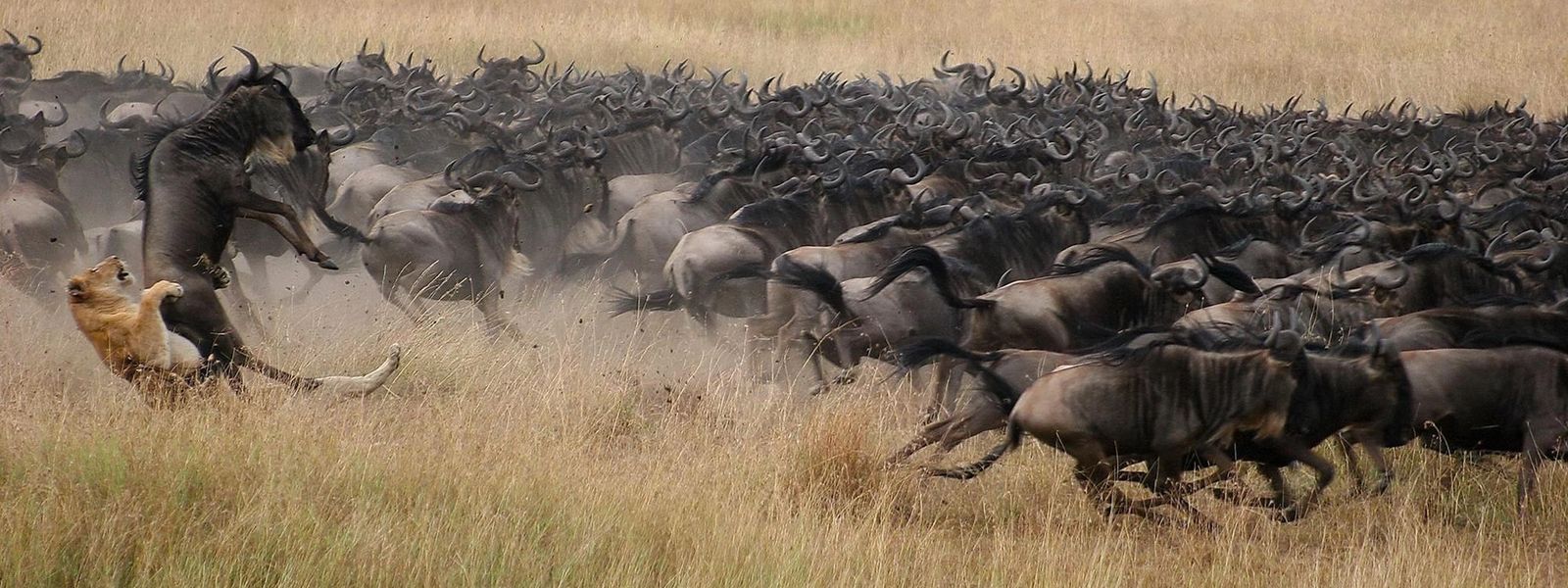

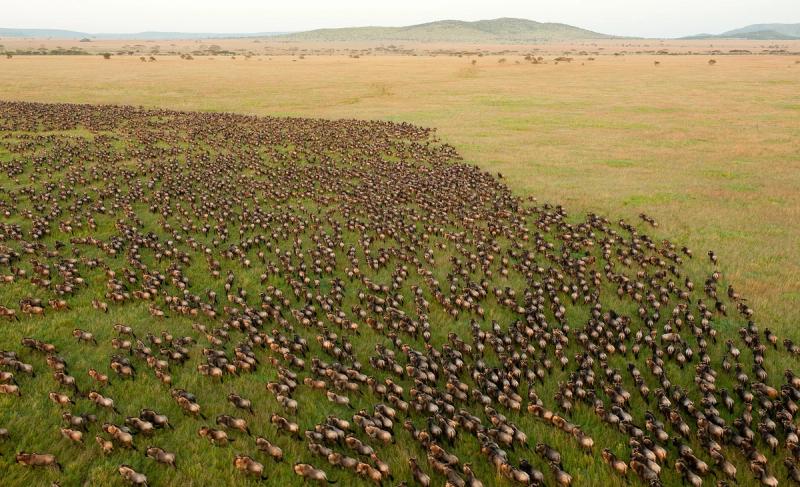
The Great Wildebeest Migration is one of nature’s great annual journeys, with over a million wildebeest moving through the Serengeti and Maasai Mara in search of fresh grazing. And despite what the name might suggest, there’s no grand departure date, no finish line, and no neat itinerary. The herds move throughout the year, following the rain and fresh grazing as conditions change. So, when is the best time to see it? That depends on which part of the story you want to catch.
The Month-by-Month Migration Route
The Migration follows a broad clockwise loop through the Serengeti and Maasai Mara, but rainfall decides the pace. The dates below are a useful guide, not a timetable. In some years, the herds arrive early. In others, they take their time.
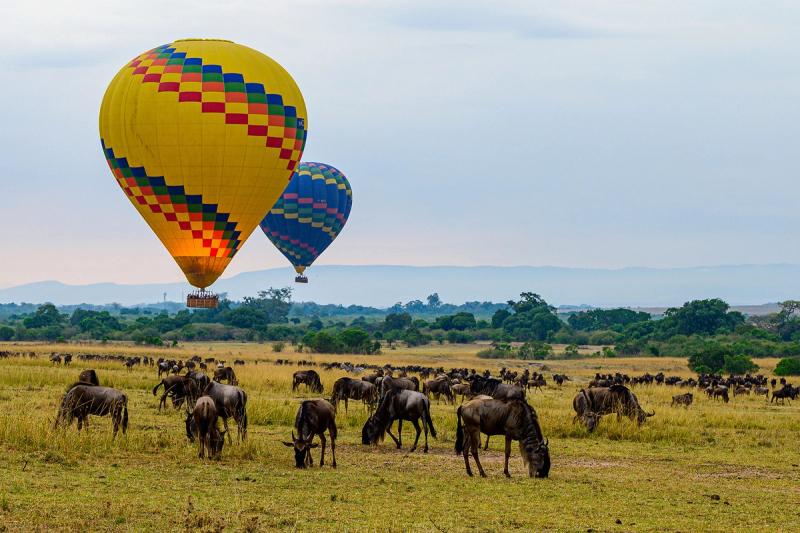
When Is the Best Time to See the Great Wildebeest Migration?
The answer really comes down to what piques your interest. The river crossings may be the scene everyone has heard about, but the Migration has a great deal going on before and after the big moments. So, what happens when?
January to March: The Calving Season
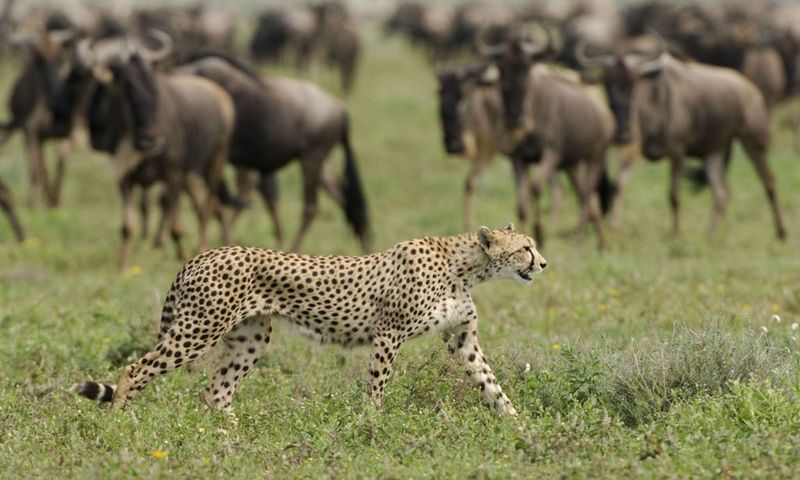
The year starts in the Southern Serengeti, and things get busy quickly. The rain brings fresh grass, followed by hundreds of thousands of calves arriving within a few intense weeks. For predators, it’s a seasonal feast, with lions, cheetahs, and hyenas never far away.
February is peak calving season, so expect wobbly legs, newborns everywhere and mothers keeping a close eye on them.
April to June: The Trek North
Once the calves are up and running, the herds start heading north through the Central Serengeti and towards the Western Corridor. They follow the rains, resulting in grassy plains they can feast on.
By May and June, rutting season is underway, with bulls competing fiercely for mates.
July to October: The Mara River Crossings
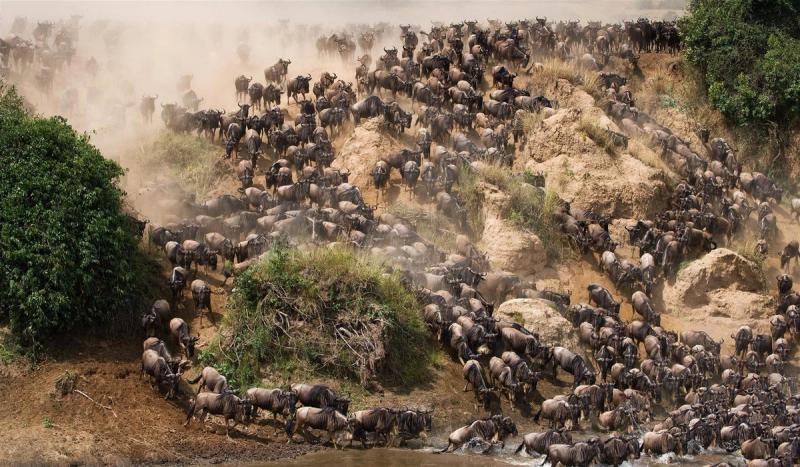
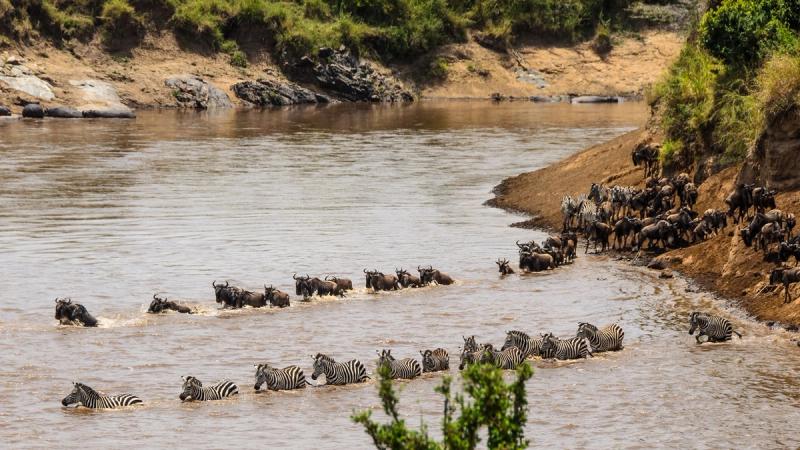
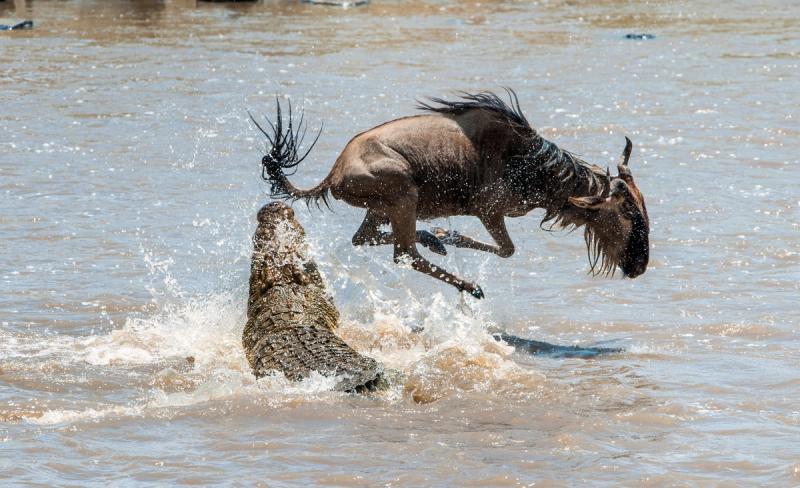
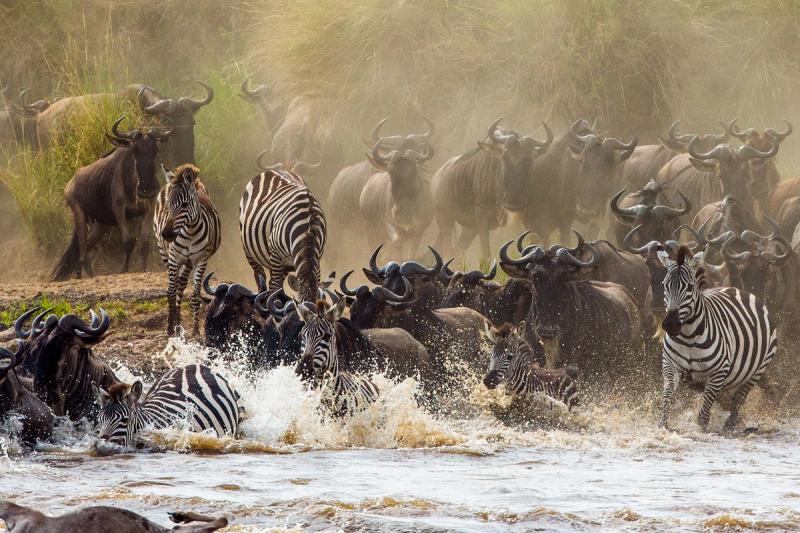
Here comes the famous bit. As the herds reach the Northern Serengeti and Maasai Mara, the Mara River stands between hungry wildebeest and greener grazing. Steep banks, strong currents, and crocodiles make it a serious decision.
Crossings can begin from July, with August and September often seeing the most activity. But there’s no crossing timetable. A herd might arrive, gather at the river, change its mind, mill about for hours, then suddenly decide that today is the day.

November to December: The Return South
The rains return, the grass perks up, and the herds turn south again. By December, they’re making their way back towards the Southern Serengeti, ready for the next calving season. The river-crossing crowds have thinned, but the Migration is far from over. The journey starts another lap.
When Are the Mara River Crossings, and Can They Be Guaranteed?
The Mara River crossings usually happen between July and October, with August and September often being particularly busy.
Can you guarantee witnessing it? Sadly, no. With so many factors at play, herds can gather at the river for hours or even days before crossing, and sometimes they simply turn around.
The good news is that if the wildebeest keep you waiting, the Maasai Mara still has a few tricks up its sleeve. We've written about some of our favourite Maasai Mara experiences over here, too.
Is Kenya or Tanzania Better for the Great Wildebeest Migration?
The short answer? It depends on when you’re travelling and what you want to see. Tanzania gives you access to far more of the Migration’s annual journey, from calving in the south to the herds moving through the Serengeti. Kenya’s Maasai Mara comes into its own when the herds reach the north, particularly during the Mara River crossings.
Where Should I Stay to See the Great Migration?
Once you’ve decided what you’re hoping to see, it’s worth thinking about where you’ll stay. Because on safari, your choice of accommodation isn’t just where you sleep. It’s where the day begins, where stories are swapped over dinner, and where the sounds of the savannah follow you into the night. From a permanent lodge to a tent that moves with the herds, the place you choose can shape the safari just as much as the wildlife you came to see.
Fixed Lodges
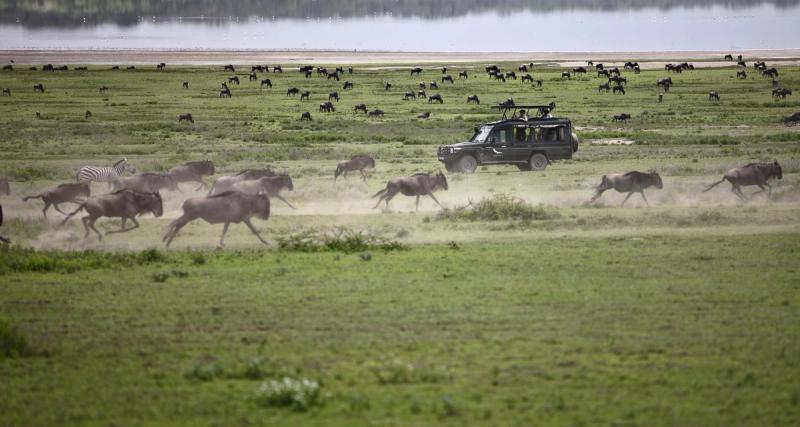
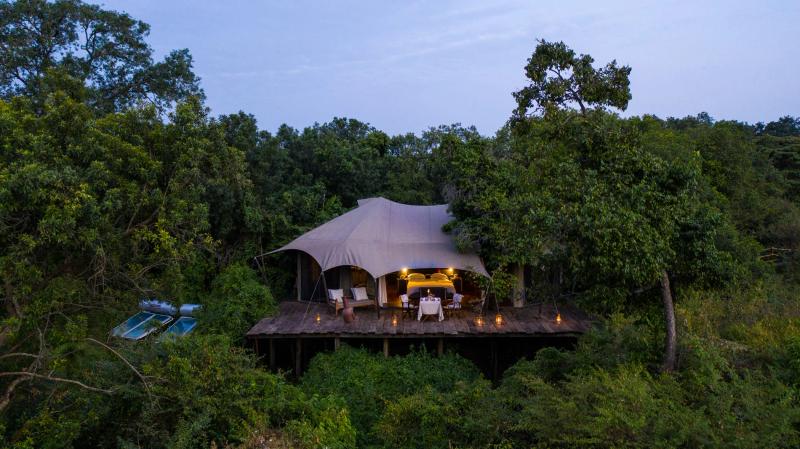
Fixed lodges stay put in carefully chosen corners of the wild, giving you a comfortable base from which to explore. Expect established infrastructure, from reliable power and hot water to pools, spas, and space to unwind between drives.
The trade-off? You may need to drive further to reach the Migration, depending on where the herds are moving. But there's more to the experience than following their every turn, with the chance to explore the surrounding wilderness and encounter the wildlife that calls it home year-round.
Our Top Lodges
- Singita Mara River Tented Camp: Right on the northern banks of the Mara River
- Mara Plains Camp: In a conservancy adjoining the Mara
- Angama Mara: Suspended above the Mara, with floor-to-ceiling glass
Mobile Camps
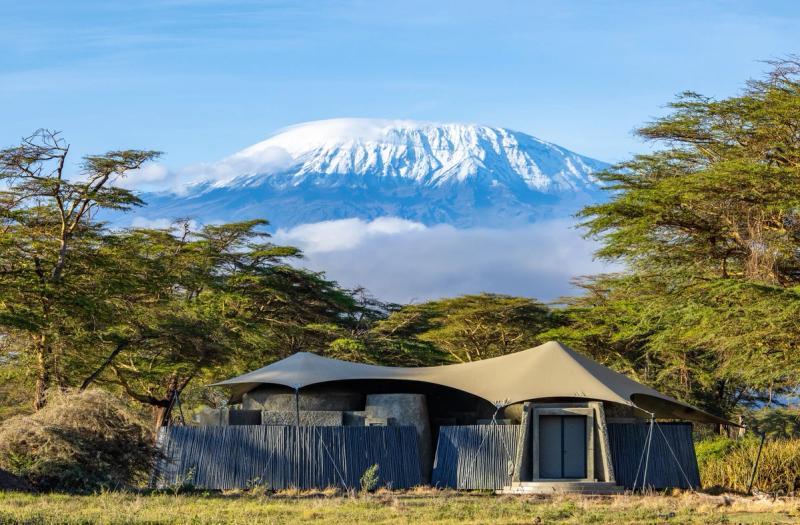
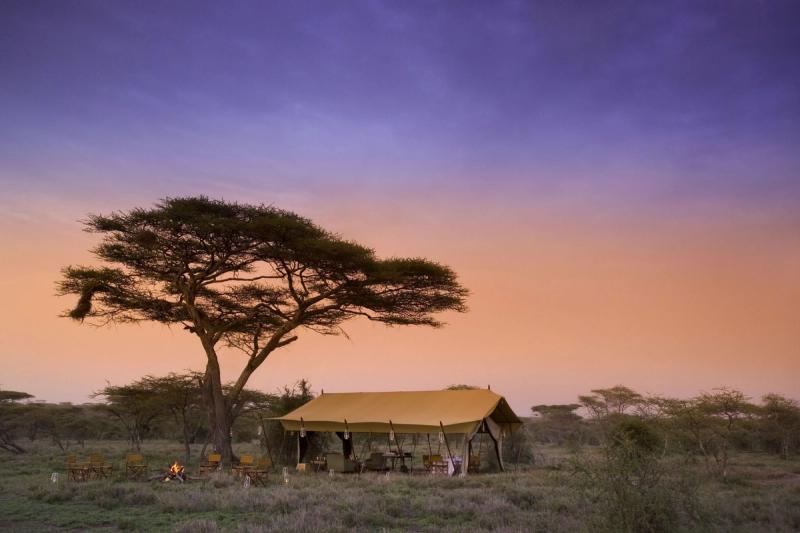
Mobile camps are designed to put you closer to the action. They relocate a few times a year, positioning themselves around the seasonal movements of the herds. You arrive, settle in, and let the camp do the moving between seasons.
They’re usually smaller and more intimate, with canvas tents and a focus on leaving a lighter footprint. Don’t mistake temporary for basic, though. Luxury mobile camps can have comfortable beds, en-suite bathrooms, and excellent food. What you give up in permanent infrastructure, you gain in proximity.
Our Top Mobile Camps
- Olakira Migration Camp: Moves between northern and southern Serengeti
- Ubuntu Migration Camp: Relocates seasonally with the herds, spending June to mid-November near the Mara River
- Serengeti Under Canvas: A nine-tent mobile camp that moves with the herds
Private Conservancies
Then there’s the setting itself. Private conservancies offer a different kind of advantage: a little more breathing room. With fewer lodges and stricter limits on game-drive vehicle numbers than many national parks and reserves, sightings can feel less crowded.
They can also allow greater flexibility on game drives, depending on the conservancy. Some even allow night drives and walking safaris!
If you have the time, you don't have to choose just one. Combine three nights in a mobile camp to get right into the heart of the Migration, followed by two nights in a fixed lodge, perhaps in a private conservancy.
How Can I Travel to See the Migration?
From the air? From the ground? There are many ways in which you can see the Great Wildebeest Migration.
Fly-In Safari
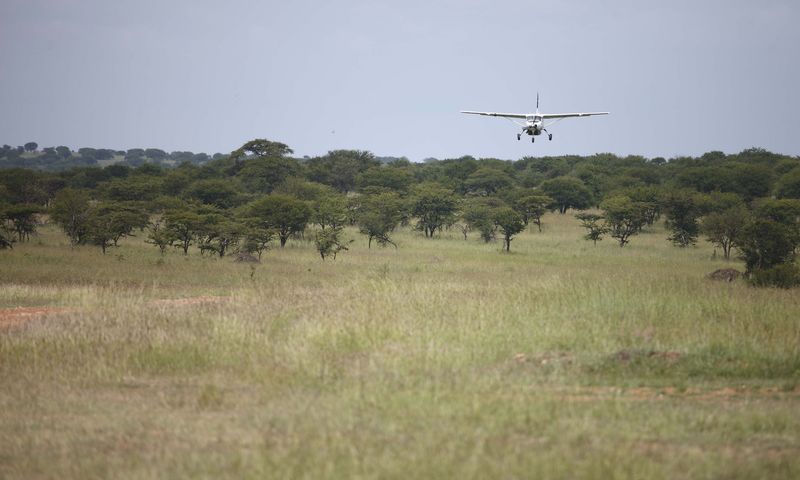
For covering wide distances without losing half a day to the road, flying is hard to beat. A network of airstrips connects many camps, making light-aircraft transfers a practical way to move between regions.
It’s especially handy when time is tight, or you want to combine several safari areas without spending your holiday driving around.
Road Safari
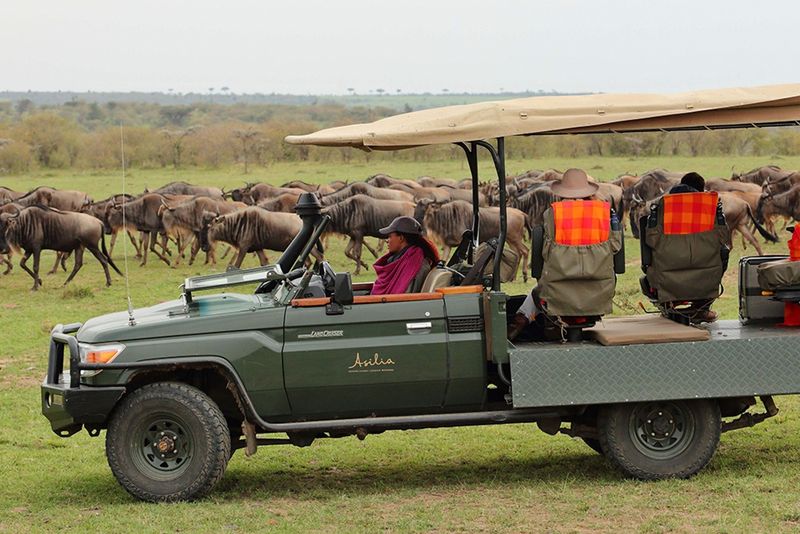
Travelling by road gives you more freedom to set the pace, with a private game-drive vehicle and guide along for the ride. You’ll have longer transfers to contend with, and some Serengeti roads can be bumpy, but there’s something satisfying about watching the landscape change as you go.
With enough time, the journey becomes part of the safari rather than the bit between two camps.
How Much Does it Cost to See the Great Wildebeest Migration?
Migration safaris can vary widely in price, depending on when you travel, where you stay, and how you choose to experience the action.
What Affects the Price?
- Accommodation: From seasonal mobile camps to luxe permanent lodges, where you stay has a significant influence on your budget. Camps in sought-after locations, particularly near the Mara River during peak crossing season, can command higher rates
- Season: Travelling during the green season, such as in April, May, or November, can mean lower rates than during the peak crossing months
- Park and conservation fees: Mandatory fees that vary depending on where you travel
- Country: Kenya and Tanzania have different fee structures and internal flight costs
- Internal flights: Light-aircraft transfers save long days on the road but add to the overall price
- Private vs shared activities: A private vehicle and guide will cost more than shared game drives
There’s a fair bit to factor in, but you don’t need to figure it all out yourself. Tell us how you’d like to experience the Migration, and our Travel Experts can take care of the details.
Your Burning Migration Questions, Answered
Ready to Follow the Herds?
If the thought of over a million of wildebeest on the move, a river crossing unfolding in front of you, or watching the herds spread across the plains has you thinking I need to see this, we know where to start. Reach out to one of our Travel Experts, and we’ll plan a tailor-made trip just for you.