
There comes a point in travel when you stop asking “where next?” and start asking something more honest: "what happens after I leave?" Some trips rejuvenate you. Others recalibrate you. They shift your sense of what travel is for, pulling you out of consumption mode and into something more purpose-driven. Across Africa, a handful of destinations for responsible travel are proving that your trip strengthens what you came to see. You don’t just return home with more photos but with bigger questions. And these are the places that prompt them.

When wildlife and wilderness remain firmly in charge, Image Credit: Mboko Lodge
What Exactly is Responsible Travel?
If travel is going to shape you, it shouldn’t cost a place its peace – or ask wildlife and local communities to absorb the fallout.
Responsible travel is travelling in a way that leaves a place better supported than you found it, where wild spaces are protected, livelihoods are built locally, and value stays close to the ground instead of drifting elsewhere. It’s the quieter version of travel: fewer people, less noise, lighter footprints, and decisions made with the long game in mind.
In practice, it looks refreshingly unflashy:
- Lower guest numbers by design
- Eco-conscious camps run by local teams
- Conservation funding that’s real and traceable
- Guests who arrive with curiosity, restraint, and respect
These destinations aren’t new, and neither is the thinking behind them. They’re long-standing examples of responsible travel done properly. And when you visit them, you help keep that model working.

Protecting apex predators through patient, conservation-first tourism, Image Credit: Daan Smit
Zambia: Liuwa Plains National Park
The first thing Zambia's Liuwa Plains National Park teaches you is patience. The horizon doesn’t end so much as dissolve into sky, long grass whispering beneath it while seasonal water threads quietly across the plains.
This is one of Africa’s oldest conservation stories. In the late 1800s, King Lubosi Lewanika appointed his people as custodians of these lands, long before conservation became policy. That origin still shapes Liuwa. It has never been imagined as wilderness without people.
Wildlife arrive on their own terms. Lions and hyenas patrol with authority, African wild dogs weave their way through, and sometimes the less obvious steals the scene – a serval slipping through the grass, a lone elephant bull standing in the dusk. Then, once a year, the plains tip into motion. Here, tens of thousands of large mammals gallop across the land in Africa’s second-largest Wildebeest migration, largely unobserved and gloriously unchoreographed.
Liuwa is one of the few places left where the wild still moves without an audience. And that kind of freedom is both rare and worth protecting fiercely.
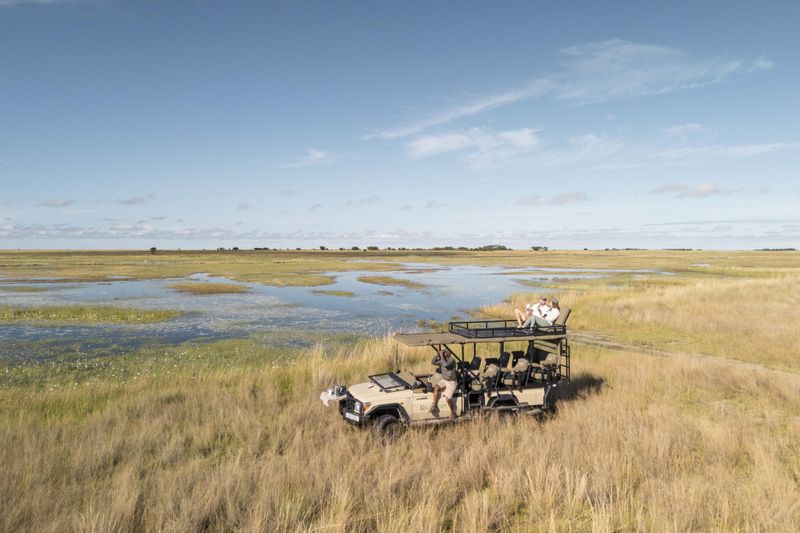
Low-impact safaris designed around space, silence, and perspective, Image Credit: King Lewanika Lodge
Why This Qualifies as a Responsible Choice, and How Your Visit Helps
Liuwa works because protection here is shared: the park is co-managed by African Parks and the Barotse Royal Establishment, pairing traditional authority with modern conservation. Year-round anti-poaching teams patrol this vast, flood-prone landscape, removing snares and monitoring wildlife so pressure is met early and consistently.
In a place this remote, tourism helps hold the plains together: visitor spend supports park operations, patrols, and monitoring, while jobs and community-run campsites channel revenue back to local custodians. Your visit becomes part of that system, helping keep Liuwa intact, and its wild movements free to continue as they should.

Exploration shaped by waterways, seasons, and natural rhythms, Image Credit: King Lewanika Lodge
Where to Stay: Style and Footprint
Tourism in Liuwa is intentionally limited, and accommodation reflects this ethos. Liuwa Camp is the park’s main base: a small, solar-powered tented camp set beneath shade trees, designed to sit lightly on the plains and overlooking a waterhole that often brings wildlife to you.
On the edge of the park, Sishekanu House provides a calm, eco-minded staging point, running on solar power. It’s ideal before heading into Liuwa or easing back out.
For guests wanting a private-house feel with polish, King Lewanika Lodge by Ker & Downey Zambia offers curated comfort without dulling the sense of scale or isolation.
Finally, for something closer to the land’s bones, community-run campsites inside the park offer basic facilities under vast skies.
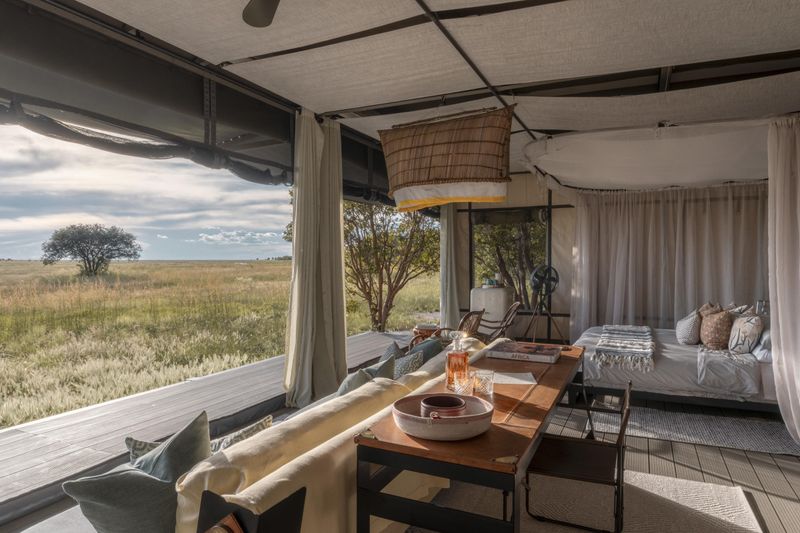
Comfort designed to connect guests directly with the wild, Image Credit: King Lewankia Lodge
Republic of Congo: Odzala–Kokoua National Park
Odzala–Kokoua National Park is one of Central Africa’s oldest protected areas and one of the most important refuges for western lowland gorillas, set deep within the Congo basin – the second-largest tropical rainforest on Earth. The park protects vast swathes of intact rainforest, punctuated by natural clearings known as bais (mineral-rich openings where elephants, buffalo, and forest antelope gather in full view).
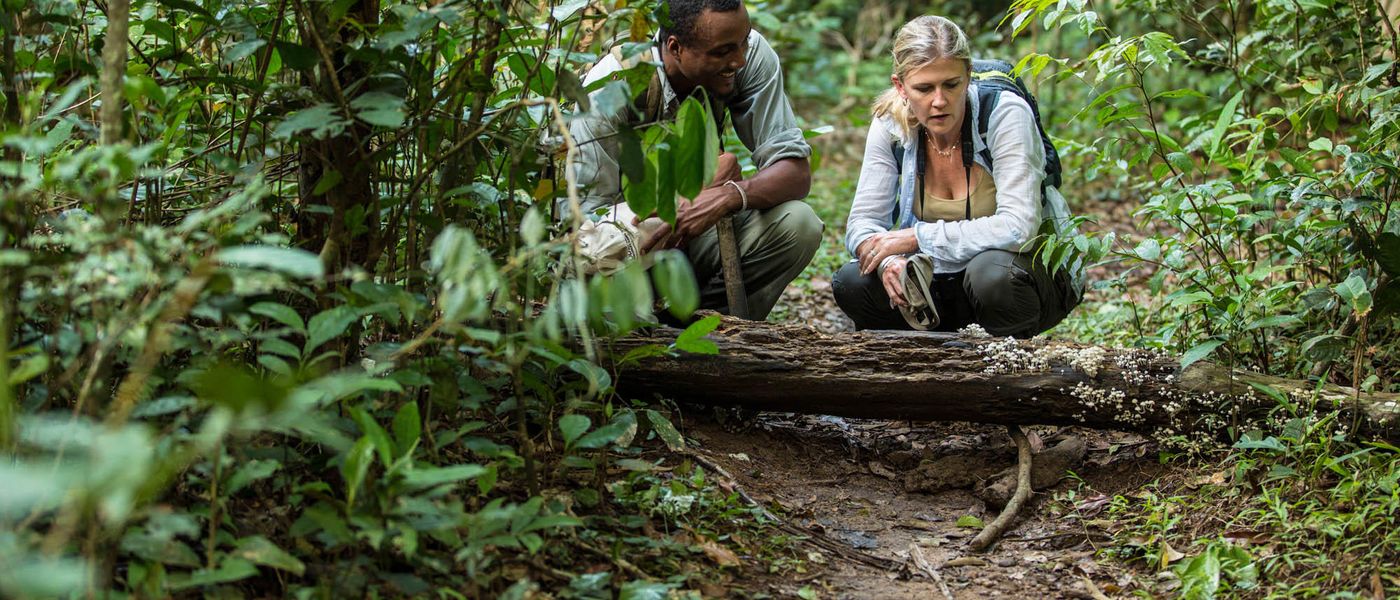
The scale is hard to grasp until you’re inside it, and the forest doesn’t open itself easily. You move through it on foot, metre by metre, learning to read absence as much as presence. Sound often arrives before sight: branches cracking somewhere ahead, insects sawing through the air, the low exhale of a gorilla long before you see shape or movement.
What really gives Odzala its weight is endurance. After all this time, it has kept the forest uncompromised, a place where humans pass through temporarily in a world that isn’t organised around them.
"This was one of the most unique places I have ever experienced, and I would have been quite content to never leave." – David Ryan, CEO of Rhino Africa.

Exploring the Congo's intact ecosystems by river, not road, Image Credit: Mboko Lodge
Why This Qualifies as a Responsible Choice, and How Your Visit Helps
Restraint is the operating principle in Odzala: visitor numbers stay low, and gorilla tracking follows strict protocols to reduce stress and disease risk. Conservation is long-term and locally grounded, funding anti-poaching patrols, wildlife monitoring, and forest protection across a vast, logistically demanding landscape, with nearby communities directly benefiting through jobs and conservation-linked livelihoods.
Your visit helps keep that system running – permit fees and camp revenue support year-round patrols and gorilla monitoring, while employing trackers, guides, porters, and camp teams and backing community programmes tied to keeping the forest standing.

Wildlife viewing that prioritises stillness and respect, Image Credit: Mboko Lodge
Where to Stay: Style and Footprint
Accommodation in Odzala is intentionally sparse because the forest demands it.
Mboko Camp sits beside an open bai, where light pours in, and elephants and buffalo drift through the clearing while you watch from raised decks.
Lango Camp takes you deeper: walkways thread through dense vegetation, tents tucked into the trees, the world narrowing to shadow and sound.
Ngaga Camp is the gorilla base, set in primary rainforest, built around time on foot and quiet recovery between treks.
Across all three, the footprint stays light: solar power, minimal clearing, low guest numbers, and a strong reliance on local staff and expertise.
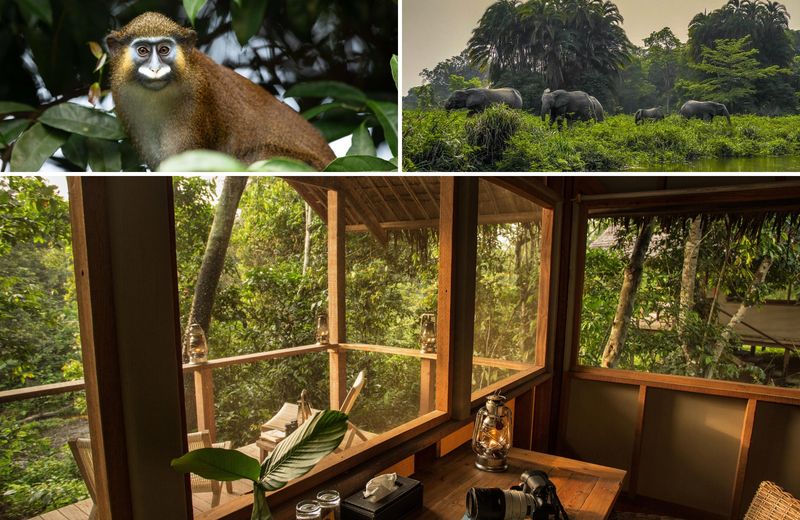
Rainforest encounters rooted in patience, knowledge, and protection, Image Credit: Mboko Lodge
Mozambique: Gorongosa National Park
The first thing you notice in Gorongosa National Park isn’t an animal but movement: water shifting where maps still show dust, birds gathering where silence used to sit. Gorongosa lies where the Great Rift Valley slackens into central Mozambique, creating a collision of grasslands, forests, rivers, and seasonal wetlands that shouldn’t coexist – but do.
The land still carries the weight of a 16-year civil war, when wildlife populations collapsed, and systems fell apart. What followed wasn’t a dramatic turnaround, but the slow work of restoration: habitat by habitat, species by species, decision by decision.
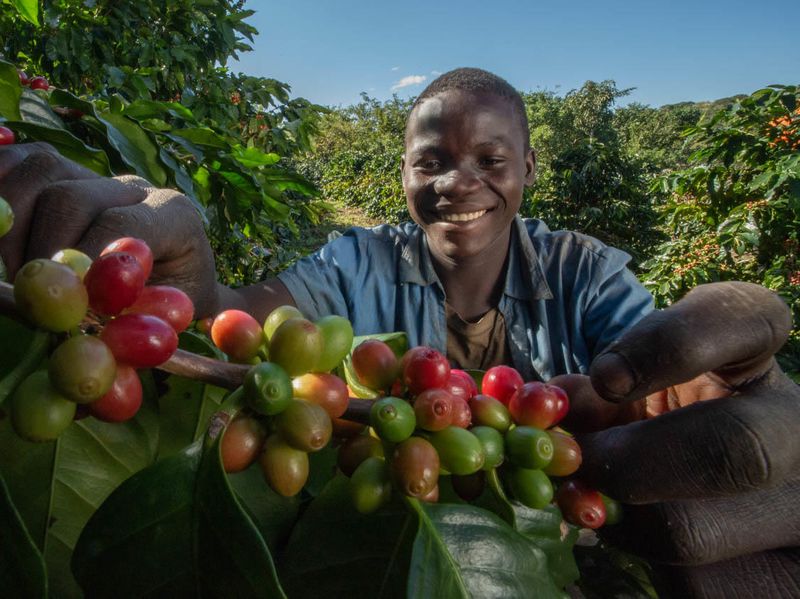
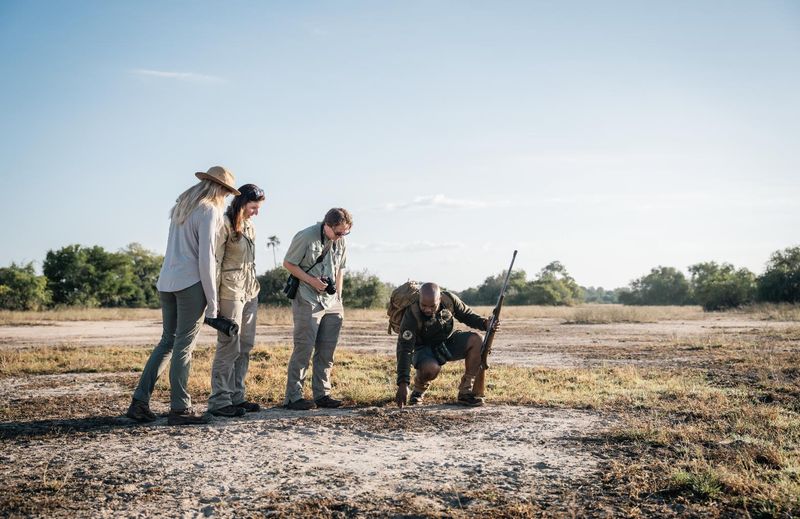
What’s impressive isn’t only the wildlife returning, but the sense of agency behind it. Communities that once lived on the park’s edges are now woven into its future, trained as rangers, researchers, technicians, and farmers. Moving through the park, you feel that shift. This is conservation you can witness unfolding as the park learns how to hold itself together again.
"It's a place that asks something of you – your curiosity, attention, and willingness to let the experience shift your understanding of what 'safari' can be." – Samantha Myburgh.
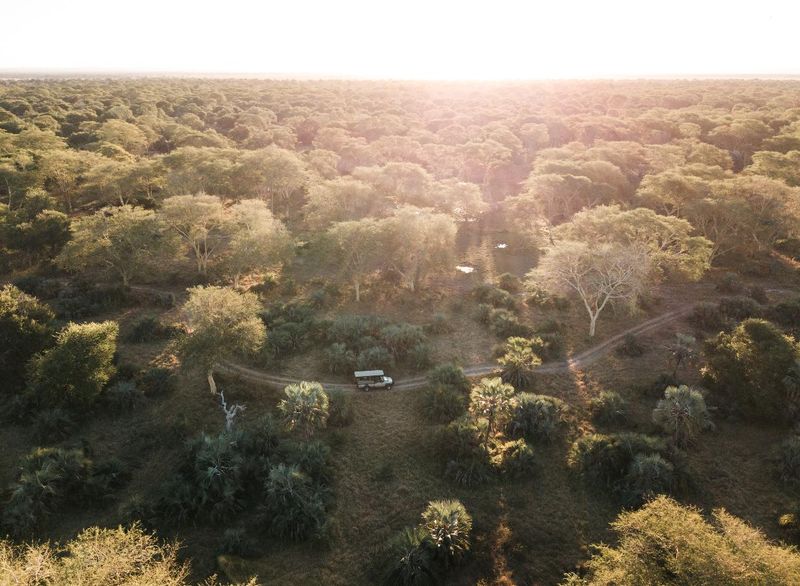
Rewilded landscapes where conservation-led safaris quietly thrive, Image Credit: Muzimu Lodge
Why This Qualifies as a Responsible Choice, and How Your Visit Helps
At Gorongosa, your visit helps fund a recovery built to last, not a safari scaled for volume. Restoration is science-led and closely monitored, with habitats repaired and species reintroduced. Conservation also reaches beyond wildlife, with education, healthcare, and sustainable agriculture reducing pressure on the park by strengthening surrounding communities.
Tourism stays deliberately contained. Low visitor numbers, small camps, growth measured against ecological health, not demand. And your trip does tangible work: 20% of park fees go to local natural resource management committees in the Sustainable Development Zone, funding community priorities, while additional revenue supports anti-poaching patrols, monitoring, and research.
Here, money circulates locally, thereby tightening the link between protection and livelihoods.
Local prosperity growing alongside conservation and nature-positive tourism, Image Credit: Muzimu Lodge
Where to Stay: Style and Footprint
Accommodation is intentionally limited to two small camps, each offering a different perspective on the park.
Muzimu Lodge, set along the Mussicadzi River, is quiet and observational. Mist lifts off the water, hippos shift below the deck, and the birdlife rewards patience.
Further east, Chicari Camp is seasonal and deliberately off-grid, positioned above a pan that draws wildlife in as the dry months deepen. Its light, removable structures leave little trace once the season ends.
Both camps prioritise local staffing and low-impact operations, operating on solar power and using water-saving systems throughout.
Learning to read the land alongside its protectors, Image Credit: Muzimu Lodge
Why These Destinations Matter
These places meet you best when you arrive with your edges softened – ready to slow down, pay attention, and let the land set the tempo. In return, they offer access to Africa that feels honest and grounded, shaped by people who live there and conservation models built to last.
If this kind of travel speaks to you, we’d love to help you do it properly. Connect with us, and together we can turn meaningful travel intentions into truly impactful experiences.
Featured Image Credit: Mboko Lodge