

Savannah St Claire returned from Zimbabwe with all the things you might expect a safari to leave behind: memories of the sightings, landscapes, and scale of a place that still feels genuinely wild. But what stayed with her most vividly was something else. Beyond the wildlife and the wide-open spaces, another story was unfolding – one shaped by the women who welcomed her, hosted her, guided her, and revealed a different side of safari altogether.
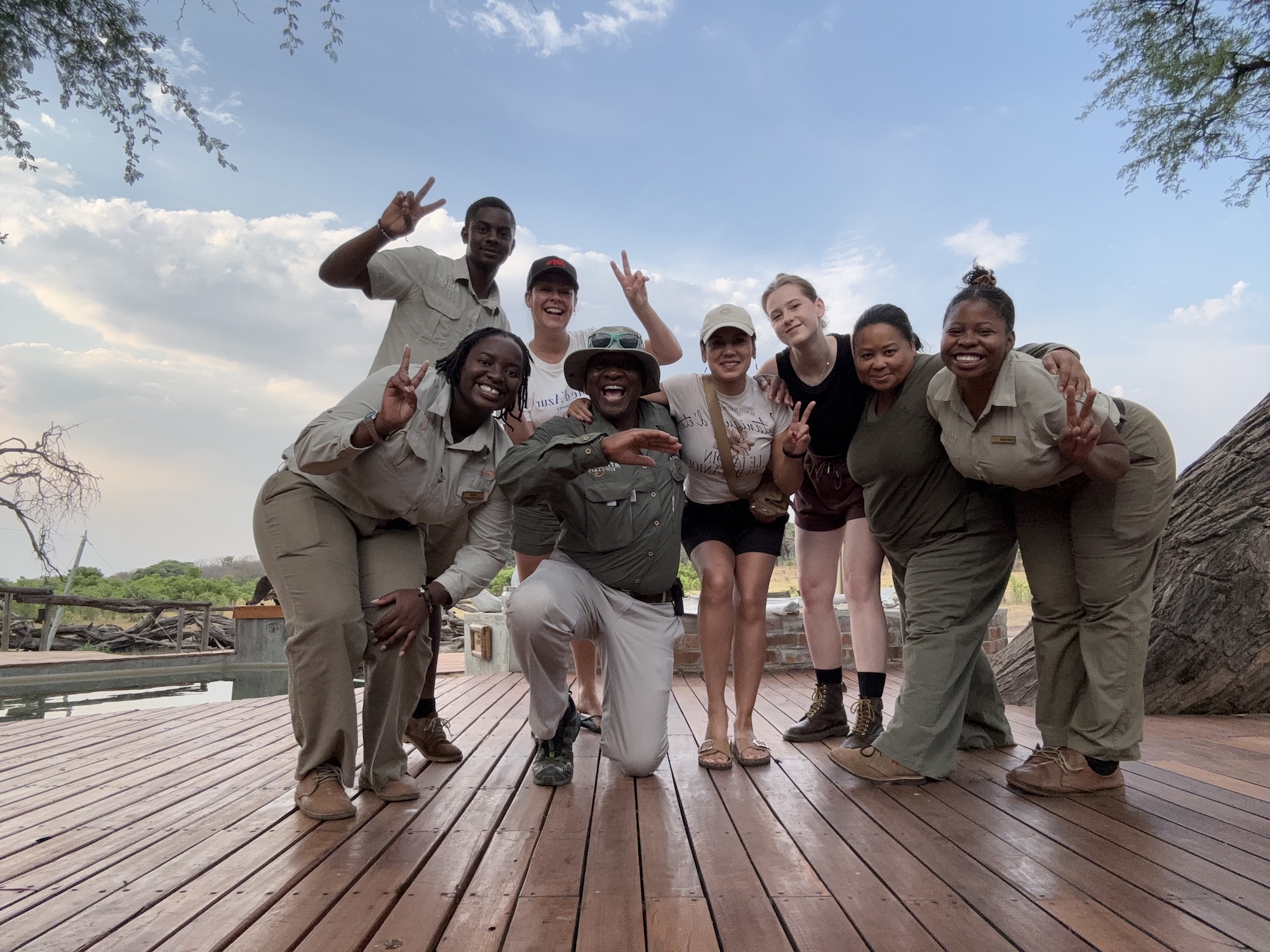
Savannah and the Rhino Africa Zimbabwe crew, joined by the team that touched their hearts, Image Credit: Savannah St Claire
Beyond the Sightings
Savannah, Rhino Africa’s Marketing Project Manager, travelled to Zimbabwe on one of the company’s educational tours, designed to give teams a first-hand understanding of the places they market and recommend. What she encountered wasn't only a country that felt beautifully raw and wonderfully unscripted, but a safari experience gently shaped by women at every stage of the journey.
There was the camp host whose warmth was immediate, the all-women team whose welcome made her feel at home from the outset, the chef whose food carried both care and character, and the female guides who brought each game drive to life with depth, passion, and calm authority.
On safari, the sightings stop you in your tracks, literally and figuratively. But it's often this kind of human connection that stays with you longest. Across Zimbabwe's top national parks, Savannah felt the impact these women had on her experience, and what made those encounters feel so striking was that they didn't seem incidental. They felt embedded in the experience itself – part of a wider way of thinking about safari, hospitality, and who gets to shape them.
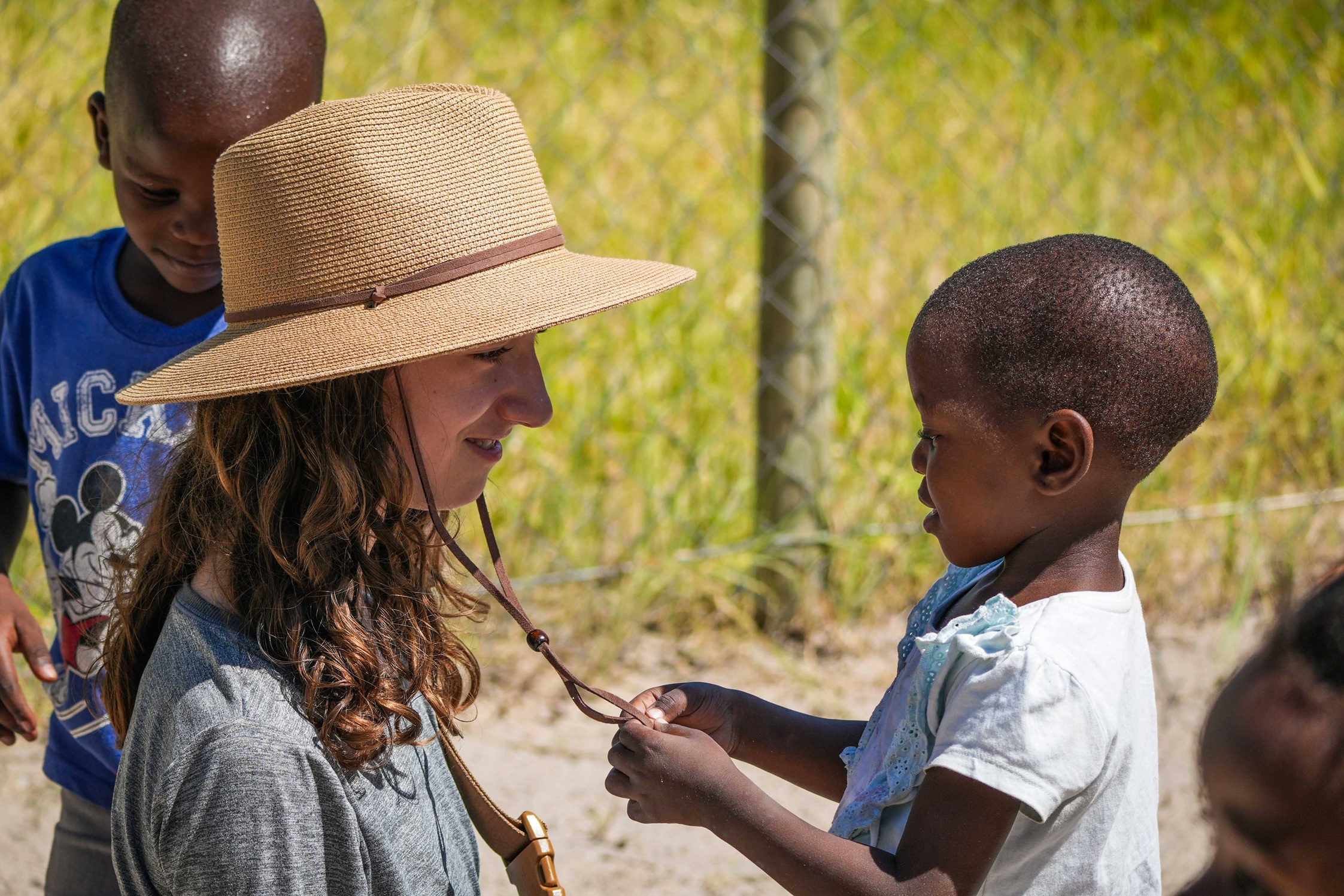
Impact you can feel, Image Credit: African Bush Camps
Where This All Comes From
Savannah stayed in three lodges hosted by African Bush Camps, a safari company with camps across Zimbabwe, Botswana, and Zambia. In Zimbabwe, these include Somalisa Acacia, Bumi Hills, and Nyamatusi Mahogany – three distinct settings, all connected by the same underlying philosophy.
That philosophy begins with Beks Ndlovu, the Zimbabwean guide who founded African Bush Camps in 2006. His understanding of safari extended far beyond the drive route or the lodge itself. It was rooted in the knowledge that wilderness areas and neighbouring communities are inseparable, and that any lasting conservation model must work for both.
From that understanding, African Bush Camps Foundation grew alongside the camps. Its work spans education, community empowerment, and conservation, with each pillar strengthening the next. Together, they give the camps a deeper foundation, one that reaches beyond hospitality and into the social and ecological fabric of the places they operate.
And within that wider structure, one shift has become increasingly apparent: women are becoming a more visible force in the evolution of safari.
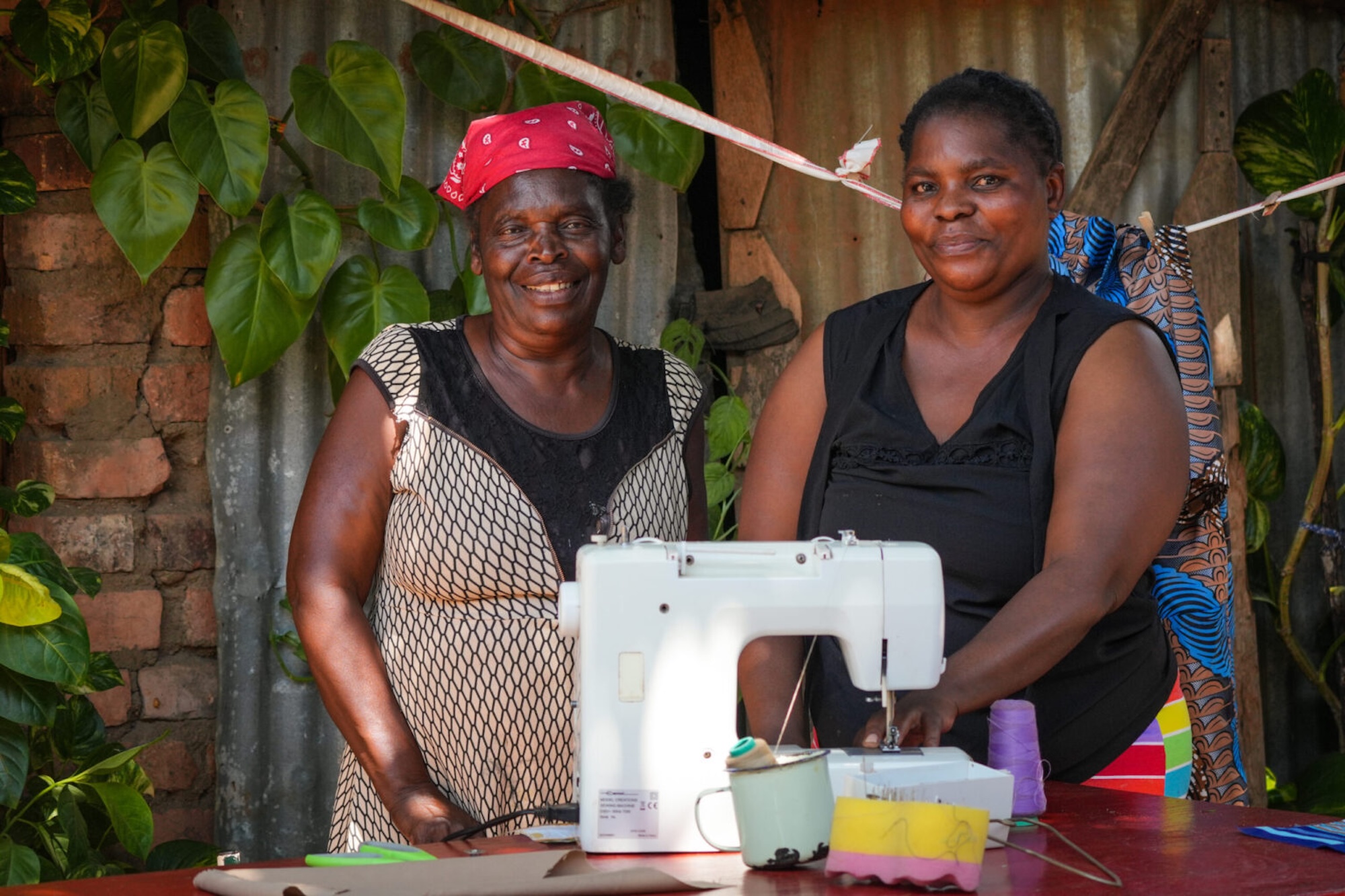
Strengthening households through steady local opportunity, Image Credit: African Bush Camps Foundation
The Foundation in Zimbabwe
In Zimbabwe, the connection between camp and community is not in the background, nor is the shift happening within it. Some of the clearest signs are found in women stepping into hospitality, leadership, guiding, and local enterprise – and in how that presence changes the feel of safari itself.
For Savannah, two of the camps brought this into especially clear focus.

Zimbabwe's magic is in its landscapes and its people, Image Credit: Bumi Hills Safari Lodge
Somalisa Acacia, Hwange
Somalisa Acacia is set within Hwange National Park, Zimbabwe’s largest national park. The camp brings a softer, more intimate take on safari, with elephants often moving close through camp and the wider rhythm of Hwange never far away. Within that setting, women are present at almost every turn – welcoming, cooking, guiding, hosting, leading. No one announces it. You simply begin to feel it in the rhythm of the place.
“What stood out most was how comfortable I felt as a female guest. The whole team was incredibly warm and welcoming – not only the women, but the men too – but it was especially meaningful to see women in so many roles within camp life.” – Savannah.
That kind of visibility matters because it doesn't happen by accident. It sits within a wider effort to create clearer pathways for women into the safari industry.
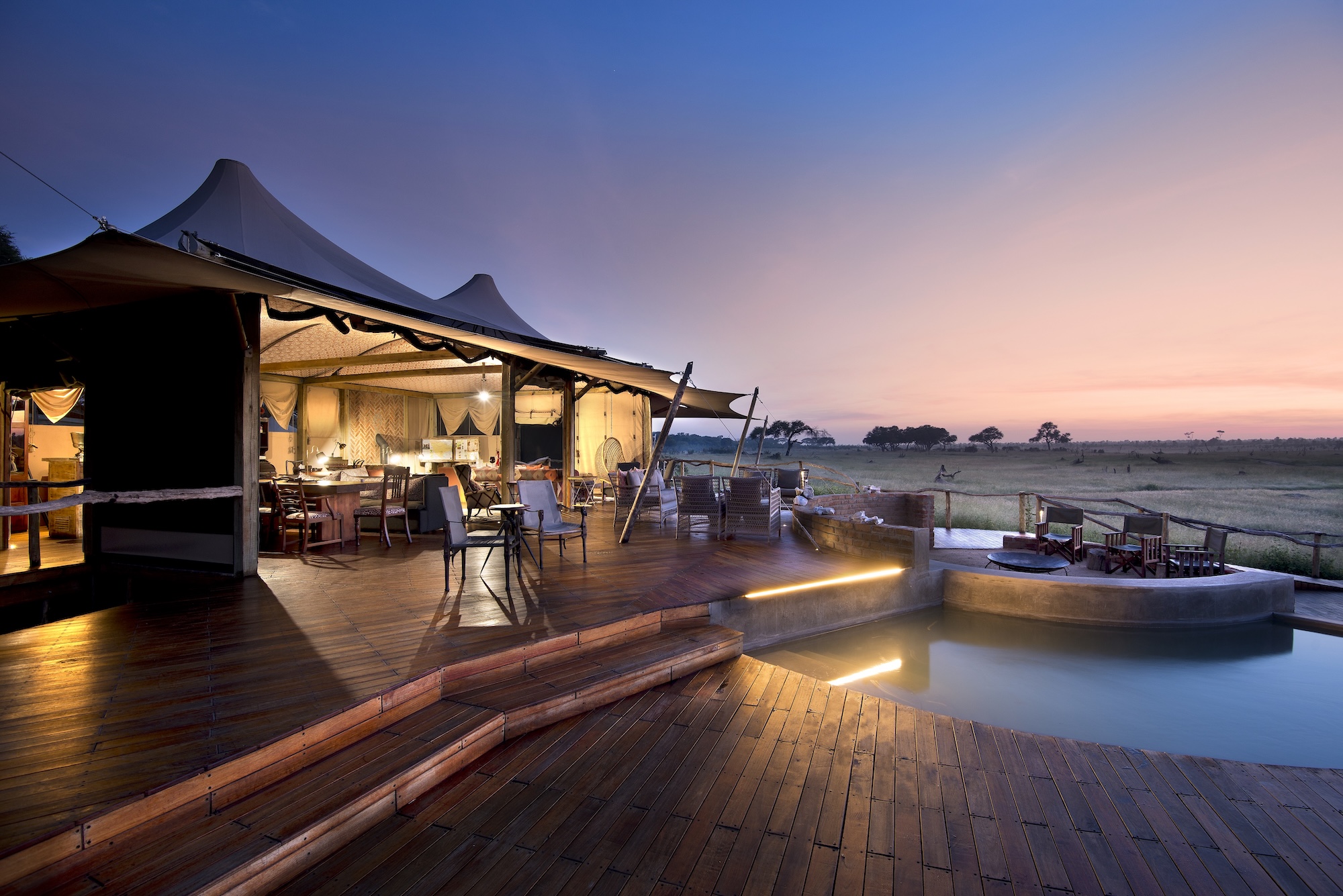
A space held by the gentle warmth of women in hospitality, Image Credit: Somalisa Acacia
Women in Tourism Programme
At the centre of this shift is the Women in Tourism Programme, which provides women from communities surrounding African Bush Camps a structured route into the safari industry.
The programme combines formal hospitality training with practical placements in camp, creating a clear path into roles such as hosting, operations, housekeeping, food service, and wider guest-facing work. It's designed not only to build skills, but to turn those skills into employment. African Bush Camps Foundation says women now hold 50% of camp management roles across the countries where it operates, which gives a clear sense of where that change is heading.
“Seeing women in leadership and guest-facing positions felt eye-opening, especially in an industry that's still largely male-dominated.” – Savannah.
At Somalisa, that presence carried through even in the smaller, more personal parts of camp life.
“I also loved chatting to Lily, the chef. A lot of the food was prepared in front of us, and she was cooking at the hotplate behind the serving area. It was lovely to see her so present and engaging as part of the guest experience.” – Savannah.
For Savannah, moments like that made the wider shift feel immediate, human, and impossible to miss.
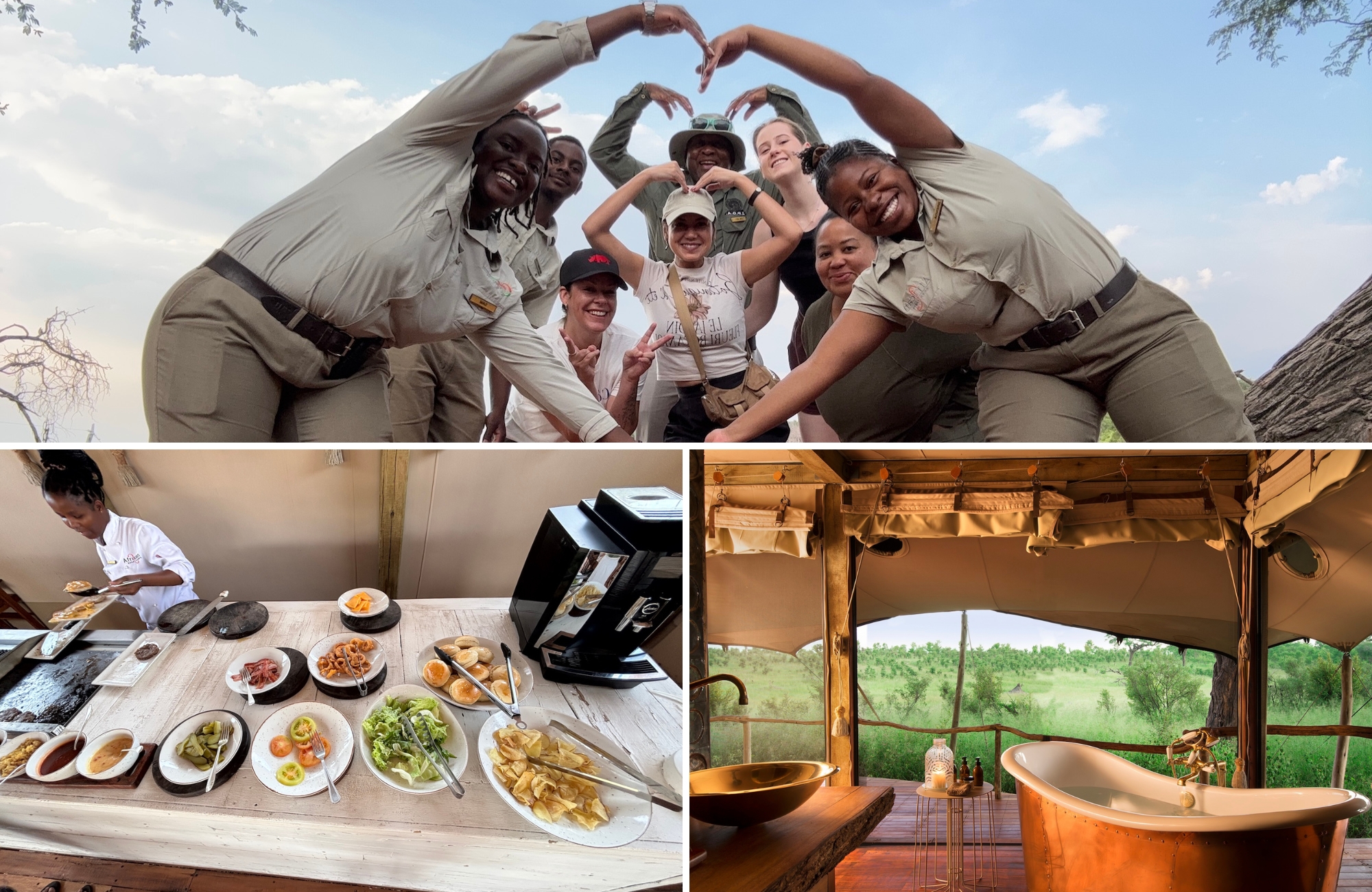
At Somalisa Acacia, the visibility of women in key roles gave the experience added depth
Nyamatusi Mahogany, Mana Pools
At Nyamatusi Mahogany, the same philosophy plays out in a very different setting. Resting on the edge of the Zambezi in Mana Pools National Park, the camp is enrobed by riverine forest and open floodplains. It's a place where the landscape does a lot of the talking, and where guiding naturally sits at the centre of the experience.
That is partly why what Savannah encountered here felt so significant. Before heading out on a morning drive, she met her guide’s daughter, who had started training to become a guide herself. In that conversation, the future of safari felt suddenly less abstract and far more immediate.
“It added an extra layer of meaning. Beyond the incredible wildlife and landscapes, there was something very hopeful about seeing women so visibly present in different parts of the experience.” – Savannah.
And that hope is not incidental. It points directly to the work being done to open up guiding opportunities to more women.
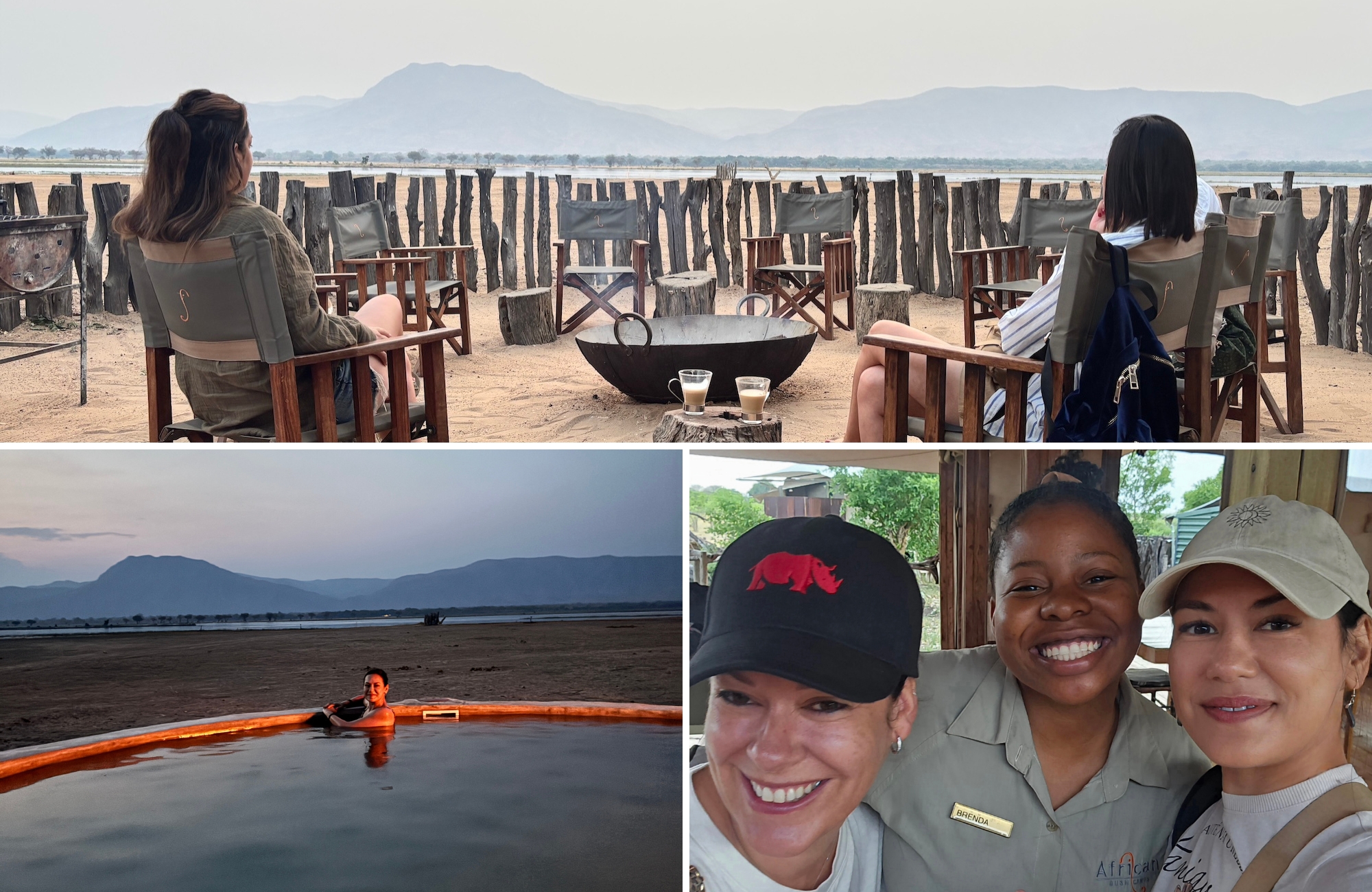
From river views to camp connections, Nyamatusi offered a safari shaped as much by people as by place
Female Guides Programme
That is where the Female Guides Programme carries real weight. Developed by African Bush Camps Foundation to address one of safari’s most entrenched imbalances, the programme is designed to train women for a role that has historically been dominated by men.
It combines theory, practical safari training, mentorship, job shadowing, and on-the-ground experience at African Bush Camps properties, building the kind of confidence and technical ability that guiding demands. The foundation says the goal is to develop a stronger pipeline of female safari guides in a sector where more than 90% of guides were previously male.
“It's valuable to see a company like African Bush Camps creating space for that – not limiting women to the roles traditionally seen as more suitable or comfortable, but supporting them in building careers as guides, leaders, and specialists in their own right.” – Savannah.

Empowering women through guide training, Image Credit: African Bush Camps
Community Upliftment
Beyond the camp, some of the most tangible support sits within women-led enterprise. Groups like Thandanani and Vukani show how sewing, beadwork, and handicrafts can become a steady source of income, creating direct economic value within the communities surrounding Hwange. The point is not simply that these goods are beautifully made, though they are. It's that they support livelihoods in a way that's practical, local, and sustaining.
Guests staying at Somalisa can visit these projects during a community excursion to Mambanje and Dete Village, where there's the opportunity to meet the women behind the work and buy directly from them. That exchange matters. It keeps support close to its source, and gives what might look like a small purchase a far wider reach within the local economy.
“Even in subtle ways, it changed the feeling of the experience. It made the safari feel more inclusive and balanced.” – Savannah.
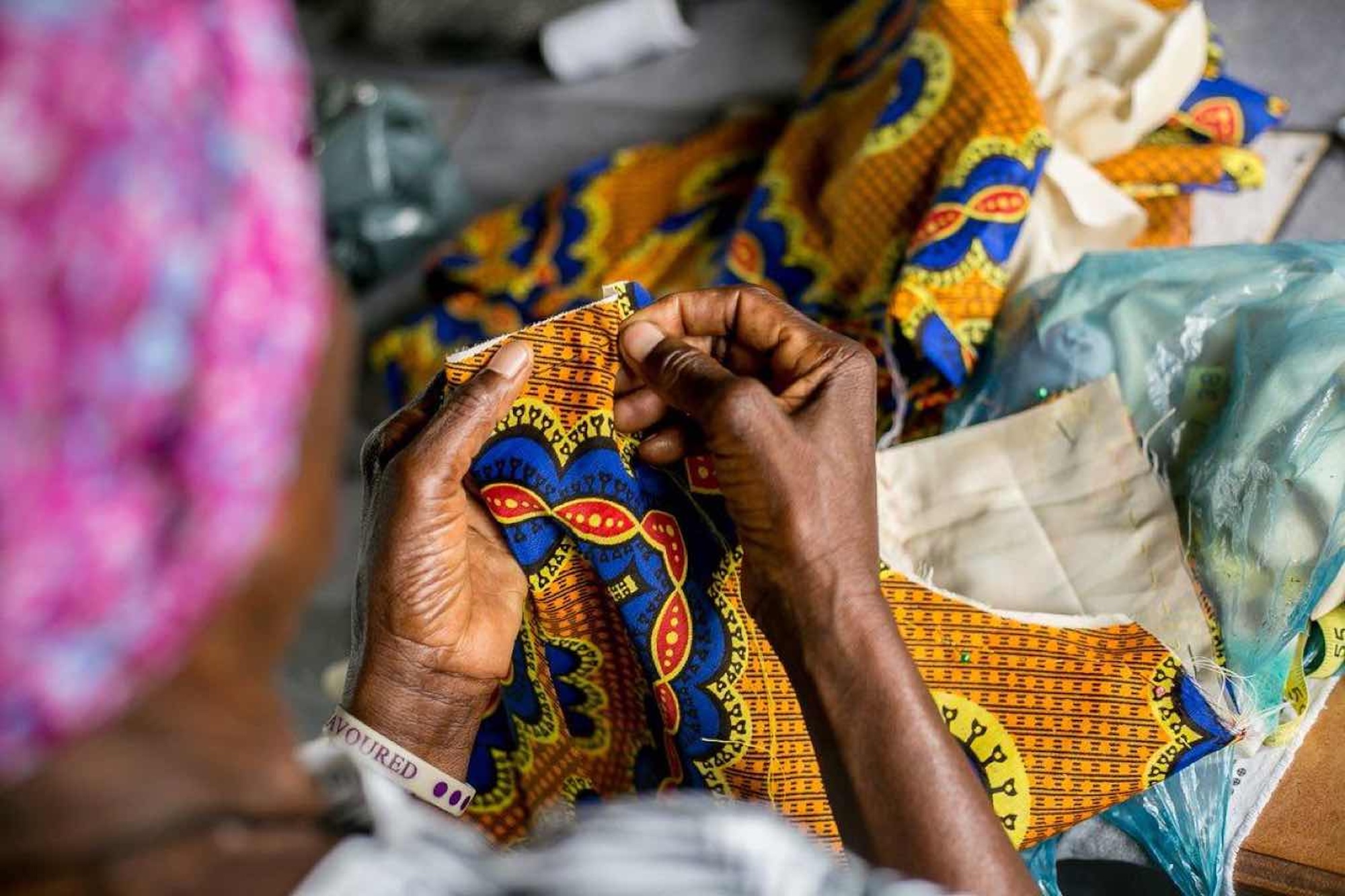
Skill becomes income, and fabric becomes part of a much wider story of stability, Image Credit: African Bush Camp Foundation
What It Sets in Motion
This kind of impact rarely stays in one place. A role in camp may begin with one woman, but it seldom ends there. Income moves quickly through a household – school fees, groceries, transport, and the small pressures that begin to ease with steadier earnings.
It also changes what conservation can realistically ask of people.
In Zimbabwe, where communities and wildlife live in close proximity, conservation has to make practical sense. Tourism-linked livelihoods help make that connection real. Healthy ecosystems support safari. Safari supports jobs. Jobs support families.
That is the real force of these initiatives. Women earning, guiding, managing, sewing, and building careers within the safari industry not only shift their own prospects. They strengthen households, widen opportunity, and give conservation a stronger human foundation.
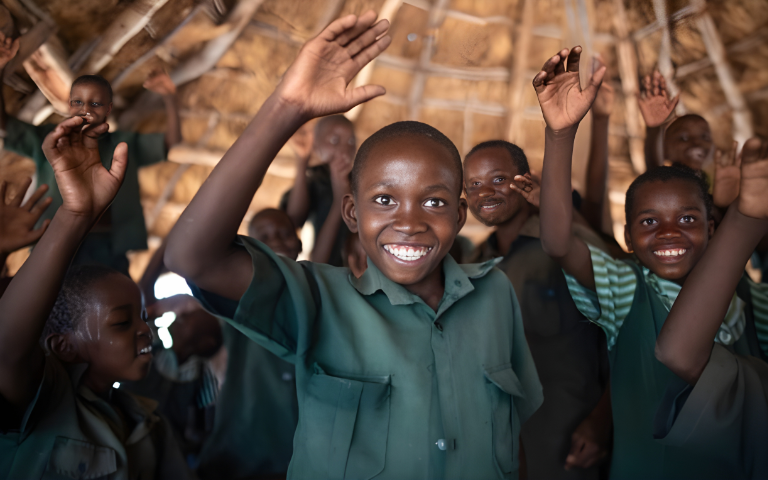
The impact of community upliftment programmes extends far beyond what the eye can see, Image Credit: African Bush Camps
What It Comes Back to
A Zimbabwe safari like this gives something back long after the stay itself. Guests come for the magnificence of the wild, and through that stay, they also have the opportunity to support the places and people that hold it all together.
Every stay at an African Bush Camps property contributes to the running of African Bush Camps Foundation, alongside conservation levies and donations. That support helps sustain the work happening around the camps, including the women increasingly shaping safari in Zimbabwe through hospitality, guiding, and local enterprise.
That's what it comes back to. You arrive for the wilderness, and in doing so, help support the people making that wilderness viable.
“It made the safari feel not only memorable, but progressive too.” – Savannah.
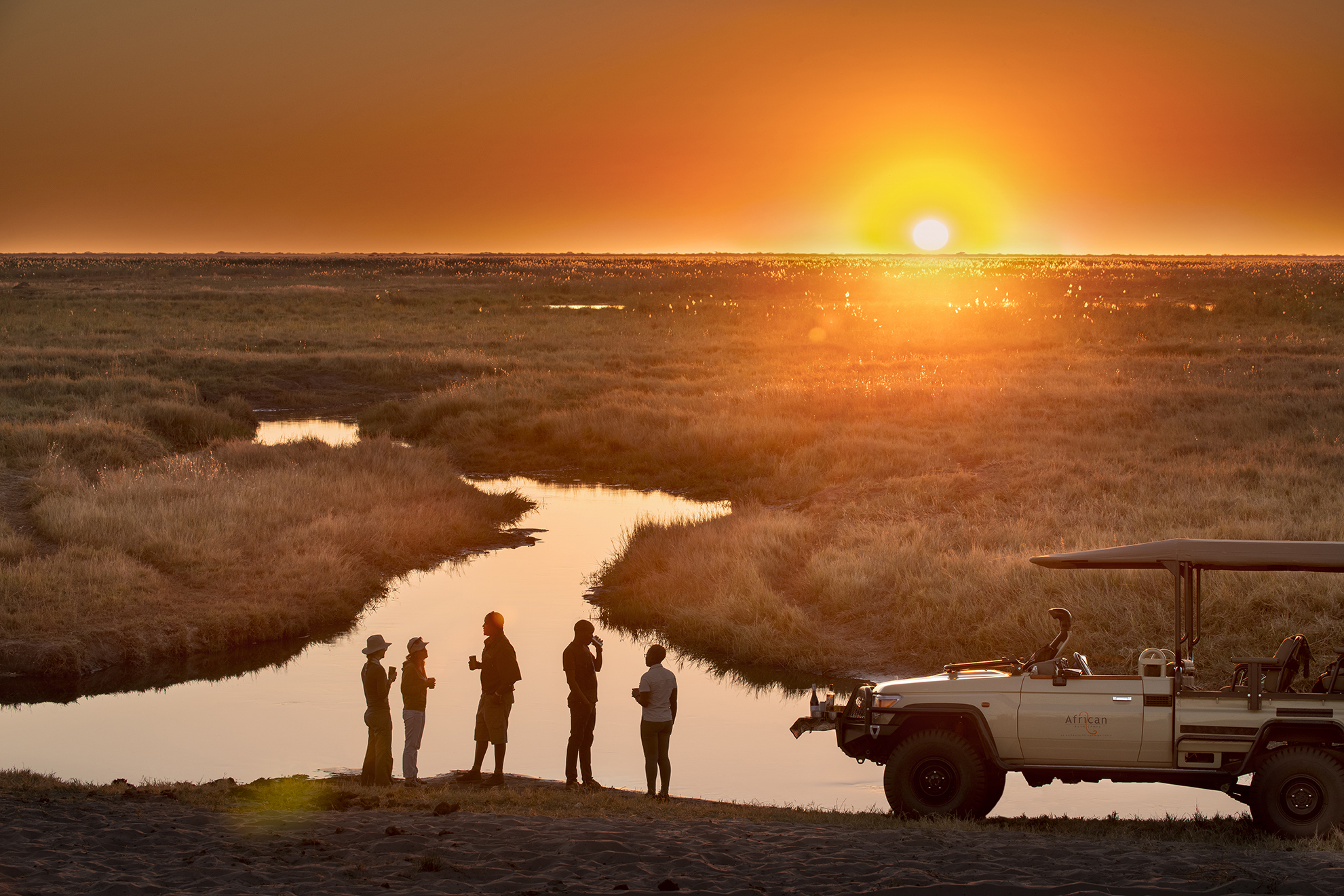
Luxury travel you can feel good about, Image Credit: African Bush Camps Linyanti Expeditions
Step Into a Different Kind of Safari
What made this kind of safari so memorable for Savannah ran deeper than the setting.
It was there in the softness of camp hospitality, set against the toughness it takes to train as a guide. In the beadwork and sewing crafted in one village, and the anti-poaching and conservation work carried out in another. In a warm smile over breakfast, with an entire structure of effort, skill, and opportunity sitting just behind it.
On a trip like this, you’re not only moving through extraordinary landscapes. You’re seeing what it looks like when those landscapes are supported by people who are being given a real stake in their future.
And perhaps that's the shift that lingers longest.
How You Can Do It
- Learn more about Zimbabwe and explore the camps, regions, and experiences that shaped Savannah’s journey.
- Chat to a Rhino Africa Travel Expert to start planning a safari that reflects your interests, pace, and travel style.
- Discover our Zimbabwe itineraries for ideas on how to combine Victoria Falls, Mana Pools, Lake Kariba, and Hwange.
- Peruse the camps if you’d like to experience the same properties and people for yourself.
Feature Image Credit: African Bush Camps Foundation


