

We know that planning your first trip to Tanzania can feel a little overwhelming on paper. But our Travel Experts know the country inside out, from the safari circuits of the mainland to the narrow alleyways of Stone Town. So, think of these 10 Tanzania travel tips as your practical field guide from someone who wants you to feel completely at ease once your feet hit the ground.

Snow-capped Mount Kilimanjaro, holding its cool above the warmth of the plains below
1. A Little Swahili Goes a Long Way
In Tanzania, greetings come first. Always. Jumping straight into a question or asking a price without a proper “hello” can feel a bit abrupt out here. Therefore, learning a few simple phrases in the local Swahili language is the easiest way to shift from a nervous visitor to a welcomed guest.
Tucking a few words into your vocabulary turns a passing interaction into a genuine moment of connection:
- Jambo (Hello): The universal, instant icebreaker.
- Habari? (How are you?): The essential follow-up that shows you're not in a rush.
- Karibu (Welcome): The word you'll hear at every single camp and shop.
- Asante (Thank you): Your go-to response for the incredible local hospitality.
Good Manners Make All the Difference
Beyond the language, a few small customs are worth keeping in mind. Handshakes, for instance, often last longer than visitors expect, so do not rush to pull away – just lean into the warmth.
The same goes for using your right hand. In Tanzania, it’s the hand used for greeting, exchanging money, and accepting food, while the left is traditionally reserved for personal hygiene. And if you’re invited into a local home, it's polite to remove your shoes at the door.

Connect deeply with the rich and remarkable cultures of Africa, Image Credit: Karin Schermbrucker
2. What You Wear Depends on Where You Are
Out on the open savannah, what you wear matters far more for practicality than style. Your safari wardrobe should default to muted shades of khaki, olive, brown, and beige. Leave the stark white linens and loud animal prints at home. You might think a leopard-print shirt is on-theme, but you don’t want a terrified zebra mistaking you for a real predator; they’ll run away long before you can even lift your camera.
On the mainland, modest casual clothing is perfect for exploring towns. Zanzibar, however, operates on distinct cultural terms. Because the Spice Island is predominantly Muslim, walking through Stone Town’s narrow streets requires conscious modesty. Ensure your shoulders and knees are covered when exploring historic sites, and keep a light linen wrap tucked into your bag just in case. Save the swimwear strictly for the beach or your lodge pool.

Stone Town unfolding from above, Zanzibar’s coast and coral-stone maze seen in one sweep
3. Yes, Tsetse Flies Are Real (and They Hate Khaki)
If your journey takes you into the open plains of the Serengeti or the baobab forests of Tarangire National Park, you’ll likely hear tales of the local tsetse fly. Fear not – safari lodges are experts at bug patrol, and your guides know exactly how to keep you comfortable and bite-free.
Stepping out with confidence comes down to a clever wardrobe rule. Tsetse flies are visually drawn to dark, contrasting colours, specifically navy blue and solid black. If you wear a dark shirt, they might mistake you for a passing wildebeest. Sticking to your classic olives, tans, and khakis means they're less likely to bother you.

Get up-close and personal with incredible wildlife, Image Credit: andBeyond Serengeti Under Canvas
4. Cash is Still King of the Bush
In Tanzania, the condition of your USD notes matters more than most first-timers expect. Banks and lodges can be strict about torn notes or older bills, so bring clean cash issued from 2009 onwards. Large $100 bills are perfect for settling lodge accounts, but you’ll want a healthy stash of $1, $5, $10, and $20 notes for daily incidentals. Major camps and national park gates accept credit cards, but cash is what moves the rest of the country.
Tipping is a standard and appreciated part of the safari industry, especially for guides, trackers, camp staff, and drivers. Instead of worrying about the math at the end of the day, you can check out our clear tipping guide to keep things perfectly simple.

Tree-climbing lions in Tanzania, an unusual sight in the wild
5. Know Your Airports
The northern safari circuit relies on two different aviation hubs, and understanding the difference between them will save you from a classic first-timer mix-up. Kilimanjaro International Airport handles the large international arrivals and sits roughly an hour outside the town of Arusha. Arusha Airport, by contrast, is a tiny, buzzing domestic strip that handles the light aircraft hopping directly between the bush airstrips.
A few hours' delay is not uncommon when connecting your flights, and it can actually be a blessing. While you wait, head over to the beautiful Arusha Coffee Lodge nearby, where you can book a day room and settle down for a brilliant meal. It's the easiest way to arrive at your international gate feeling completely relaxed.

Welcome to Tanzania's wild wonderland, Image Credit: Chem Chem
6. Transfers Take Longer Than You Think
When looking at a map of East Africa, distances can be incredibly deceiving. Out in the bush, we measure travel times in terrain and wildlife encounters rather than kilometres. A transfer between a bush airstrip and your safari lodge can easily take up to two hours.
In national parks such as the Serengeti, guides must stay on designated tracks to protect fragile habitats, which naturally slows the pace. But that's part of the experience. Vehicles are stocked with snacks and refreshments prepared by the lodge, and the transfer itself becomes an extension of the safari rather than a break from it.

With so much to explore, no two trips to Africa need to be the same
7. Pack Your Emotional Support Bottle
Safari comfort often comes down to the basics, and hydration is one of them. Dry air, long game drives and shifts in altitude can leave you more dehydrated than you expect, so a sturdy reusable bottle is well worth treating as part of your daily kit.
Water safety, thankfully, is simple. Tap water is best avoided, but worry not, as luxury camps and lodges keep a generous supply of fresh filtered water on hand for drinking, brushing your teeth, and filling your bottle before heading out.

There's always something unexpected in Tanzania
8. Single-Use Plastic? Not Around Here
Tanzania is incredibly proud of its pristine wild spaces and takes environmental preservation very seriously. As a result, the country enforces a strict ban on single-use plastic carrier bags. This rule is actively monitored at airport customs and border entry points, where officials politely collect standard plastic grocery or shopping bags from your luggage.
There are no heavy or scary fines for honest mistakes. It's a straightforward, friendly handoff. Clear, reusable Ziplock bags used explicitly for your travel toiletries are the one exception to the rule, provided they leave the country with you at the end of your holiday. For a completely seamless arrival, decant any plastic-bagged items into fabric packing cubes or drawstring alternatives before you fly in.

White sandy beaches with twinkling turquoise seas, Image Credit: Zuri Zanzibar Hotel and Resort
9. Zanzibar Operates on its Own Island Rhythm
The moment your bush plane touches down on Zanzibar, the safari rhythm disappears. Out in the bush, your days are dictated by the wild. You're up before dawn to watch the sunrise over the Serengeti and track predators before breakfast. On the island, however, the pace softens. You can sleep in and enjoy a long breakfast overlooking the waves while the morning drifts by without a single alarm clock.
Once your feet hit the island, give historic Stone Town the time it deserves. This UNESCO World Heritage Site has a beautiful, labyrinthine layout designed for exploring. Pro tip: When browsing the local markets for world-famous spices or hand-carved art, lighthearted bargaining is completely expected.

Old and new worlds collide in Zanzibar’s capital city, Stone Town
10. There’s More Than Just the Northern Circuit
As a first-time guest, you might naturally follow the postcard trail of the northern circuit. Tarangire, Lake Manyara, the Ngorongoro Crater, and the Serengeti are iconic for a reason, but they're only the beginning.
If you crave absolute solitude, look to the south. Ruaha National Park is nearly 50% larger than the Serengeti, yet it sees less than a tenth of the visitors. Further east, the river-mapped landscapes of Nyerere National Park offer equally vast, dramatic ecosystems. For a complete change of scenery, the remote forests of the Mahale Mountains provide the rare privilege of tracking wild chimpanzees.
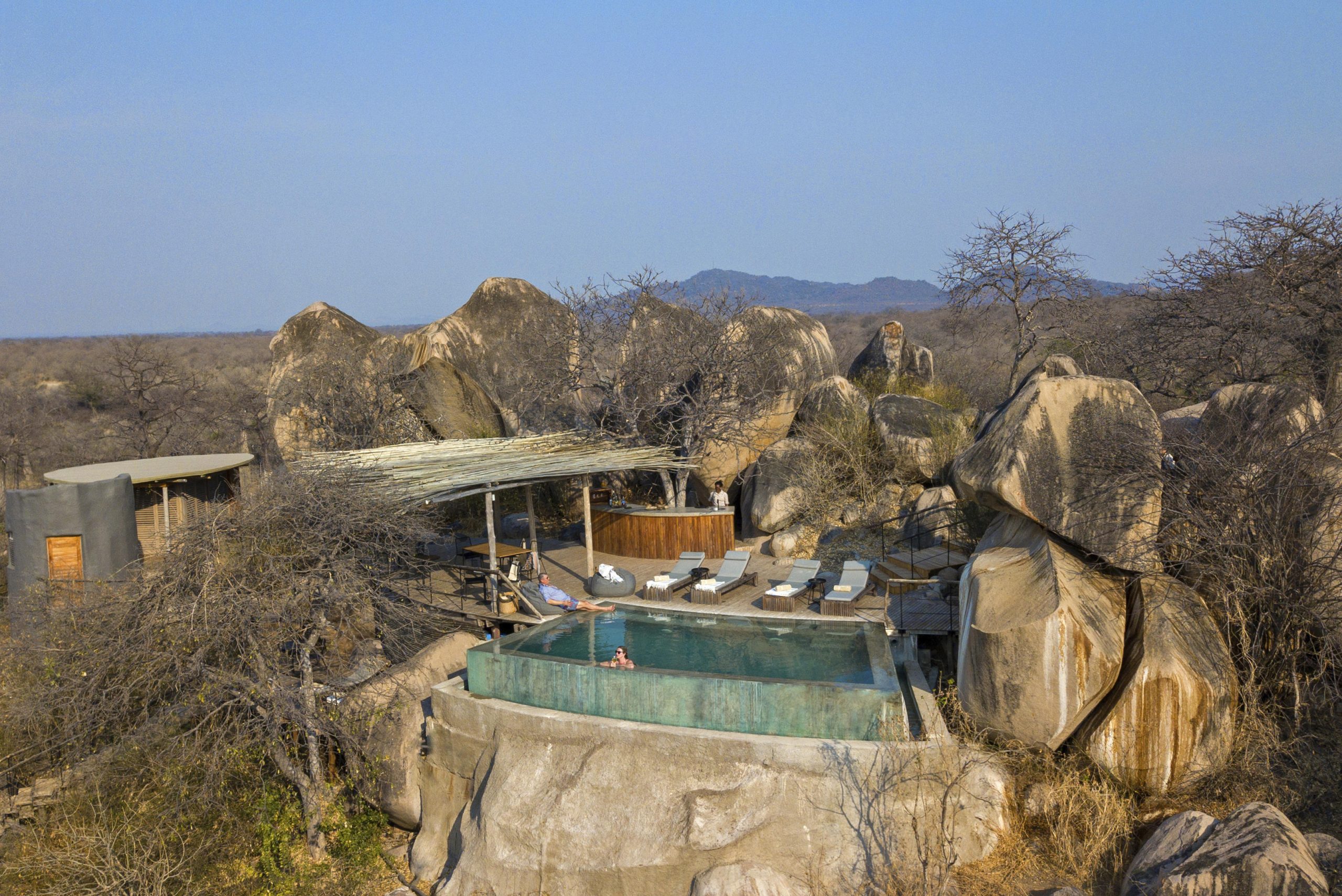
Granite, horizon lines, and Ruaha’s wild silence, Image Credit: Jabali Ridge
Are You Ready to Experience Tanzania?
And there you have it: our top tips for experiencing Tanzania, from savannah to shoreline, for anyone drawn to more than one kind of wonder. If you're ready to shape your perfect bush-and-beach itinerary, speak to our Travel Experts today. We’ll take care of all the behind-the-scenes logistics, so all that's left for you to do is simply step into the wild.


