

The sun clipped the horizon, rays slowly spilling over the sand. They moved across the dunes, casting one side in shadow and the other in a rose-pink hue unlike anything Justine Ryan had ever seen before. She had been to Namibia a few times already, but only in fragments – enough to know its dust, distance, and assumed difficulty. So when she returned to experience it the way our clients do, it came as a pleasant surprise: that Namibia is far richer than she ever imagined. Below, Justine shares the retelling of her epic journey through this country of contrasts.
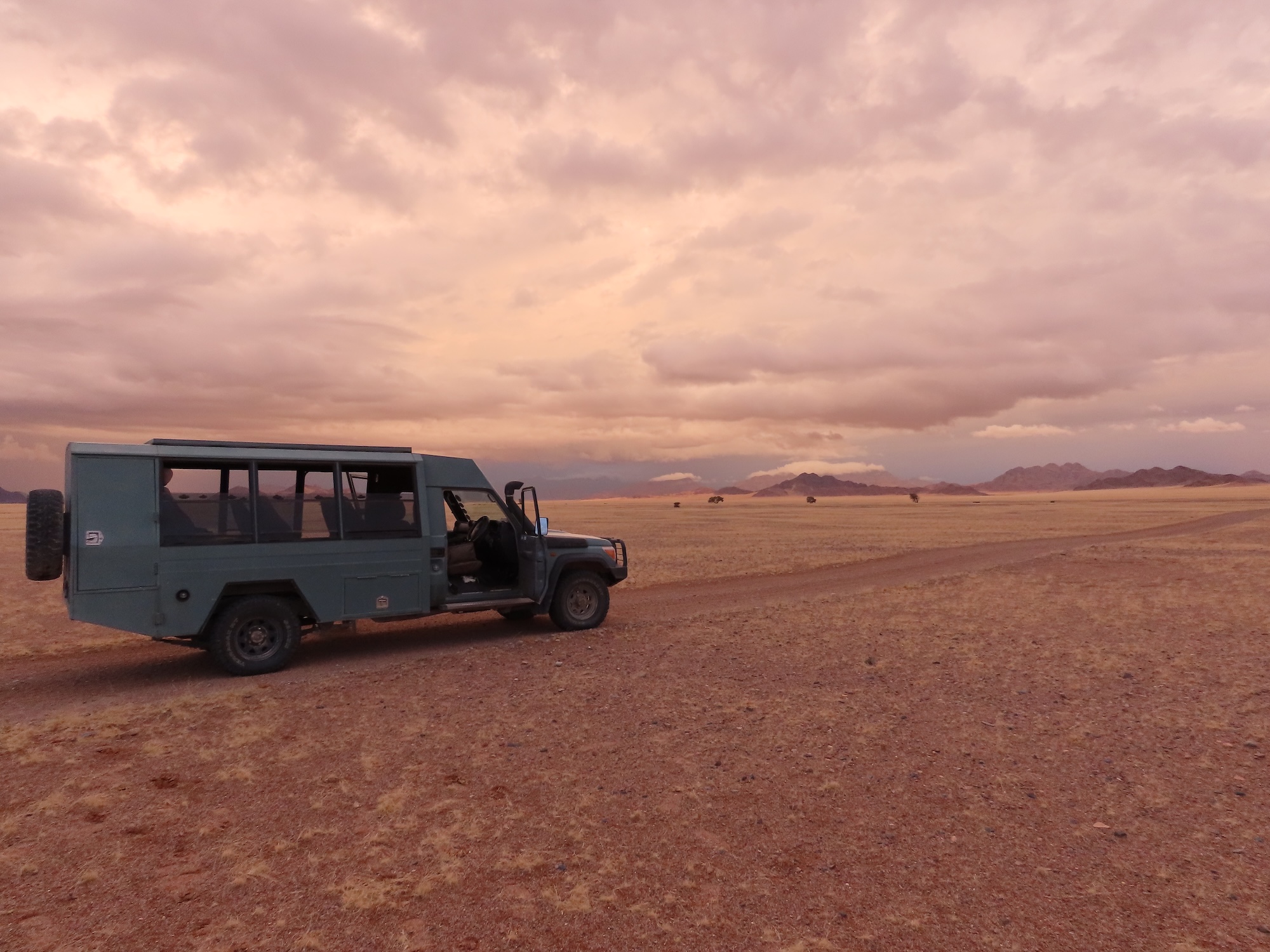
A morning departure into Namibia’s wide landscapes, Image Credit: Justine Ryan
The Confession
I travelled on one of Rhino Africa’s educational journeys, designed to let our Travel Experts experience a destination the way our guests do, properly and in full. My route took me from Sossusvlei to Damaraland, Hoanib, Serra Cafema, and finally Ongava.
And somewhere along the way, I had to admit I had been wrong.
Yes, there are dunes, there’s dust, and there’s dirt. But Namibia is not one mood, one colour, or one idea. It’s a country of startling contrasts that only make sense once you move through them all. And I don’t say that lightly. Many destinations boast a diverse range, but none actually come close to the juxtaposition of Namibia’s raw, rugged, wild landscapes.
Each tells its own story, and what we see today is a tapestry of time’s effect, told layer by layer, all slowly revealing the hidden truths of wind, water, and sun-drenched wonders. I had mistaken starkness for simplicity. What I found instead was a country of astonishing complexity, where survival itself becomes part of the beauty.
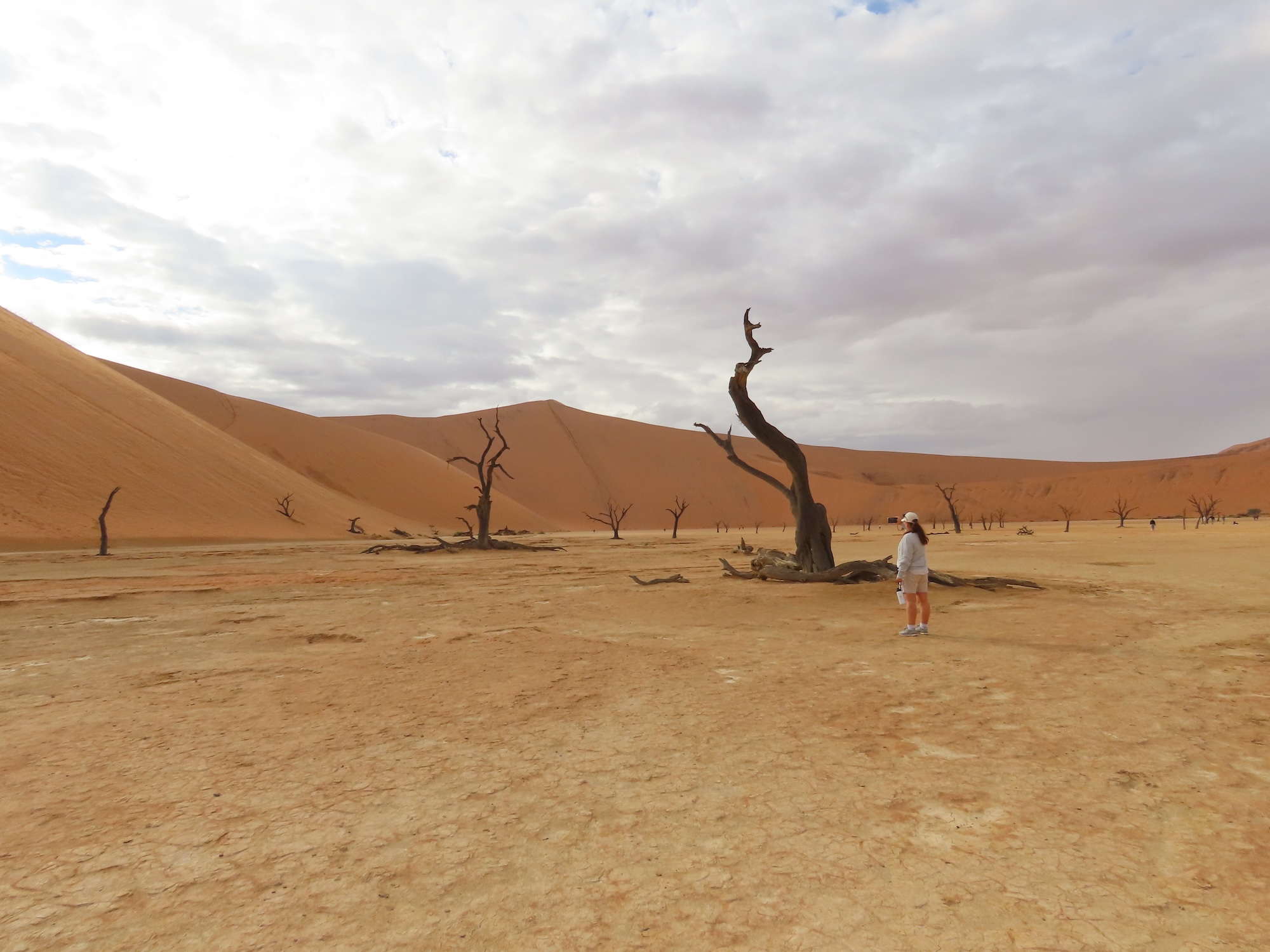
In Sossusvlei, scale plays tricks on you with towering dunes, fossil-still trees, and seemingly staged silence, Image Credit: Justine Ryan
Dunes Are Not Just Dunes
Sossusvlei, in southern Namibia, was the first stop on my journey and the ideal introduction to the country. It’s one of Namibia’s most iconic landscapes: looming red dunes, white clay pans, and dead camelthorn trees.
This is the problem with clichés: they ruin a place before you get there. Sand dune is a phrase that sounds finished, self-explanatory. But Sossusvlei is not that simple at all. What changed it for me was not only being there, but having a guide explain what I was actually looking at.
The dunes stopped being beautiful heaps of sand and became something more precise – an ecological masterpiece sculpted by wind, their colour deepened by minerals like iron, and the perfect angles a picture of beauty. Once I understood the how, the landscape stopped being a postcard and became something of a legible, living narrative.

Big Daddy Dune, the largest sand dune in the country
What also surprised me was how much fun the place allowed itself to be. We missed the hot air ballooning because of the weather, which felt briefly tragic. But then Namibia, being Namibia, offered another perspective. At Kulala, I headed out on a quad bike excursion instead. It was ridiculous and absolutely wonderful.
“At one point, the guide let me move ahead, and with no buildings, no communities and nothing around me, I felt like the only person left in that vast space.” – Justine.
And just when I thought the desert had shown me enough, we visited Sesriem Canyon, a ravine hidden almost like a fissure between the dune-scapes. It offered another side of the region entirely: layered rock you can wander through, providing an intimate experience and tangible example of deep time.
Silence and scale defined this region for me. And little did I know that the wonders had only just begun.
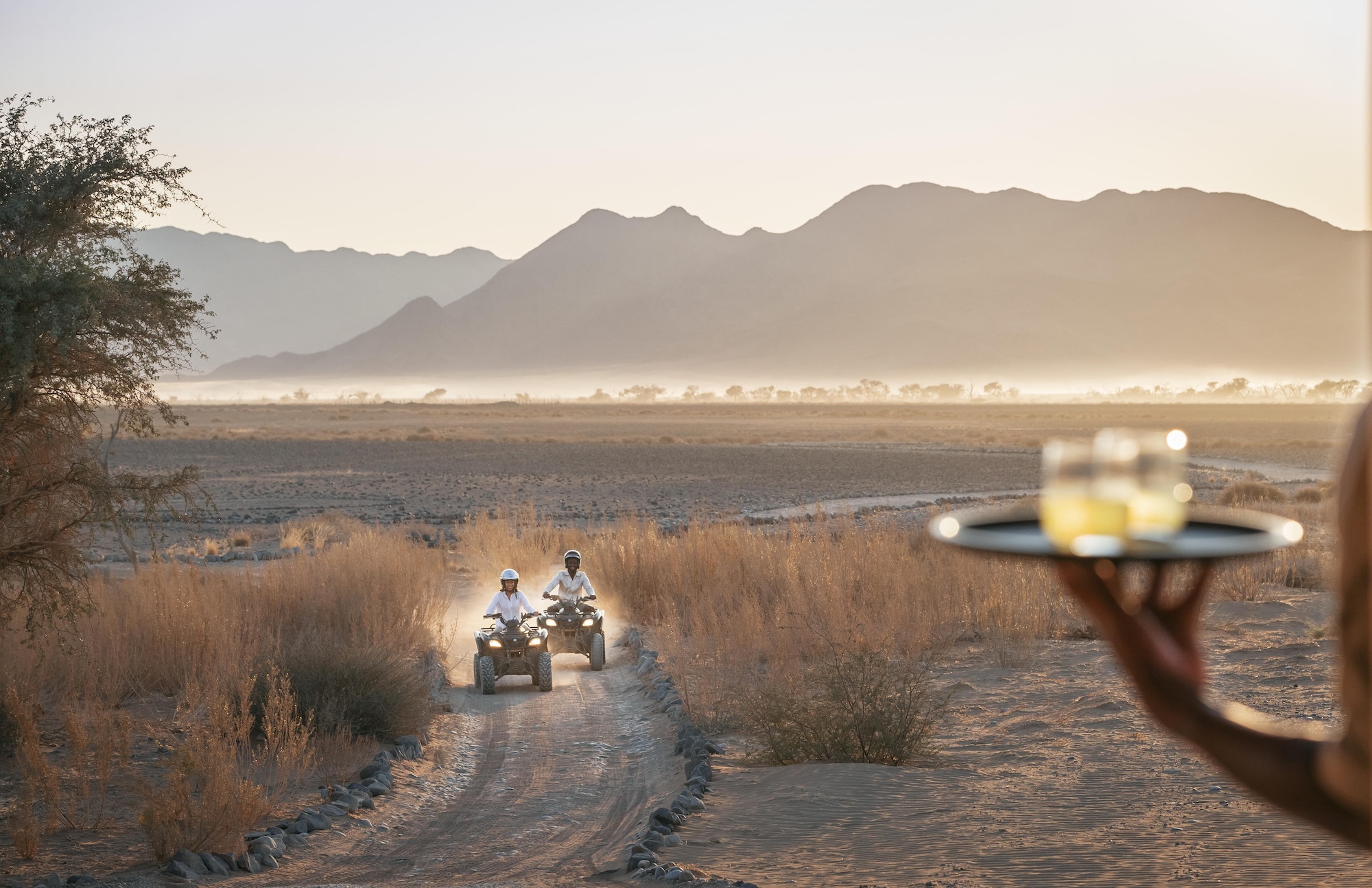
A rare kind of freedom: riding into the stillness with nothing ahead but dust and open land, Image Credit: Little Kulala
The Land Grows Bones
From Sossusvlei, we headed north into Damaraland – specifically the Huab River Valley in the Torra Conservancy. If Sossusvlei had introduced Namibia through line and curve, Damaraland brought weight. Rock. Texture. A harder kind of beauty.
This is where the land seemed to grow bones. The softness of sand gave way to something more mineral. The desert did not disappear, but changed form. It became mountainous rather than dune-led – all rust-coloured rock, dry riverbeds, and broken ground. Even the drive felt different: bumpier and less forgiving.
And yet it did not feel empty. It felt inhabited by solutions.
“This is where Namibia’s desert-adapted wildlife became real to me. It’s not impressive because it’s abundant. It’s impressive because it survives.” – Justine.
Elephants moved through dry riverbeds and rocky country as if this harshness were simply part of their design. You see their shorter legs working hard as they move up jagged slopes, a surreal sight if you’ve only known them elsewhere. Rhinos are part of the story too, and the region is renowned for rhino trekking and guided walks.
Damaraland felt like a turning point. And there was still so much more to come.
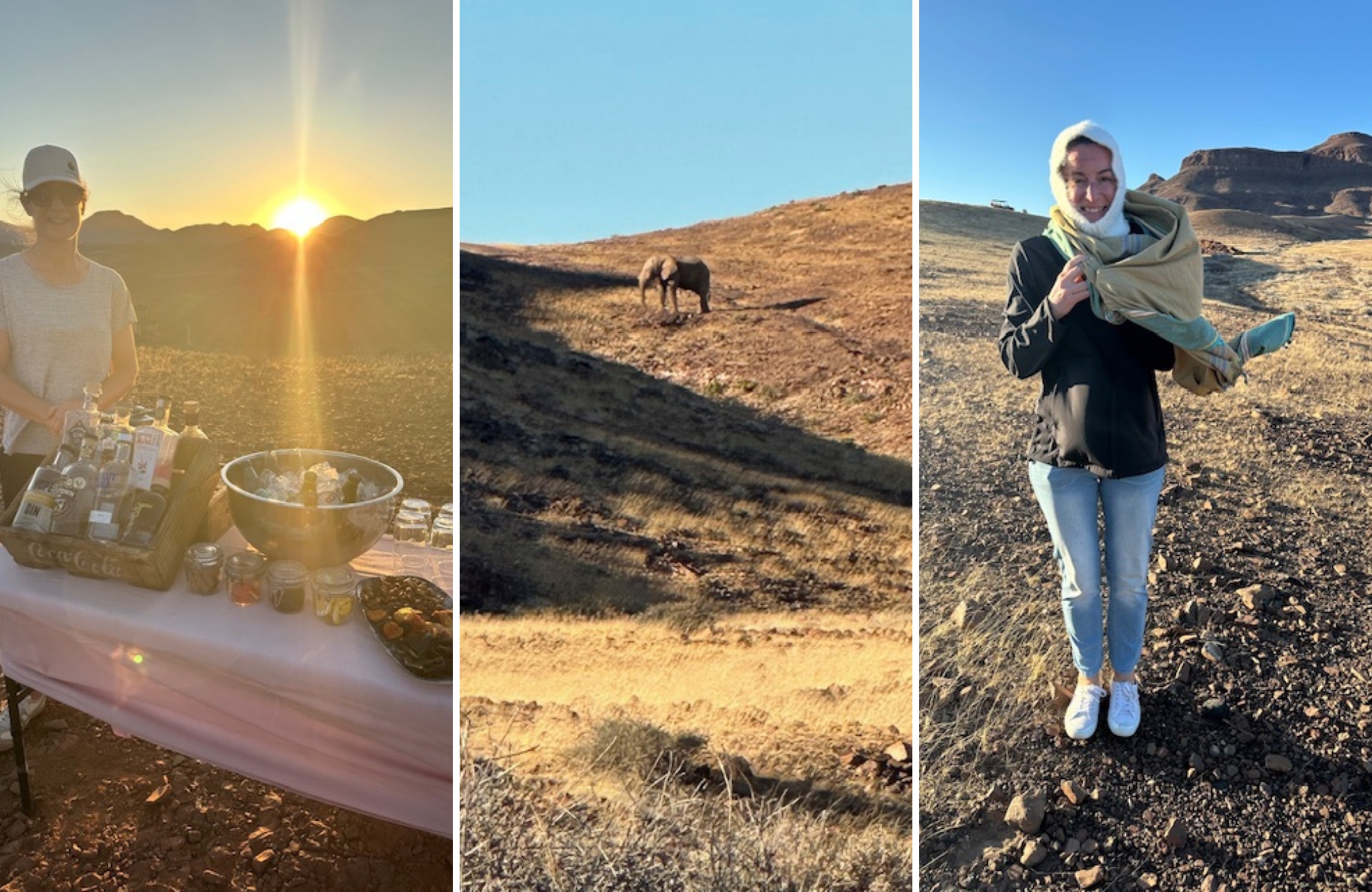
Justine relishing a sundowner stop in Damaraland, Image Credit: Justine Ryan
Safari Animals on the Beach?
By the time I reached Hoanib, Namibia had already shapeshifted several times for me. And now, we ventured into a part of the country that felt even more exposed and improbable. Hoanib itself sits in the Kaokoveld, enrobed by a landscape of dried riverbeds, arid escarpments, undulating outcrops, and impossible oasis pockets (because why not make the scenery more dramatic?).
The next day, we set out on a full coastal excursion towards the Skeleton Coast. At first, the vistas still carried that inland harshness I had come to know. Then, gradually, it softened. Dry riverbeds began to hold more green than seemed possible. Oryx appeared through the sand-induced mirages. Giraffe stepped through the dust and into view just behind them. Birds of prey circled above us. And then, just as I thought I had settled into this new scenery, the signs changed again: lion tracks in the sand, and cub tracks, too.
And it didn’t end there.
“The ground gave way to dunes. Water appeared where I least expected it, nourishing life where there should be none. Then, once we crested the dunes, the coast arrived in full: silver-blue and utterly dramatic.” – Justine.
Here, shipwrecks lay stranded along the shore like relics from another world. Seals carpeted the coast in their thousands, noisy and unbothered, while jackals moved among them. Even elephant and giraffe appeared near the coast – the kind of collision of life that feels impossible until you are standing in front of it.
And then, instead of driving back through it all, we flew over it.
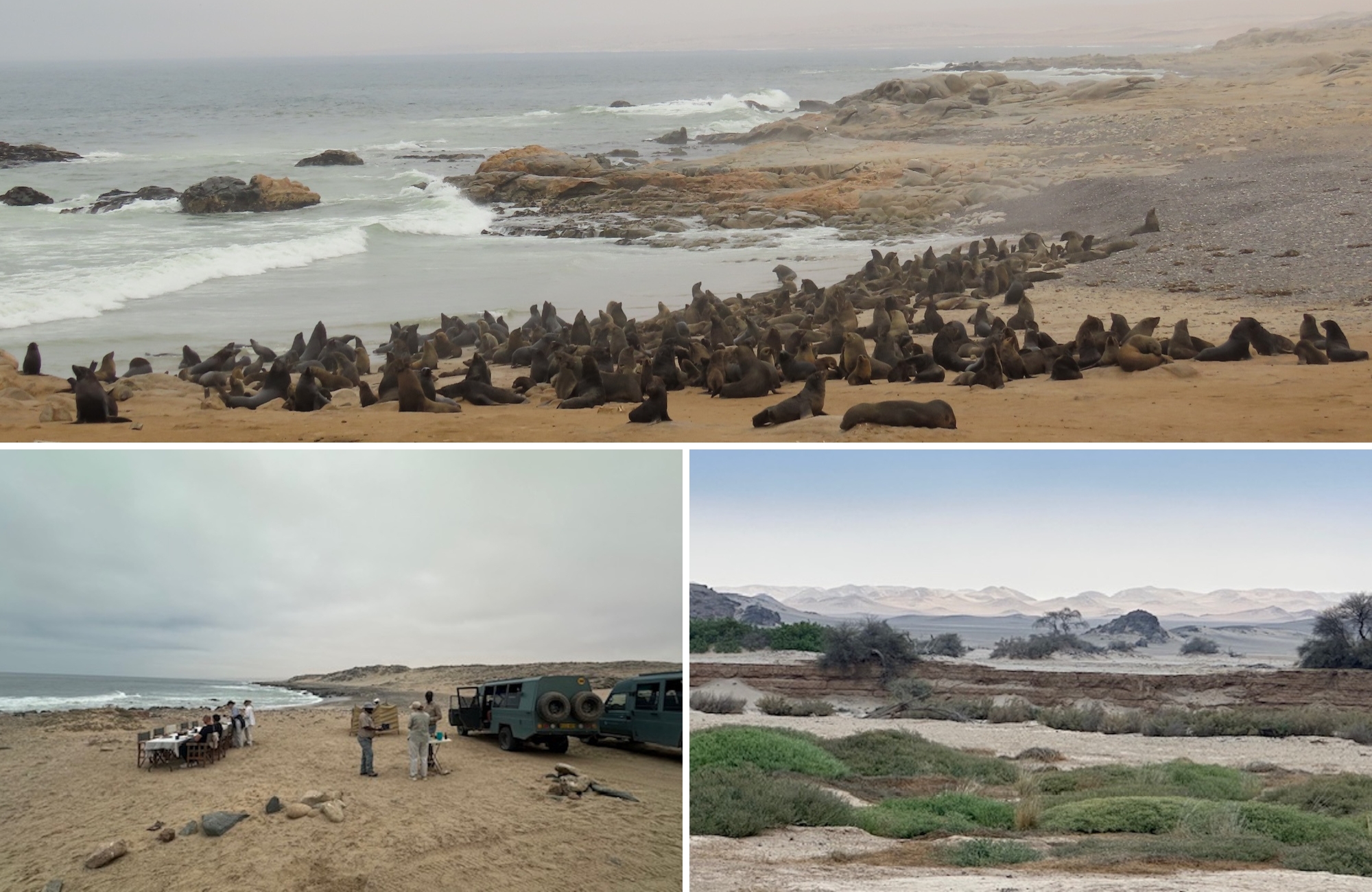
The Skeleton Coast carries seals, shipwrecks, and surreal drama all its own, Image Credit: Justine Ryan
The Flight
That scenic flight back to Hoanib was one of the most mesmerising experiences of the trip. In just 15 minutes, it gathered everything I had just seen on the ground into one impossible view.
What had felt so dramatic in sequence suddenly became visible as one connected landscape. That was the moment I understood just how much this country can hold.
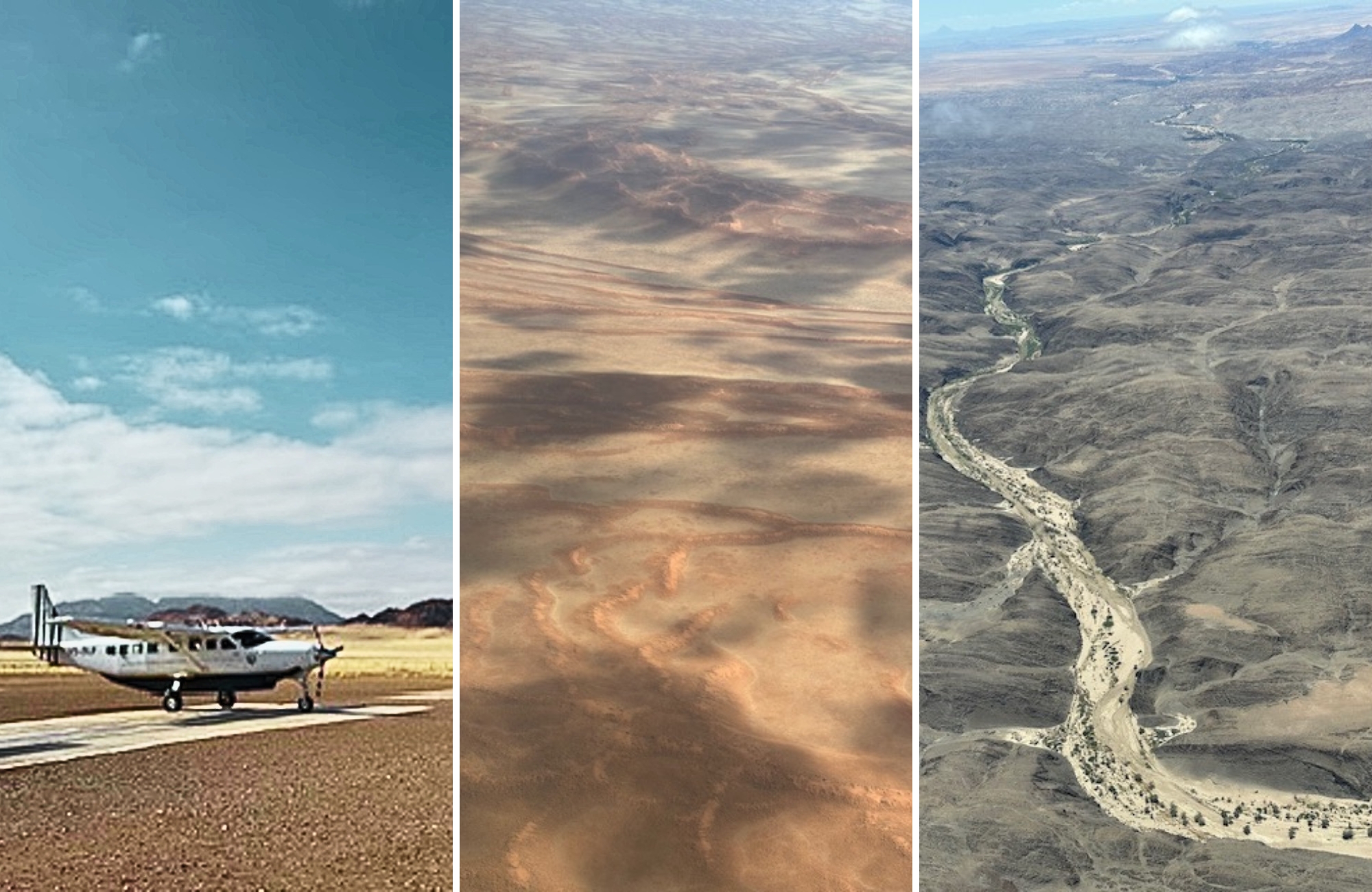
Seeing Namibia from the air turned distance into design, Image Credit: Justine Ryan
At the Edge of Everything
From Hoanib, the journey continued north into the Hartmann Valley, close to the Kunene River and the Angolan border. After the drama of the Skeleton Coast, this part of Namibia felt more stripped back and even more remote. It was still rugged and sun-struck, but quieter – nestled at the edge of everything.
There are so many ways to experience that remoteness. Nature walks, game drives, quad biking, and even the simple act of sitting still all offered a different perspective on the same stark terrain. And despite how exposed it looked, the place never felt empty.
“One of the most memorable parts of this stop was a visit to a local Himba community. I’m often wary of cultural visits because they can easily feel staged, but this one did not. It felt respectful and genuine.” – Justine.
What stayed with me most was learning that this area had not had rain in nine years, and that some of the children there, around five or six years old, had never seen it. For me, that detail changed the landscape from something visually dramatic into something deeply lived.
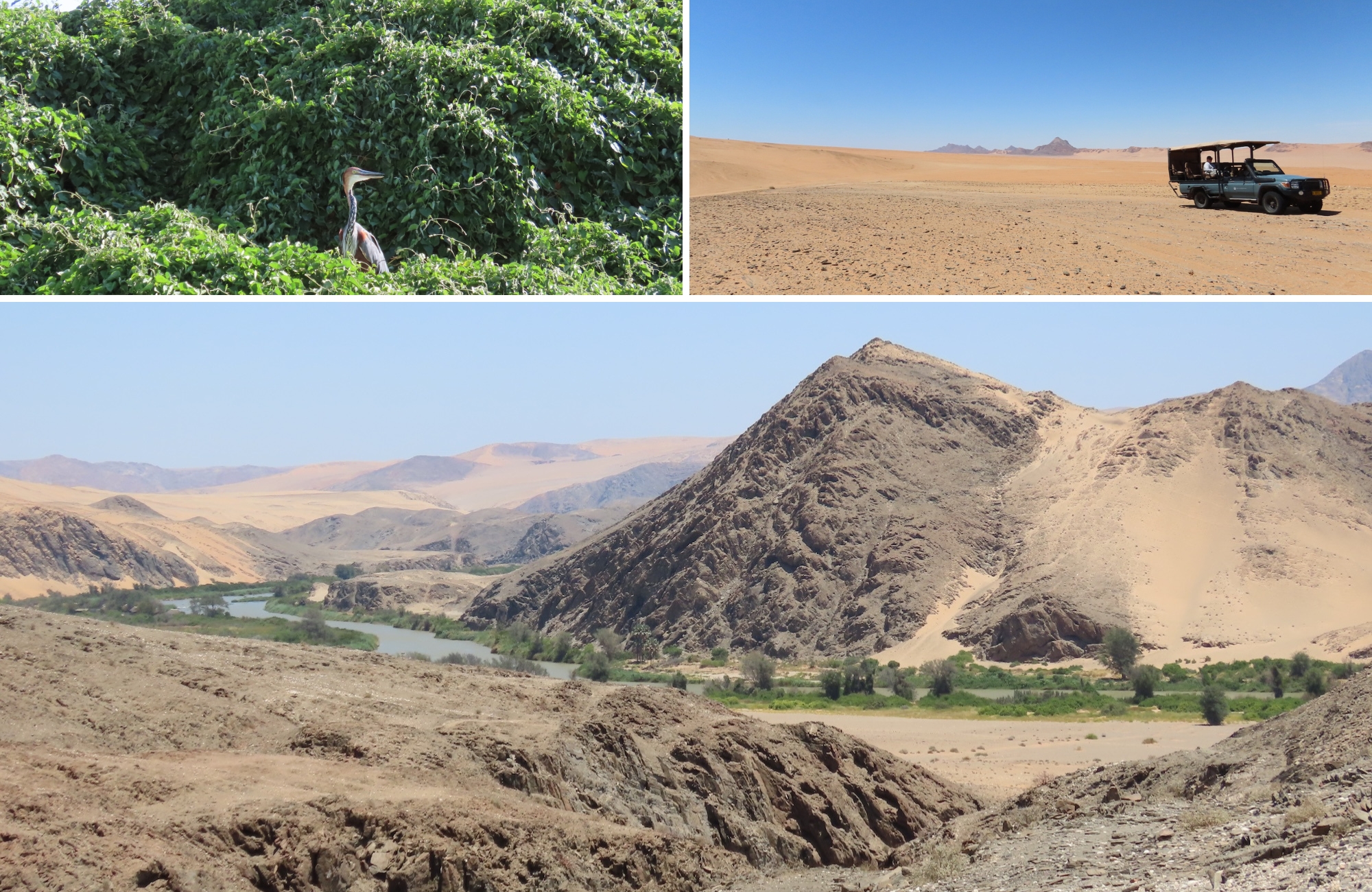
At Serra Cafema, desert and river meet in a way that feels improbable until you see it for yourself, Image Credit: Justine Ryan
The Anchors
For all of Namibia’s scale and severity, the luxury safari element meant I felt completely at home and taken care of. The camps softened the journey without ever dulling it. They did not compete with the landscape or try to distract from it. Instead, they gave each place somewhere warm and comfortable to settle – somewhere that made the remoteness feel not harder, but more enjoyable.
“And it was luxurious, to a point that you can’t quite believe it’s possible in destinations as remote as these. But there we were, experiencing elevated comfort and class in the middle of nowhere.” – Justine.
The luxury didn’t end at the décor or amenities. It was apparent in the people, the ease, the care, and the way each camp seemed to understand exactly where it was. Even the food became part of that feeling: fresh, varied and never too heavy, which mattered more than I expected on a long Namibia circuit.
Wilderness lodges certainly impressed. Here’s a closer look at each camp we stayed at.
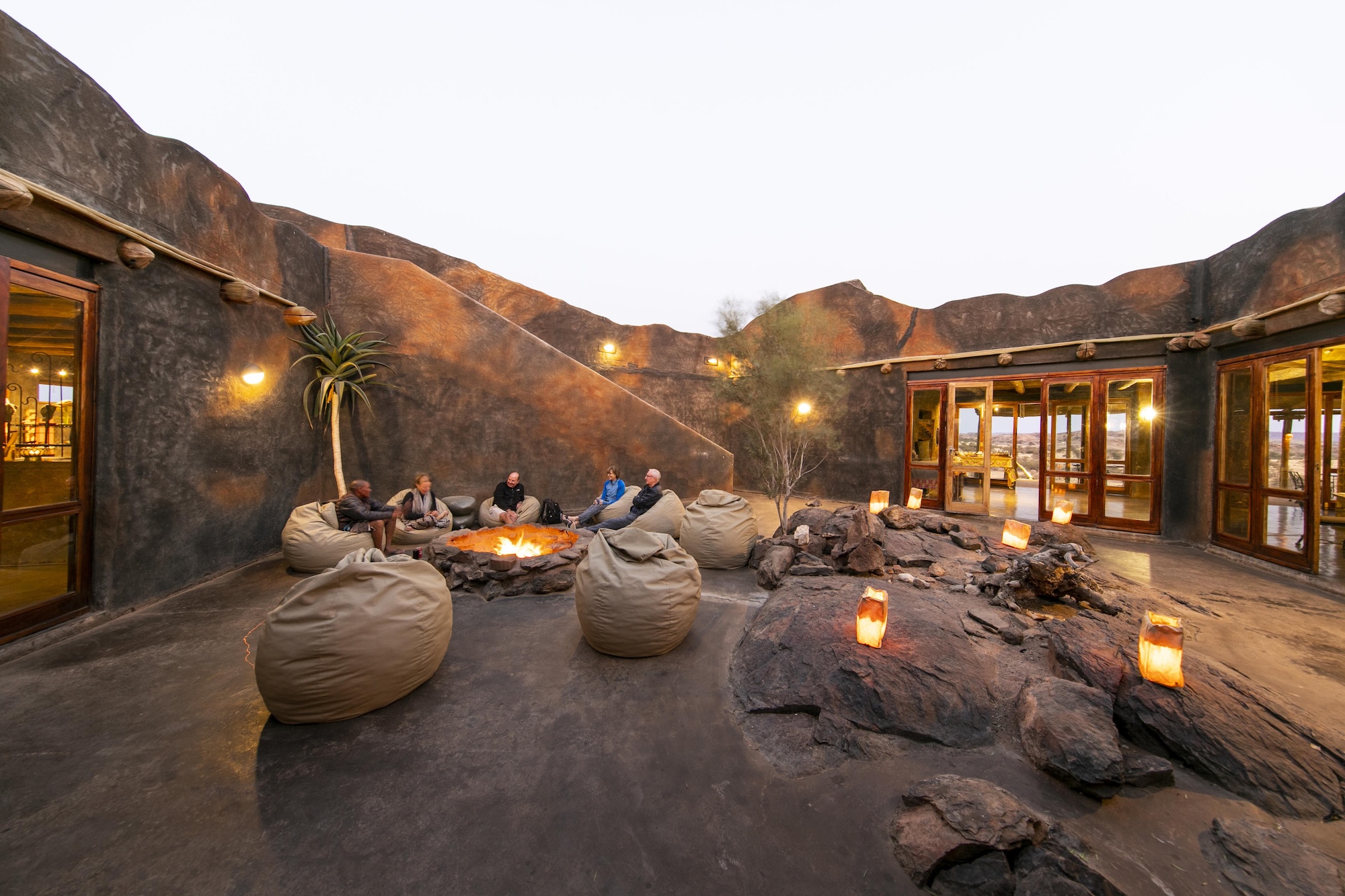
Immersion into the Namibia wilderness has never been this stylish, Image Credit: Doro Nawas
Wilderness Kulala Desert Lodge: A Softer Beginning
Kulala Desert Lodge felt like the gentlest possible way to arrive in Namibia. The desert was already there in full, but the camp made the landing smooth. The canvas-and-thatch chalets that seem to spill into the wide desert views made the scale of the landscape feel welcoming rather than overwhelming.
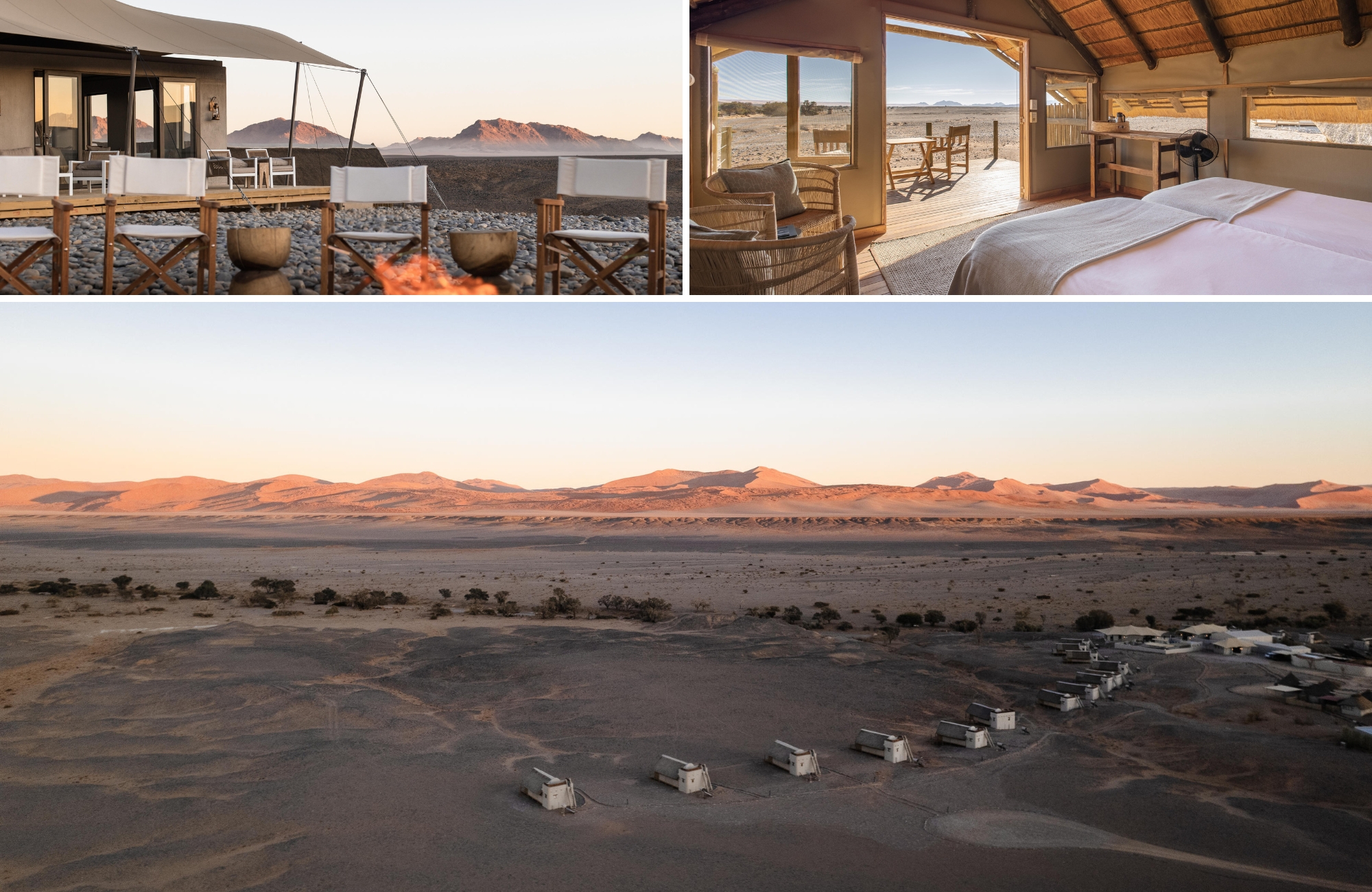
A softened first encounter with Namibia, perfectly placed beneath the dunes, Image Credit: Wilderness Kulala Desert Lodge
Damaraland Camp: Where It Felt Like Home
Damaraland Camp felt the most like home. Set among old camelthorn trees in the Huab River Valley, it had an immediate warmth. After a day out in the rock and dust, coming back to somewhere so open, relaxed, and genuinely welcoming changed the whole mood of the day.
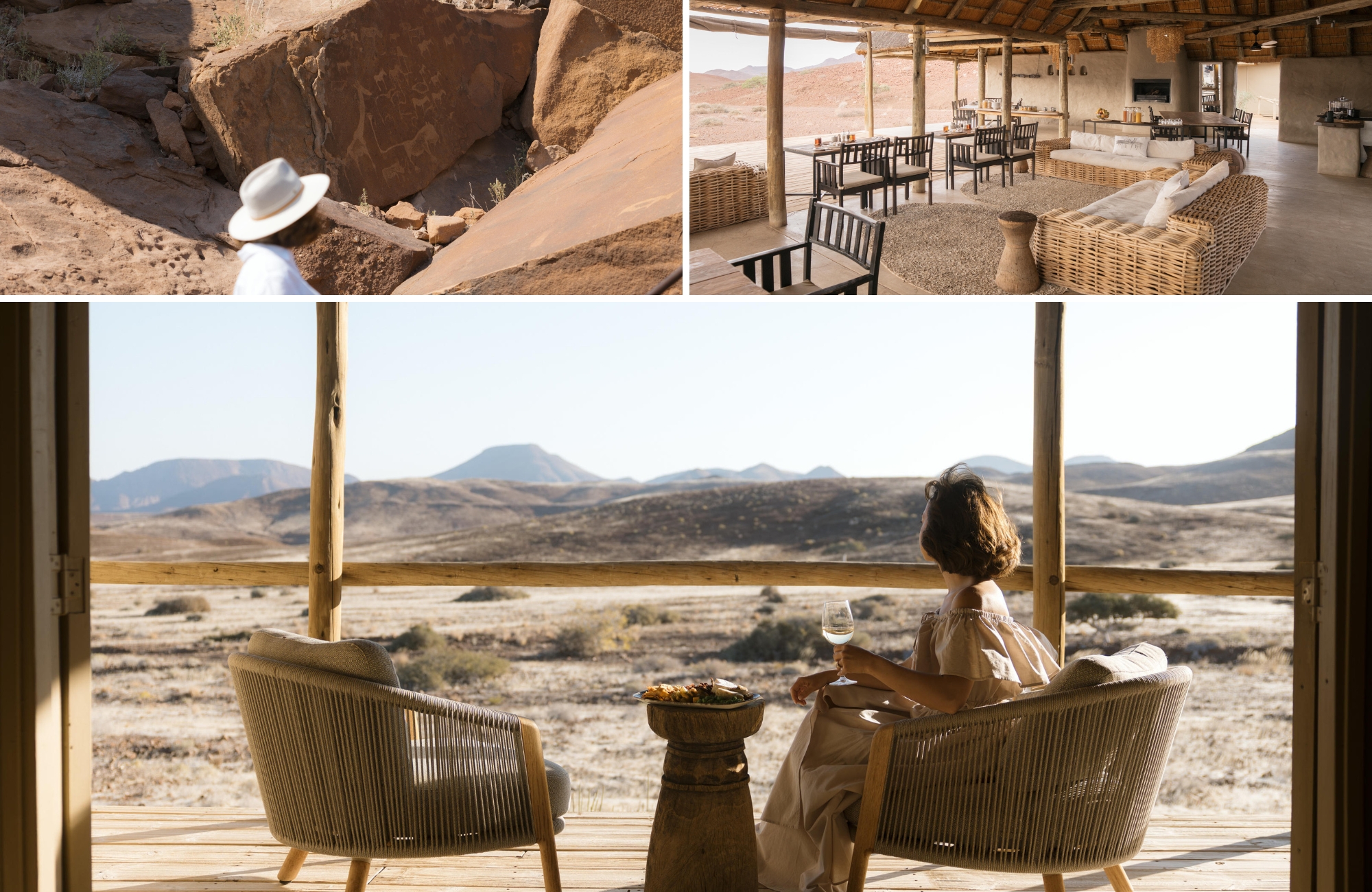
A lodge punctuated by ancient rock art and cloaked in never-ending vistas, Image Credit: Damaraland Camp
Hoanib Skeleton Coast Camp: The Camp That Disappeared
Hoanib Skeleton Coast Camp was probably my favourite aesthetically, because it blended so completely into the landscape that, flying in, you could barely see it. The stretch-tent design seemed to dissolve into the desert rather than sit on top of it. Even the pool at the main lodge felt extraordinary: a still, cool pocket in the middle of nowhere. It was one of those details that made the remoteness feel even more special.
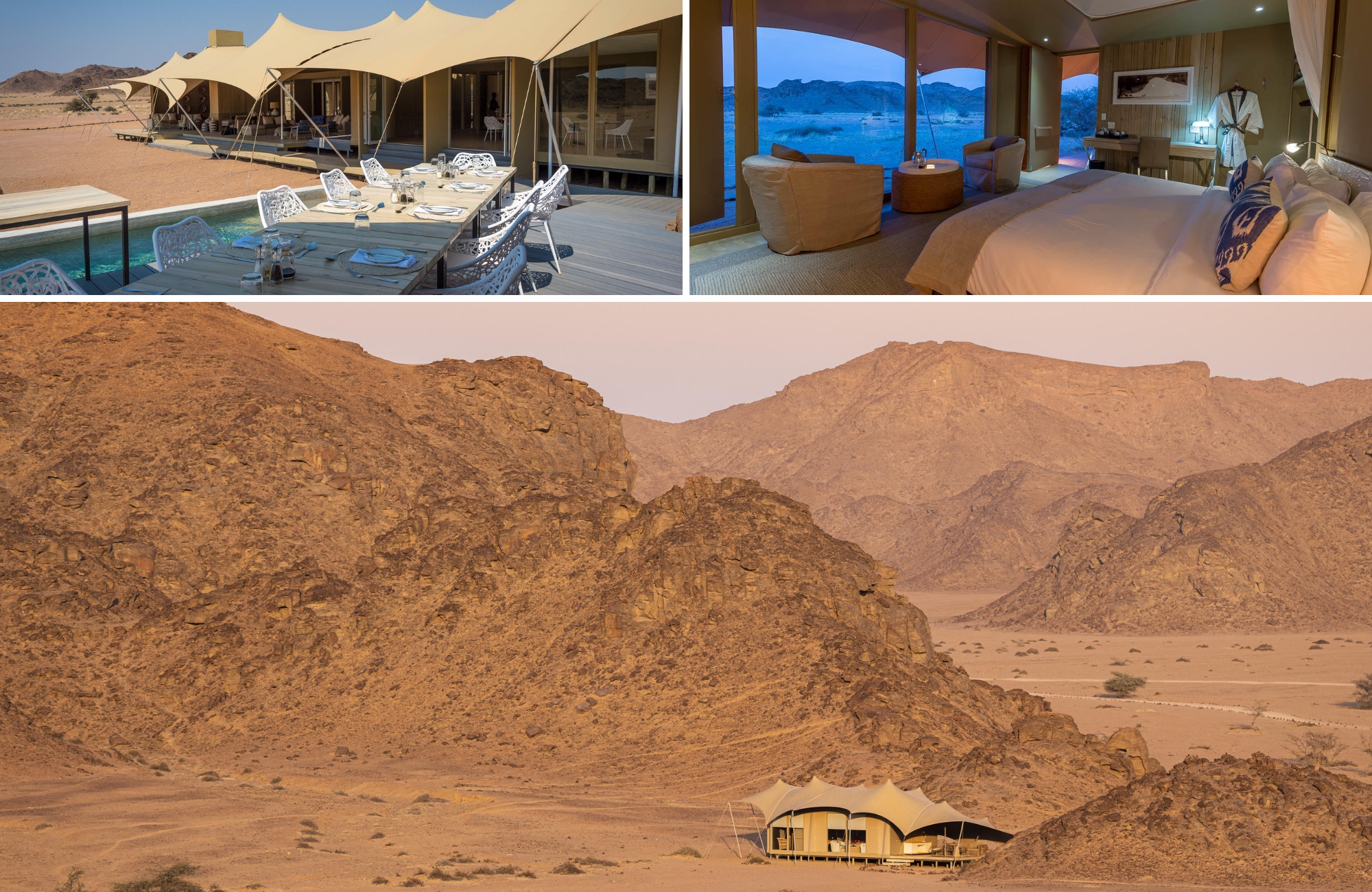
Luxury folded into one of Namibia’s harshest and most beautiful regions, Image Credit: Hoanib Skeleton Coast Camp
The Revelation
Namibia changed the way I understand safari. This is not a destination defined by constant sightings or speed. It asks that you notice not only what you’re seeing, but what it has taken for life to exist there at all. That’s what makes it so distinctive, and why it suits guests who value space, contrast, and a slower, more thoughtful experience of the wild.
Here’s How I Would Plan Your Trip
If I were planning a first Namibia journey for a client, I would always recommend experiencing it as a circuit rather than choosing just one region.
- Begin in Sossusvlei: Start here for Namibia’s iconic desert scenery, scale and extraordinary light. If time allows, stay three nights to make room for more than one desert experience.
- Continue to Damaraland: This brings in a completely different texture – rockier, harsher and more rugged, with desert-adapted wildlife and a stronger sense of Namibia’s inland severity.
- Include Hoanib and the Skeleton Coast: For me, this is where the country becomes most dramatic. The shifts between desert, dry riverbeds, dunes, wildlife and coast are some of the strongest in Namibia.
- Add Serra Cafema: If time and budget allow, this deepens the journey with a new level of remoteness and a stronger human dimension.
- End with Ongava or Etosha: Finish with a more classic safari setting, where the game viewing is stronger and the rhythm more familiar, ideal for first-timers.

Unplug in Namibia’s surreal serenity, where fiery desert dunes meet the cool embrace of the Atlantic Ocean
How I Would Travel
Namibia can be done in a few different ways, depending on your time, budget, and travel style.
- A self-drive works well if you enjoy flexibility and want to experience the journey at your own pace.
- A lodge-to-lodge trip by road offers a more comfortable, guided version of the same experience.
If you can, though, I would strongly consider adding a fly-in element to the trip.
- The distances are long, and flying makes them far easier to cover.
- The scenic flights are not just practical; they become part of the experience.
- Seeing Namibia from the air helps the scale and contrast of the country fully register.

Take to the roads and skies for a fully immersive Namibian experience, Image Credit: Katja und Walter Birrer
Who Namibia is Best For
Namibia is ideal for guests who:
- want something more spacious and unusual than a traditional safari
- value landscape as much as wildlife
- are drawn to contrast and remoteness
- have done a safari before, and want something completely different
You can choose a life-altering adventure, or go for complete silence and dive into digital detox. Whichever way you choose to explore Namibia, the magic lies in the fact that this destination does not perform in obvious ways.

The Himba Tribe of Namibia, Image Credit: Serra Camp
Explore Namibia in Full
I thought Namibia was dust. What I found instead was depth. Not because the country abandoned its harshness, but because that harshness turned out to hold far more life and beauty than I had ever expected.
If a journey like this has stirred something in you, I’d love to help you experience Namibia in full. You’re welcome to get in touch with me directly at justine@rhinoafrica.com, or enquire here for an obligation-free quote.


