
The road curved through the hills, folding one green ridge into the next. Below, Kigali flickered with colour and movement; beyond it lay forests, lakes, and a country Carl Preller had never experienced for himself. As one of Rhino Africa’s leading Travel Experts, Carl chose Rwanda as his educational destination because it was one of the last countries on our map he had yet to visit. He arrived with an open mind. And before long, the country became unexpectedly close to his heart.
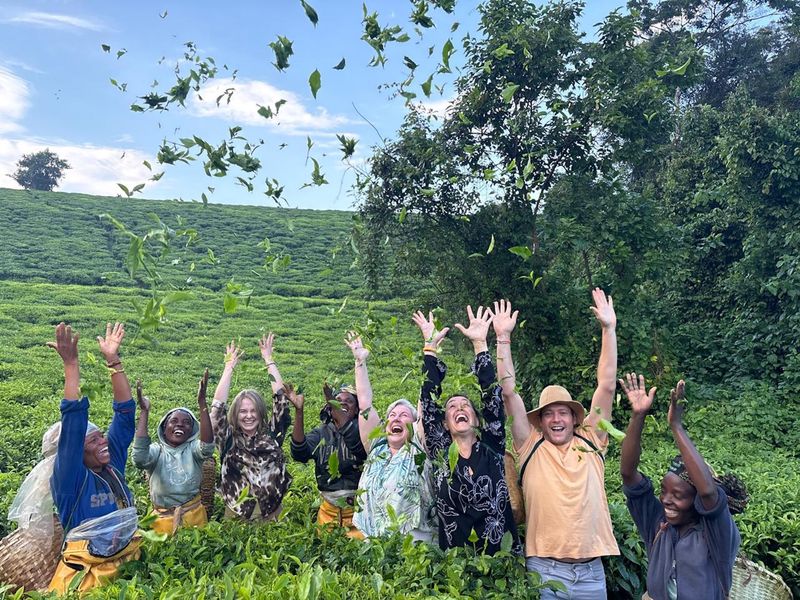
Carl (on the right) and fellow Rhino Africa Travel Experts frolic in the tea plantations, Image Credit: Wilderness
Land of a Thousand Hills
Rwanda is a country that keeps coming closer. Closer through history, people, wildlife, and the inevitable presence of the experience.
It’s small enough to cross in days and layered enough to defy quick understanding. Known as the Land of a Thousand Hills, it reveals itself gradually. Carl followed that unfolding from Kigali to Volcanoes, Nyungwe, Akagera, and beyond.
When he returned, I wanted to understand exactly how Rwanda had left such a lasting mark.

The iconic landscape of Rwanda
The Heartbeat of Rwanda
When I asked Carl where Rwanda first got under his skin, he did not say gorillas.
He said Kigali. From afar, Rwanda's capital city can seem almost modest. Then the details come into focus: painted buildings poised alight, rippling emerald slopes, multi-hued rooftops zig-zagging in every direction.
And the vibrancy doesn’t end in the visuals. Carl informs me that the streets are filled with a compelling bustle, stalls boasting fresh produce at every corner and rich aromas drifting from open-door coffee shops in the alleyways.
“There’s an amazing energy in Kigali. The people always have the biggest smiles, and they make you feel so welcomed.” – Carl Preller.
But as delightful as the introduction is, the first stop is a sombre one: The Kigali Genocide Memorial. Carl describes it as one of the most emotional parts of the trip – so emotional, in fact, that he could not make it through the entire exhibition. The memorial presents itself as a place of remembrance and learning, dedicated to the victims of the Genocide against the Tutsi and to the work of reconciliation and peace-building that followed.
Carl says Rwanda only becomes legible once you begin there. You leave with the history in your chest, and that history changes the way you read the country that follows.
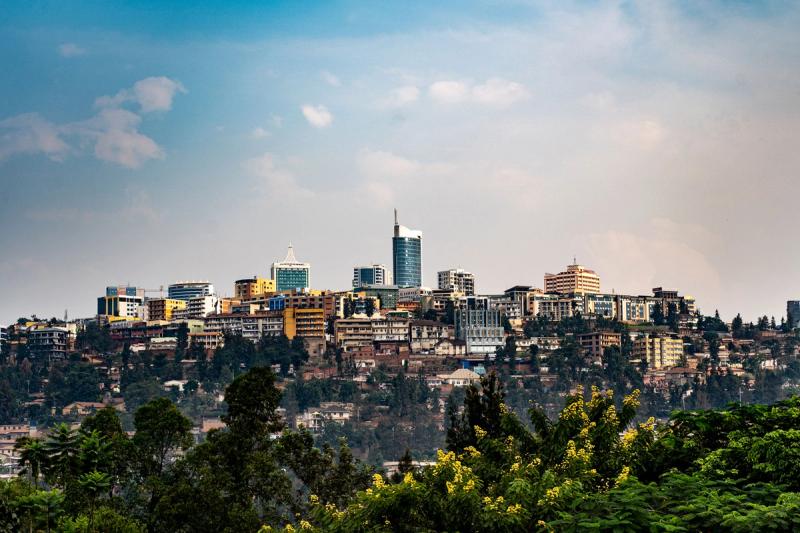
Kigali, the vibrant jewel of Rwanda
Step back into Kigali afterwards, and the city feels sharper for it. Carl was struck by how clean it was – not only by African standards, but by any standard. Streets immaculate. Public spaces cared for. Not a piece of plastic in sight. This is no accident. Rwanda’s long-running monthly community work programme, Umuganda, remains part civic duty, part social glue, rooted in reconstruction and shared national identity.
And yet Kigali is no polished museum piece. Carl found it bright and busy, full of weaving scooter taxis, flashes of colour, and dazzling smiles. Orderly, but never muted. Energetic, but never chaotic. And above all, warm with a pride that was impossible to miss.
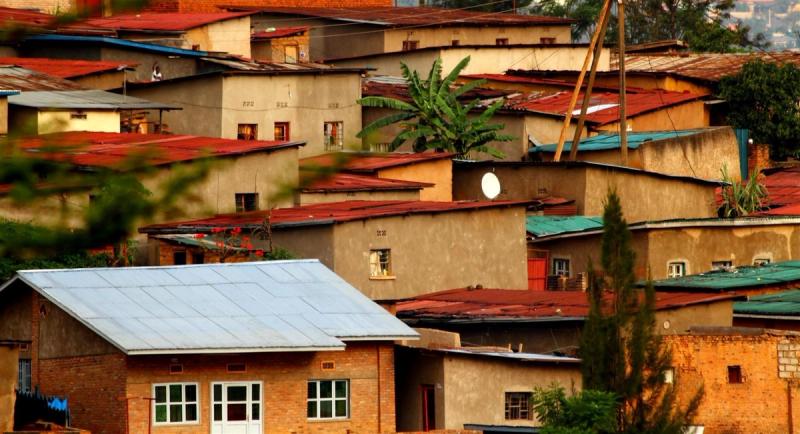
Kigali's colourful energy appears at every corner of the city
The Forest, Face to Face
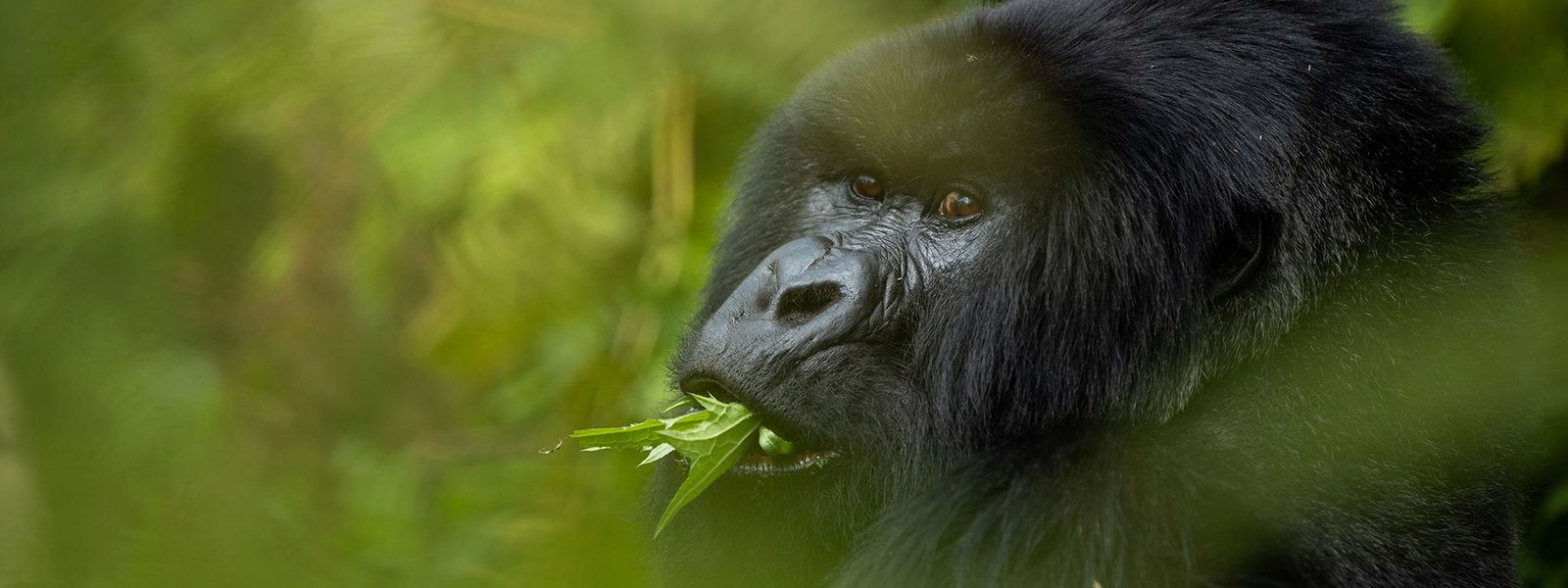
Leave the ridgelines of Kigali behind, and Rwanda gathers itself into something greener, steeper, and far less knowable. Cradled in the north corner of the country is Volcanoes National Park, Africa's oldest national park. Here, dense Afromontane forest climbs the slopes beneath mist-cloaked volcanic peaks, creating a world that still feels ruled by its own terms. It's home to the legendary mountain gorillas.
When I asked Carl what the gorillas felt like up close, he did not reach for a grand line. He went straight to the physical reaction.
“When you’re there right next to them, you get chills.” – Carl Preller.
Gorilla trekking in Rwanda asks something of you first. Mud. Incline. Breath. In Volcanoes National Park, each trek is shaped by the movements of the gorilla family you’re assigned to, which means the journey can be relatively gentle or physically demanding depending on where they have travelled that day. But bravely trek these rugged trails, and you’ll be rewarded.
Because suddenly, there they are.
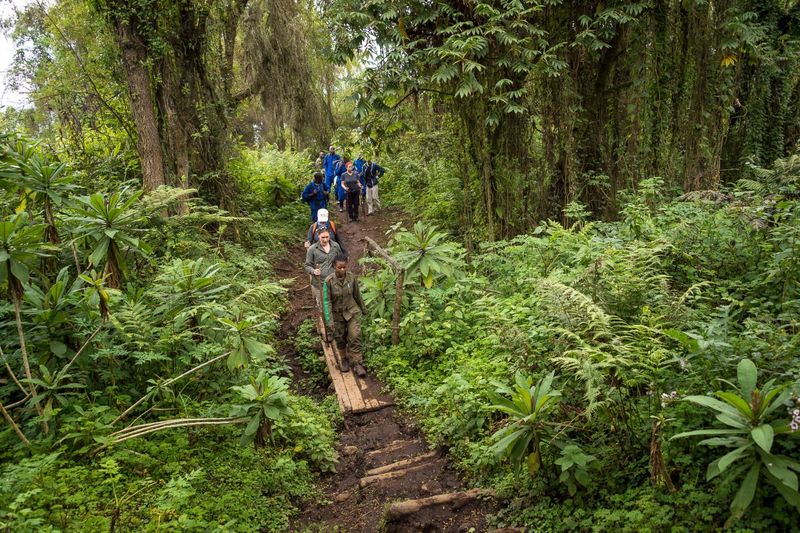
Trekking through Volcanoes National Park – an unmatched adventure, Image Credit: Wilderness Bisate
Carl had seen gorillas the way most of us have: through screens, lenses, old National Geographic spreads. None of that prepared him for the first real moment of proximity. He stood beside them and watched them eat, shuffle, and sit with one another.
And at such close range, their mannerisms stopped feeling animal in the abstract and started feeling unnervingly familiar.
“It’s an incredibly grounding experience. Their mannerisms are so human – it’s scary and beautiful all at once.” – Carl Preller.
What makes the experience even more remarkable is Rwanda’s determination to make it accessible without diminishing its authenticity. Carl saw guests with mobility issues reaching the gorillas by stretcher, carried up the mountain by porters so they, too, could experience the encounter for themselves.
But no matter how or when, once the climb begins, your schedule revolves only around the movements of the gorillas and the mood of the mountain. The forest keeps its own time.
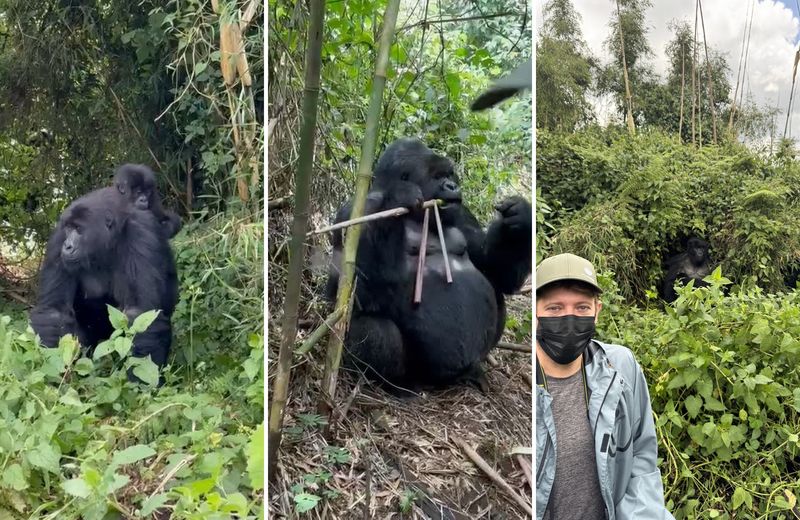
At close proximity to the gorillas, Image Credit: Carl Preller
Where the Trees Start Shouting
Nyungwe Forest National Park brings a dramatic tempo change. In Rwanda’s south-west, the land thickens into an ancient montane rainforest: a vast, high-altitude mismatch of moisture, moss, bamboo, and time-tangled trees. The air feels wet with life. Water slips through the undergrowth, birds call from the canopy, and the whole forest seems to be working in every direction at once. This is chimp country.
And if the gorillas felt grounded, the chimps felt electric.
The trek began differently, too. Higher up, then a deep descent into the valley, dropping deeper within rather than climbing steadily towards a single, awaited encounter. The first thing Carl recalls is the noise – sharp, almost unnerving. You hear them before you see them: screams ricocheting through the trees, sudden and wild enough to make the whole forest feel charged.
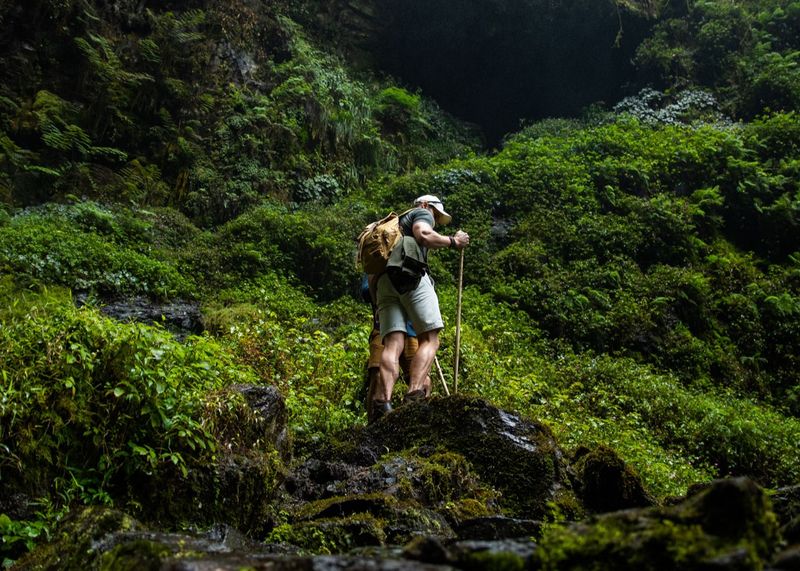
The lush corridors of Nyungwe Forest
Chimp trekking, Carl said, was harder than the gorilla trek. The chimps climb high into the trees, disappear into foliage, reappear somewhere else, and keep the entire encounter just slightly out of reach. It lends the experience a very different kind of intensity. With the gorillas, the nearness characterises them. With the chimps, it's the pursuit.
Carl remembers the forest working on him from every direction: birds overhead, insects at his feet, spiders strung between branches. It is a rare kind of intimacy – not simply seeing the forest, but feeling yourself briefly absorbed into its living rhythm.
“You feel fully immersed in their home.” – Carl Preller.
The chimps may not offer the same prolonged, clear-eyed proximity as the gorillas, but they pull you almost more completely into their world.

Witness Chimpanzees in their natural habitat, Image Credit: Nyungwe Forest Lodge
The Safari Few See Coming
For guests who know the country only by its primates, Akagera National Park can feel almost improbable. Here in the east, Rwanda opens into savannah, lakes, papyrus wetlands, and golden grasslands – a space that feels worlds away from the misty forests of the north and south.
Carl was enchanted, to say the least. The more he spoke about it, the less it sounded like a safari add-on. It was a revelation. Akagera is one of Africa’s great restoration stories, too. Since 2010, the park has been restored into a functioning Big 5 reserve, with lion and rhino reintroduced and wildlife numbers steadily increasing.
“The quality of the game viewing far exceeded what I had expected.” – Carl Preller.
Akagera expanded the journey in a wholly new way. It was not just the classic safari setting, but the rarity of what unfolded there – a leopard on the lakeshore, catching fish, something Carl had never seen on any previous safari.
Yet what stayed with Carl was not only what he saw, but who he saw it with.
“Bosco, our guide at Magashi, was one of the best guides I’ve ever had.” – Carl Preller.
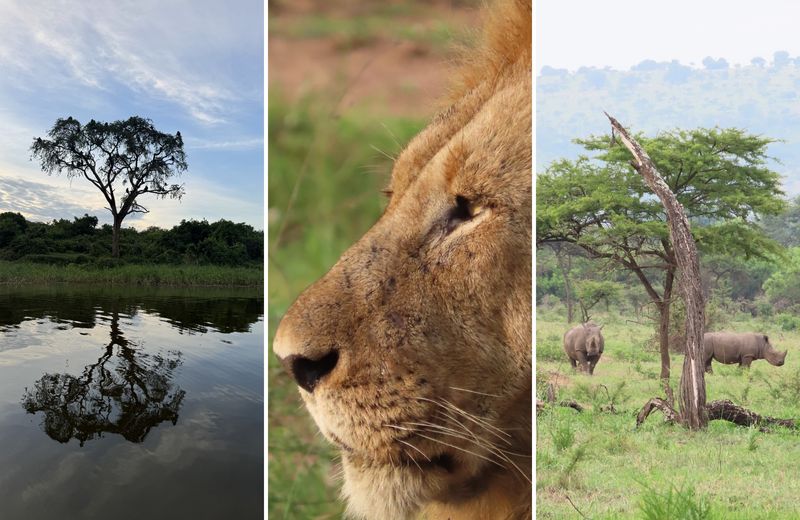
Rwanda's unassuming yet unparalleled safari experience in Akegera
The Closest Connection
When I asked Carl where he felt most connected in Rwanda, he did not say the gorillas. He did not say Akagera, or Kigali, or even the extraordinary lodges. He said the people.
That answer came quickly. Again and again, as we spoke, he returned to the same things: the warmth, the friendliness, the unwavering kindness. Rwanda, in his telling, was never handed over as a performance. It was offered with sincerity.
That feeling followed him from place to place. It was there in Kigali’s smiles, in the quiet generosity of the lodge teams, and in guides like Bosco, whose knowledge and calm made the experience feel personal rather than simply polished. In a country already rich with wildlife and emotion, it was the people who gave it its pulse.
“You can see how proud they are of their country and all it has become, and how deeply they want every guest to have the best possible experience.” – Carl Preller.
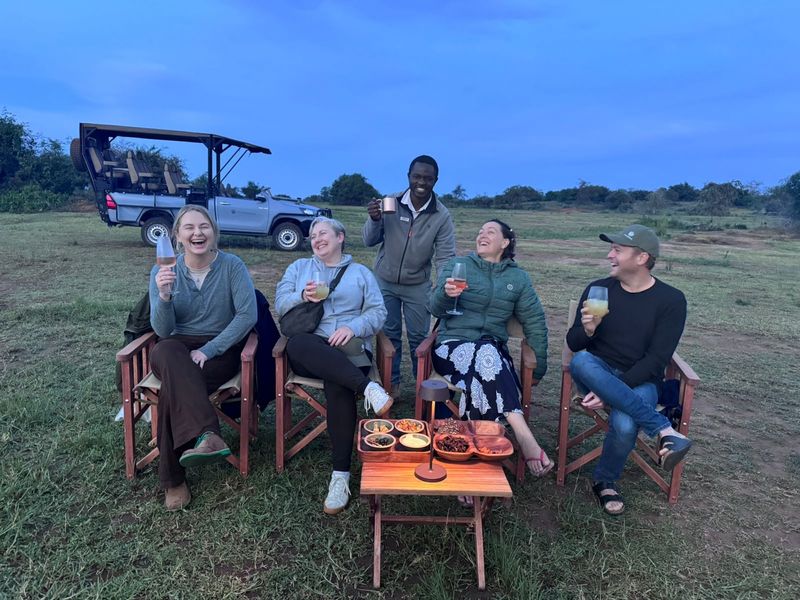
Carl and the Rhino Africa Rwanda team enjoying sundowners with Bosco, Image Credit: Carl Preller
How Carl Would Plan Your Rwanda Safari
Carl’s advice is simple: don’t rush Rwanda or treat it as just a quick gorilla stop. Here’s what you should do instead:
- Start with Kigali. Visit the Genocide Memorial early, ideally with a city tour, so the rest of the trip lands with more meaning.
- Book two porters for gorilla trekking. One for your backpack, one to help you up the mountain.
- Come prepared for an active experience. Gorilla trekking can be short or more demanding depending on where your assigned gorilla family is that day, so a good level of mobility and proper footwear will go a long way.
- Plan for the pace. Rwanda’s roads are excellent, but the hills and winding routes make transfers longer than they may appear on a map. If your budget allows, helicopter transfers can add ease and save valuable time.
- Time your visit well. The best time to go depends on the kind of trip you want, so seasonality is worth thinking through carefully when you plan.
- Book well in advance. Rwanda’s gorilla trekking permits and top lodges are limited, so the most exclusive experiences need to be secured early.
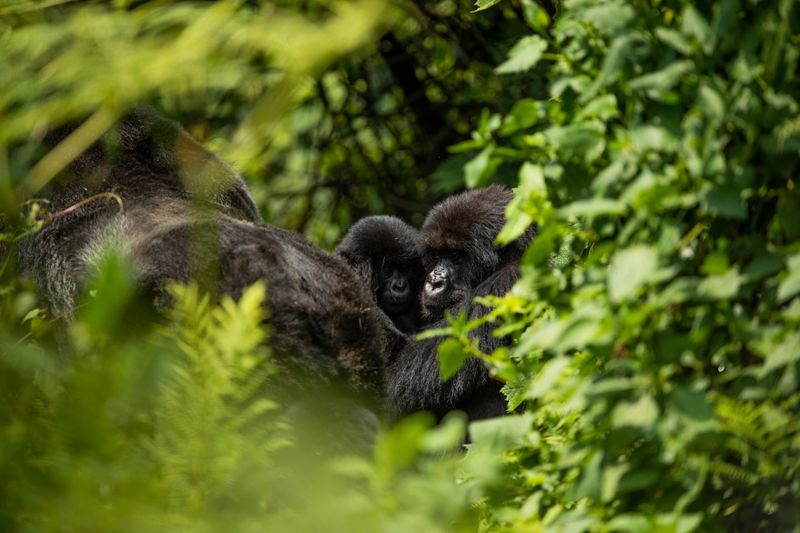
Among the dense green stillness, the gorillas wait.
Get Close To Rwanda
It was not only the gorillas. Not even the chimps. It was the way the country kept drawing closer: through history that refused abstraction, wildlife encountered at unnerving proximity, and people whose warmth seemed to give the whole place its pulse. By the end of the trip, Rwanda had become one of Carl’s favourite places in Africa – perhaps one of his favourite places anywhere in the world.
If this piece has stirred your curiosity, explore more of Rwanda here, browse our itineraries for a sense of how a journey might unfold, or reach out to us for an obligation-free enquiry. We'd love to help bring your trip to life.
Feel free to share any comments, thoughts, or questions below.